





Grand-Popo does not only live to the rhythm of tides and wind — it vibrates to the sound of drums, songs and dances that punctuate its cultural calendar throughout the year. From Vodun ceremonies to popular festivals, each month brings its share of celebrations where spirituality, tradition and joy of living mix in a whirlwind of colours and emotions.
Grand-Popo events are far more than tourist attractions: they embody the living soul of a people who honour their ancestors, celebrate their identity and welcome visitors as honoured guests. Coming to Grand-Popo also means choosing the right time to experience these unique moments.
To understand the spiritual context of these celebrations, dive into our guide to Grand-Popo's culture and heritage. And to plan the ideal season, our page when to visit Grand-Popo will help you choose the best time.
Grand-Popo, a town where celebration and daily life are the same thing
What sets Grand-Popo apart from other coastal destinations is the authenticity of its celebrations. Here, festivals are not organised for tourists — they reflect a living culture, deeply rooted in the daily life of the inhabitants. The ceremony you stumble upon at the end of an alleyway on a Tuesday evening was not staged for your benefit. It has been happening in that courtyard, with those families, for longer than anyone present can remember.
Occasions to celebrate are numerous: the Vodun religious calendar marks the year with ceremonies dedicated to different deities. Rites of passage (births, marriages, funerals) give rise to family and community gatherings. National holidays and cultural festivals complete this festive landscape.
For the visitor, it is a unique chance to enter the intimacy of an open and generous culture. But it also demands respect and discretion: some ceremonies are sacred, and photography or even presence must be negotiated with tact. Arriving curious and unhurried is the best preparation. Arriving with expectations of spectacle is a way to miss what matters.
Grand-Popo's cultural rhythm is not something you read off a poster. It is something you feel in the change of atmosphere on certain evenings — the drums starting up two streets away, the neighbours moving toward a sound, the dogs falling quiet. The town signals its own events if you pay attention.
National Vodun festival (January 10)
January 10 is a date etched in the Beninese calendar. Since 1997, the government has officially recognised Vodun as a national religion, and this day has become a national holiday celebrated throughout the country. But it is in Grand-Popo that this celebration takes on its full dimension.
A day of spirituality and communal renewal
From dawn on January 10, drums resound throughout the town. The faithful, dressed in white — the colour symbolising purity and connection with spirits — converge on places of worship and public squares. Vodun priests (vodunsi) officiate amid songs, dances and offerings.
Ceremonies unfold in several stages: prayers and libations to ancestors, ritual possessions where spirits descend upon initiates, processions through the streets, and collective dances that continue until nightfall. What is striking, for the foreign visitor who witnesses it honestly, is that none of it feels performed. The woman weeping silently in the third row is not performing grief. The elder whose knees barely bend as he leads the procession is not performing reverence. The intensity is real.
By 6am, before the formal processions begin, individual families are already at their household altars. The head of each compound lights incense, pours sodabi on the ground, calls the names of the dead. This private hour — quiet, unhurried, entirely domestic — is the emotional foundation of everything that follows. The public ceremony draws its power from ten thousand private moments like this one.
Where and how to attend
The heart of the celebrations is around the central market and the Vodun convents scattered through the town's neighbourhoods. Each convent organises its own rituals, open to respectful visitors.
To fully experience the event, arriving the day before is advisable. Wear white as a sign of respect, and have a local guide accompany you to explain the ceremonies and indicate when foreign presence is welcome. Book your accommodation several weeks in advance: this is the busiest period of the year.
Our complete guide to the Vodun Festival on January 10 gives you all the keys to attend this unique event in the best conditions.
Nonvitcha festival
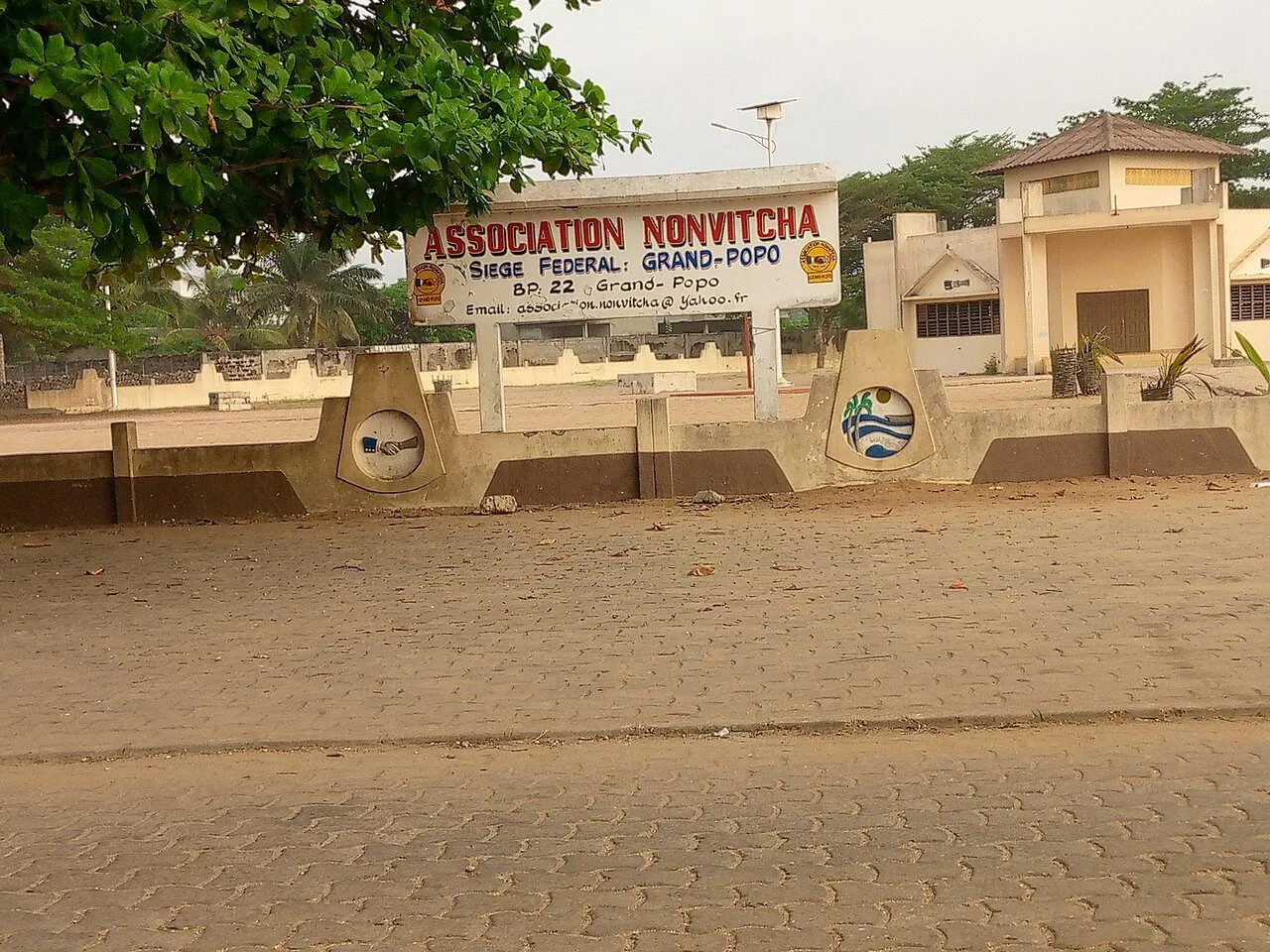
The Nonvitcha Festival is the great celebration of the Popo people. Held every two years, generally during the dry season (between July and August), it brings together Popo communities from Benin, Togo and the diaspora.
The spirit of Nonvitcha
Nonvitcha means "the festival of the Popo" in the local language. It is a moment of reunion, identity reaffirmation and cultural transmission. The festival lasts several days with a rich programme: traditional dances, music concerts, conferences on Popo history, craft exhibitions, fashion shows, sporting competitions.
Dances are the heart of the festival. Each village presents its best dancers in spectacular costumes blending traditional fabrics, beads, feathers and cowries. Drums beat relentlessly, creating a collective energy that carries everyone along. The competition element matters — villages prepare for months, the best troupes are known by reputation, and the crowd does not hesitate to show its preference.
The diaspora returns
One of Nonvitcha's special features is the massive participation of the Popo diaspora, coming from the Americas, Europe and Central Africa. For many, it is a chance to reconnect with their roots, meet their ancestral family and measure the journey travelled since their ancestors left.
The arrivals at the airport in Cotonou in the days before the festival carry something particular: people in their sixties descending with grandchildren who have never seen Benin, clutching photographs of relatives they are about to meet for the first time. By the time the opening ceremonies begin, the emotion in the square is dense with that history.
The Nonvitcha Festival is a special moment to understand the history and identity of the Popo people, and to share an experience of reconciliation and cultural pride.
Egungun ceremonies
The Egungun are the "returning spirits" — ancestors who come back to visit the living during special ceremonies. These manifestations, inherited from the Yoruba tradition, are among the most impressive and sacred in Grand-Popo.
The return of the ancestors
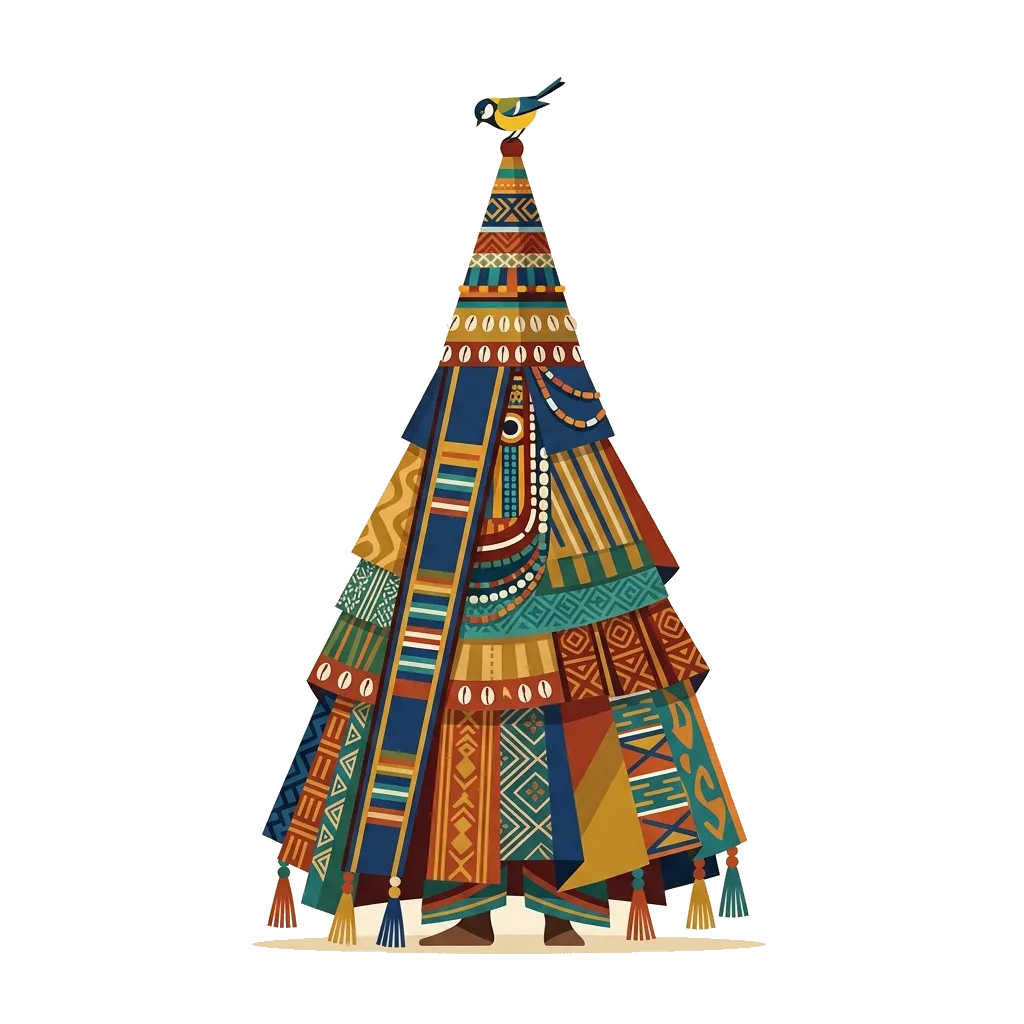
During Egungun ceremonies, initiates wear elaborate costumes made of multiple layers of colourful fabric, cowries, mirrors and amulets. Their faces are completely hidden by a mask or veil: when they wear the costume, they are no longer human but the very incarnation of the ancestor whose spirit they bear.
The Egungun dance, whirl, speak in a modified voice that seems to come from beyond the grave. They distribute blessings, offer advice, sometimes reprimand those who have misbehaved. Their appearance is always a solemn moment, charged with emotion for families who recognise their ancestors. The modified voice — mechanically altered by a device inside the costume — is one of those things you cannot prepare for. It is both eerily wrong and completely authoritative.
Watching an Egungun move through a crowd, you understand that its path is not random. It stops at certain people. A conversation happens in a modified voice, too quiet and too rhythmic to follow if you don't know the language. The person addressed sometimes reaches out, sometimes weeps, sometimes straightens with visible relief. Whatever was said has weight. You are watching a therapy, a judgement, a blessing — all at once.
Calendar and access
Egungun ceremonies take place mainly between November and March, with a concentration in December-January. Precise dates are set by family heads and priests, and may vary.
To attend a ceremony, you must ask permission. The initiates and families concerned are generally open to the presence of respectful visitors, but photography is strictly forbidden without explicit permission.
Everything you need to know about Egungun ceremonies in Grand-Popo, including the calendar and rules of conduct.
Zangbeto ceremonies
Zangbeto are the guardians of the night, a traditional night-police institution unique to the Xwla communities of the Beninese and Togolese coast. Their ceremonies are among the most mysterious and spectacular in Grand-Popo.
Guardians of the village night
Zangbeto wear imposing costumes made of raffia, palm leaves and straw, which transform them into massive, moving creatures. Their role is twofold: protect villages from malevolent spirits and exercise a form of traditional policing.
During ceremonies, the Zangbeto perform a powerful dance, spinning at surprising speed for such bulky costumes. The spectacle is striking, but the Zangbeto are not performers: they are spiritual guardians whose role is taken very seriously by the community. A neighbourhood where a Zangbeto has appeared is a neighbourhood that has been addressed — blessed, warned or cleansed, depending on what the community needed.
Zangbeto appearances have no fixed calendar: they respond to specific needs (conflict resolution, purification, protection) or festive occasions. Chances of seeing them are higher during major festivals like Nonvitcha or January 10.
Discover the history and role of Zangbeto in Grand-Popo in our dedicated guide.
Seasonal events
Beyond the major events, Grand-Popo's calendar includes more modest but equally authentic celebrations.
Fishing ceremonies mark the start and end of the fishing season. Xwla fishermen organise rituals to ask for the sea's protection and thank the spirits for the catch. These ceremonies generally take place in October-November and March-April. Beach ceremonies at dawn, with the smell of palm oil on salt air and the sound of prayers over the first light, have a quality that the larger public events cannot replicate.
Neighbourhood festivals are community celebrations that animate different parts of Grand-Popo in turn. Each neighbourhood organises its annual festival, with collective meals, music and dances.
Villa Karo exhibitions — the Finnish-Beninese cultural centre — host regular openings throughout the year, as well as concerts, readings and workshops open to the public. Even during the quieter months of the rainy season, Villa Karo ensures that Grand-Popo's cultural life does not stop.
To not miss anything, the Grand-Popo cultural calendar month by month lists all events and helps you plan your stay.
Month-by-month calendar
| Month | Event | Type | Details |
|---|---|---|---|
| January | Vodun Festival (January 10) | Religious ceremony | National holiday — large crowds |
| February-March | Egungun ceremonies | Spiritual ceremony | Variable dates |
| April-May | Fishing ceremonies | Traditional ritual | According to lunar calendar |
| June-July | Nonvitcha Festival | Cultural festival | Every two years |
| July-August | Neighbourhood festivals | Local celebration | Dates vary by neighbourhood |
| September-October | Villa Karo exhibitions | Cultural | Variable programme |
| November-December | Egungun ceremonies | Spiritual ceremony | Peak Egungun season |
| December | Year-end celebrations | Festive | Local Christmas markets |
This calendar is indicative. Traditional ceremony dates are set by customary authorities and may vary from year to year.
Coming for an event
Planning a trip to Grand-Popo specifically to attend an event takes some organisation, but the effort is well rewarded.
Accommodation and transport
For the Vodun Festival (January 10) and the Nonvitcha Festival, accommodation must be booked several weeks, even months, in advance. Ecolodges and guesthouses fill up very quickly. Also plan your transport: taxis and zemidjans (moto-taxis) are busier than usual. Getting stranded in Cotonou with no room in Grand-Popo on the morning of January 9 is a real possibility if you leave bookings late.
Preparing for the experience
For spiritual events (Vodun, Egungun, Zangbeto), dress soberly and respectfully. White is recommended for Vodun. Bring water, a hat and sunscreen: ceremonies can last hours outdoors. More importantly, read something about the tradition before you arrive. A visitor who understands why the procession stops at each crossroads, or why the Legba altar is the first to receive offerings, will see more than one who doesn't.
For cultural festivals (Nonvitcha), bring light clothing, a camera (with permission), cash for purchases and offerings.
Eat well before attending a long ceremony. There are rarely food stalls at family ceremonies, and standing for two or three hours in the sun is more comfortable on a full stomach. Bring water in a bag you can carry without drawing attention. The idea is to disappear into the crowd — not to look like a visitor on safari.
Budget
Most religious ceremonies are free and open to all. Festivals may charge a modest entry fee (2,000 to 5,000 FCFA, 3 to 8 EUR). Bring small notes for offerings and tips.
Etiquette and respect
A few simple rules allow you to attend Grand-Popo's events with respect for traditions and locals.
Always ask permission before taking photos or videos. At spiritual ceremonies, photography may be forbidden or limited to certain moments.
Dress respectfully. Avoid overly short or casual clothing for religious ceremonies. White is the appropriate colour for Vodun.
Do not touch initiates in a state of possession: they are considered inhabited by spirits, and any contact could be disruptive.
Stay discreet. Do not speak loudly, do not interrupt rituals, do not place yourself in front of participants. Observe and listen.
Do not bargain with the sacred. Offerings are free; ceremonial artefacts are not souvenirs to buy.
Give thanks. A simple gesture of gratitude to the organisers, a small donation or a smile are welcome. The relationship between visitor and host matters beyond the single day you share.
Grand-Popo events and festivals are the most vivid expression of its culture. By choosing to visit the town during a celebration, you will not only see Grand-Popo — you will live it, in all its fervour, joy and spiritual depth. It is an experience that changes your perspective, that brings the traveller closer to the soul of Benin.
Plan Your Visit
Discover the magic of Grand-Popo with our curated local experiences.