






When the sun sets over the sandy shore of Grand-Popo, an invisible, protective force awakens. The Zangbeto, these "Night Guardians" of Ogu and Xwla tradition, are far more than a simple custom: they are the moral and spiritual pillar of the community, a system of justice and protection that watches over the living.
Find the broader cultural context in our guide to the culture and heritage of Grand-Popo.
What the eyes see and what the initiates know: the Zangbeto mystery
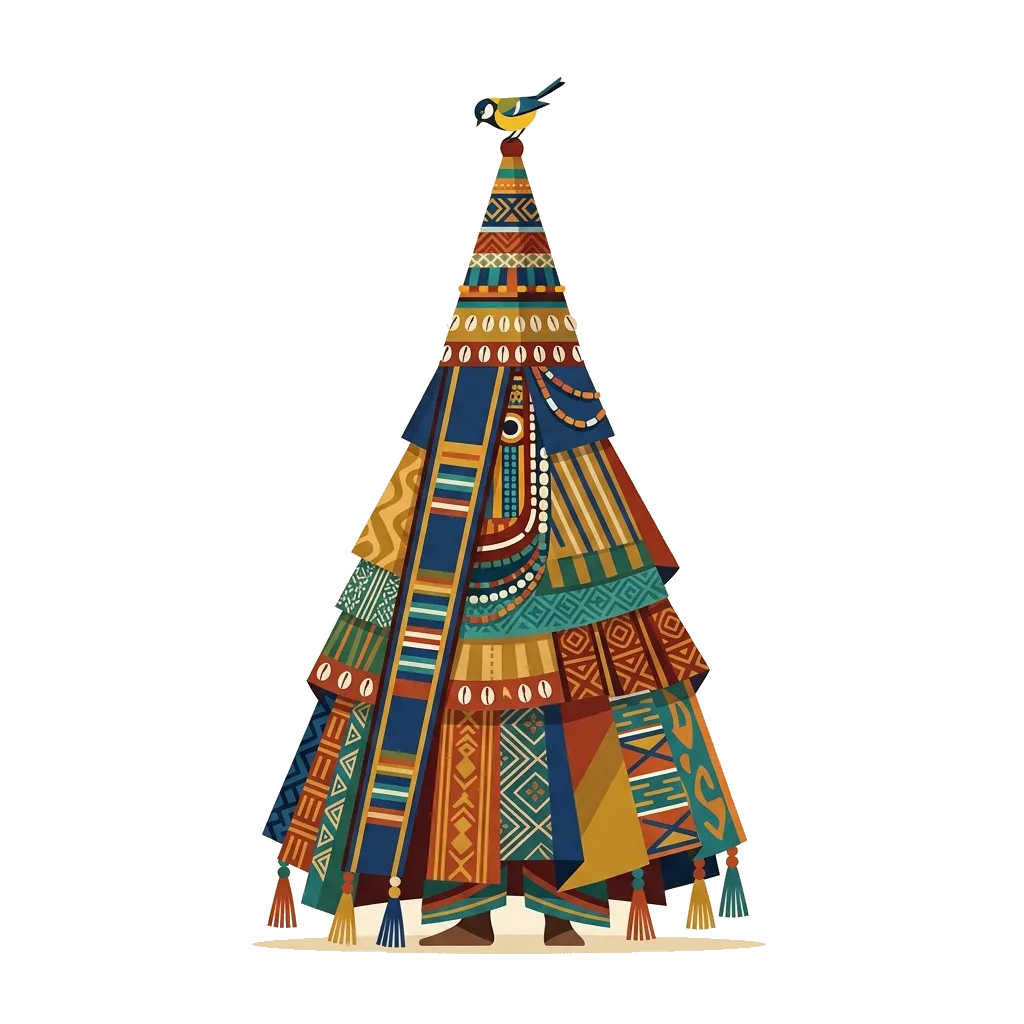
Visually, the Zangbeto appears as an immense cone of colored straw called kouta, seemingly animated by magic. But for initiates and locals, it is the manifestation of a spiritual entity without bone or flesh. The straw cone is not a costume: it is the receptacle of a force from elsewhere.
According to legend, these entities appeared to protect persecuted peoples during their migrations. Their power is said to come from forest and water spirits, to whom initiates address secret incantations during invocation ceremonies.
What one feels on the ground, at night, when the Zangbeto whirls in the golden dust: something changes in the air. Not fear. A kind of vigilance the body recognizes before the mind has time to understand it.
What local guides know and rarely share with outsiders: the Zangbeto has a specific sound signature. Each guardian communicates with the others across the night, from one neighborhood to another, through sound signals that only initiates can decode. The city has its own nocturnal language, invisible to those who have not been taught to listen.
From Ogu to the banks of the Mono: origins and social function
The Zangbeto traces its roots to Ogu culture, a Yoruba subgroup established on the coast between Benin and Nigeria. Transmitted orally from generation to generation, this tradition was enriched through contact with Xwla and Vodun practices to become an institution unique to Grand-Popo.
The Zangbeto's primary function is community protection. But its role is far more complex. Initiates distinguish several levels of action:
- Spiritual protection: it wards off evil spirits and malevolent forces that prowl at night.
- Social justice: it resolves neighborhood conflicts, calls troublemakers to order.
- Forest guardian: it protects sacred forests and the mangroves of Bouche du Roy, forbidding excessive cutting of mangrove trees.
- Night police: its mere presence deters thieves and aggressors.
What guides do not always mention: Zangbeto communicate with each other across the night, from one neighborhood to another, through sound signals that only initiates can interpret. The city has its own codes, invisible to outsiders.
The Zangbeto dance: what defies reason
Watching a Zangbeto come to life is an experience that defies rational explanation. Accompanied by frenetic drums and polyphonic songs, the straw cone spins with disconcerting agility, raising clouds of golden dust in the twilight light.
Several movements characterize its dance, each with precise meaning:
- The whirlwind: the Zangbeto pivots on itself at astonishing speed, creating a hypnotic effect and an artificial breeze.
- The zigzag run: it crosses the square running in broken lines, as if escaping invisible forces or tracking them.
- The salute: it bows before elders and dignitaries, acknowledging their authority with unexpected elegance.
What the emptiness reveals: the straw miracle
One of the most puzzling moments is when the initiate lifts the straw cone to show the interior is empty, or produces symbolic objects from it: miniature pirogues, statuettes, fruit. For initiates, this is proof that the Zangbeto is not a disguised man but a spiritual entity. For the rational visitor, it is a moment of deep inner silence. Both reactions are valid.
Reading the kouta: symbolism of the costumes
The kouta, the straw costume, is a highly symbolic element. Each color and element carries meaning:
| Element | Meaning |
|---|---|
| Yellow raffia straw | Solar protection, link with ancestors |
| Red fibers | Life force, blood of sacrifices |
| Blue fringes | Connection with water and the lagoon |
| Interlaced stems | Unity of the community |
| Hidden bells | Warning of spiritual presence |
Making the costume is an art in itself, transmitted within guardian families. A kouta can take several weeks to weave and assemble. The raffia must be harvested at precise moments in the lunar calendar. The fibers are treated with secret preparations before being assembled. What you see spinning in the night is the result of months of patient, ritual work.
What the Zangbeto really protects: traditional police force
In Grand-Popo, the Zangbeto exercises a traditional police function recognized by the authorities. When conflicts erupt, the Zangbeto is called to arbitrate. Its word carries authority because it is believed to emanate from the spirits.
The Zangbeto intervenes in areas that modern justice handles poorly:
- Land disputes: it knows the ancestral boundaries of territories, transmitted orally across generations.
- Domestic quarrels: it calls unfaithful spouses to order with an authority no tribunal possesses.
- Thefts: its mere presence often suffices to make stolen goods returned, without investigation or trial.
- Environmental protection: it monitors wood cutting and excessive fishing in protected areas.
This parallel justice does not conflict with modern justice. The two systems coexist, with inhabitants turning to one or the other depending on the nature of the dispute. Some matters resolve better in the street at night, before a spinning kouta, than before a judge.
When to see them: the guardians' calendar
Zangbeto appearances cannot be scheduled in advance like a show. They happen at specific moments in the social and spiritual calendar:
- Social events: weddings, funerals, initiation ceremonies
- Full moon nights: periods of reinforced spiritual vigil, when natural light allows the entity to manifest
- Dry seasons: ceremonies are more frequent between November and March
- Vodun Festival (January 10): a grand gathering of all guardians in the region
To maximize your chances of witnessing an appearance, contact a local guide or ask your accommodation. The local network will tell you about upcoming events. Be patient: the Zangbeto does not appear for tourists. It appears when it must.
Zangbeto and modernity: an institution that endures
Contrary to what one might think, the Zangbeto is not a dying tradition. It adapts to contemporary challenges with remarkable flexibility. Zangbeto have been seen patrolling beaches to prevent drownings, reminding tourists of proper conduct, or raising awareness about local environmental protection.
This capacity for adaptation is not new. The Zangbeto has always evolved according to the community's needs. What changes is the arena of action. What does not change is the moral authority.
The Zangbeto embodies a living social justice, able to speak to both young and old. Its moral authority spans generations, proof that when traditions know how to evolve without betraying their essence, they remain powerful. Young people in Grand-Popo who film appearances on their phones carry the same ancestral respect as their grandparents. The form changes. The substance holds.
To go further, also discover the Egungun masks, the return of the ancestors and Vodun in Grand-Popo.
FAQ
Is a Zangbeto dangerous for tourists? No. The Zangbeto protects the community and does not threaten respectful visitors. Simply keep your distance and do not touch the costume.
Can I photograph a Zangbeto? Always ask permission before filming or photographing. Some appearances allow photos, others do not, depending on the sacred nature of the ceremony.
Are there female Zangbeto? Traditionally, the Zangbeto cult is male. However, women play an active role in the songs, dances and organization of ceremonies.
Is Zangbeto the same as Egungun? No. Zangbeto are night guardians of Ogu and Xwla tradition. Egungun are returning spirit masks of Yoruba tradition. Their role and symbolism are different.
Plan Your Visit
Discover the magic of Grand-Popo with our curated local experiences.