

In Grand-Popo, the line between the world of the living and that of the dead is razor-thin. The Egungun, these "Returning Spirits" of Yoruba tradition, are living proof. When they appear in the streets, draped in layers of precious fabrics, they are the ancestors themselves returning to counsel, protect and bless their descendants.
Discover these traditions within the broader context of our guide to Grand-Popo's culture and heritage.
What hides beneath the costume: who are the Egungun
The term Egungun refers both to the sacred masks and to the ancestral spirits they embody. In Yoruba cosmology, death is not an end but a transition. Ancestors remain present and active in the lives of their descendants. The Egungun are the mediators between these two worlds.
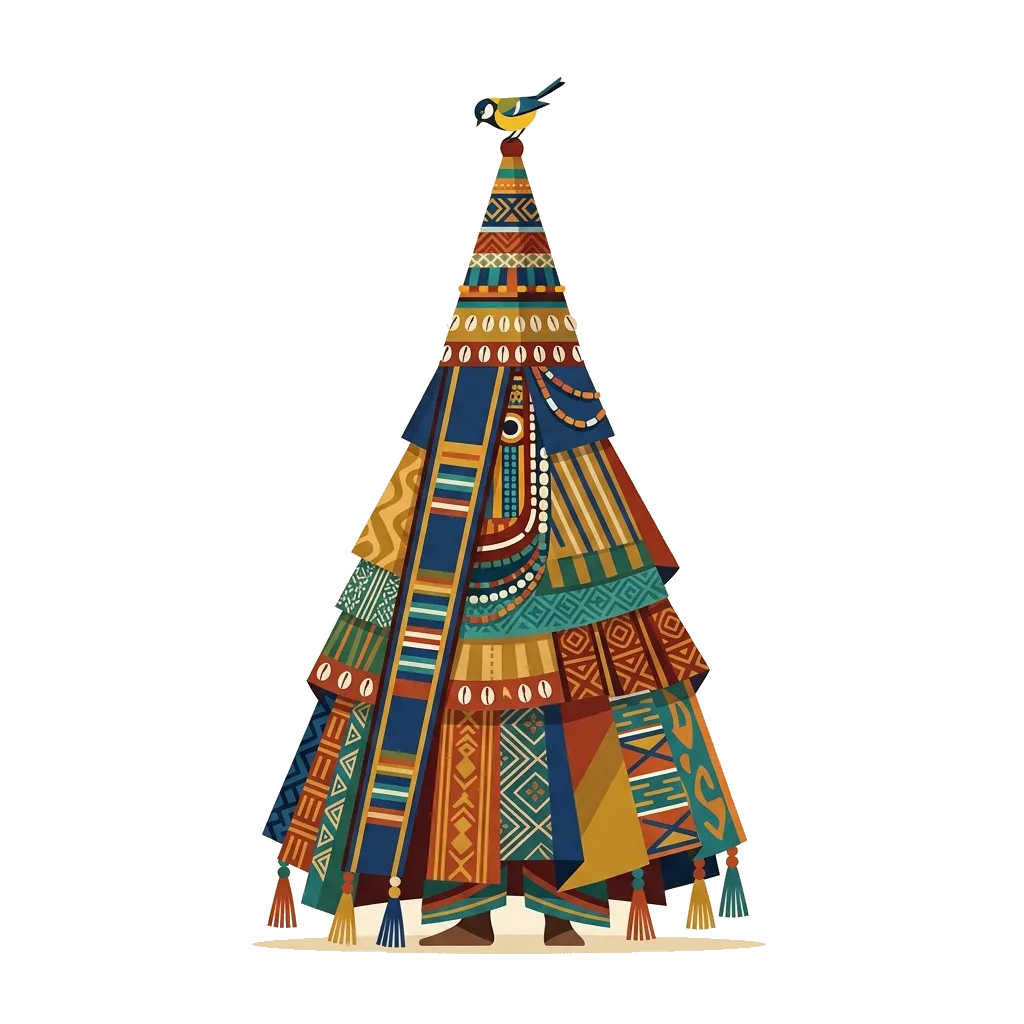
In Grand-Popo, where Yoruba influence blends with Xwla and Fon traditions, the Egungun cult is particularly alive. Every important family possesses its own Egungun, inherited from generation to generation. The costume, composed of hundreds of stitched-together fabric strips, represents the collective memory of the lineage. Each layer of fabric added over the years is another page in the family's living archive.
What few visitors know: the costume does not belong to the man who wears it. It belongs to the lineage. Some Egungun of Grand-Popo are over a hundred years old, their fabrics gathered like living documents. Touching this costume without authorization is not simply rude: it is considered a serious transgression, capable of drawing the wrath of the ancestors onto oneself.
Beyond the spiritual dimension, the costume is also a family archive in textile form. Each piece of fabric corresponds to a specific generation, sometimes to a specific person. The oldest fabrics, dark with age and oil, are at the center. The newest additions wrap around the outside. Standing before an Egungun, you are standing before a layered genealogy that goes back further than any written document in the region.
From Oyo to Grand-Popo: Yoruba origins
The Egungun cult traces its roots to the Oyo kingdom in present-day Nigeria, cradle of Yoruba civilization. From the 15th to the 19th century, trade and population movements spread this tradition westward along the Gulf of Benin. Trade routes between Nigeria, Dahomey and the Atlantic coast carried the Egungun masks all the way to Grand-Popo.
Today, the cult is deeply integrated into the region's spiritual landscape. It shares affinities with local Vodun while retaining its Yoruba specificities: the importance of the mask as a receptacle of the spirit, the strict hierarchy of initiates and the central role of the Alagba, the elder who guarantees the secrecy of the rituals.
The Alagba knows the names of the ancestors, each family's stories, and the ritual sequences transmitted orally across generations. Without him, no appearance is possible. He alone decides whether the conditions are right to call a spirit.
What the Alagba carries is not just knowledge. It is responsibility. If a ceremony fails, if an ancestor is called incorrectly or at the wrong time, the consequences fall on him. This weight of accountability is what gives his authority its substance.
Reading a costume like a book: masks and meanings
Each Egungun is unique. Its costume tells a story. Here are the key elements to observe:
- Precious fabrics (velvet, silk, brocade) indicate the wealth and status of the family.
- Multicolored strips represent successive generations, each color corresponding to an ancestor.
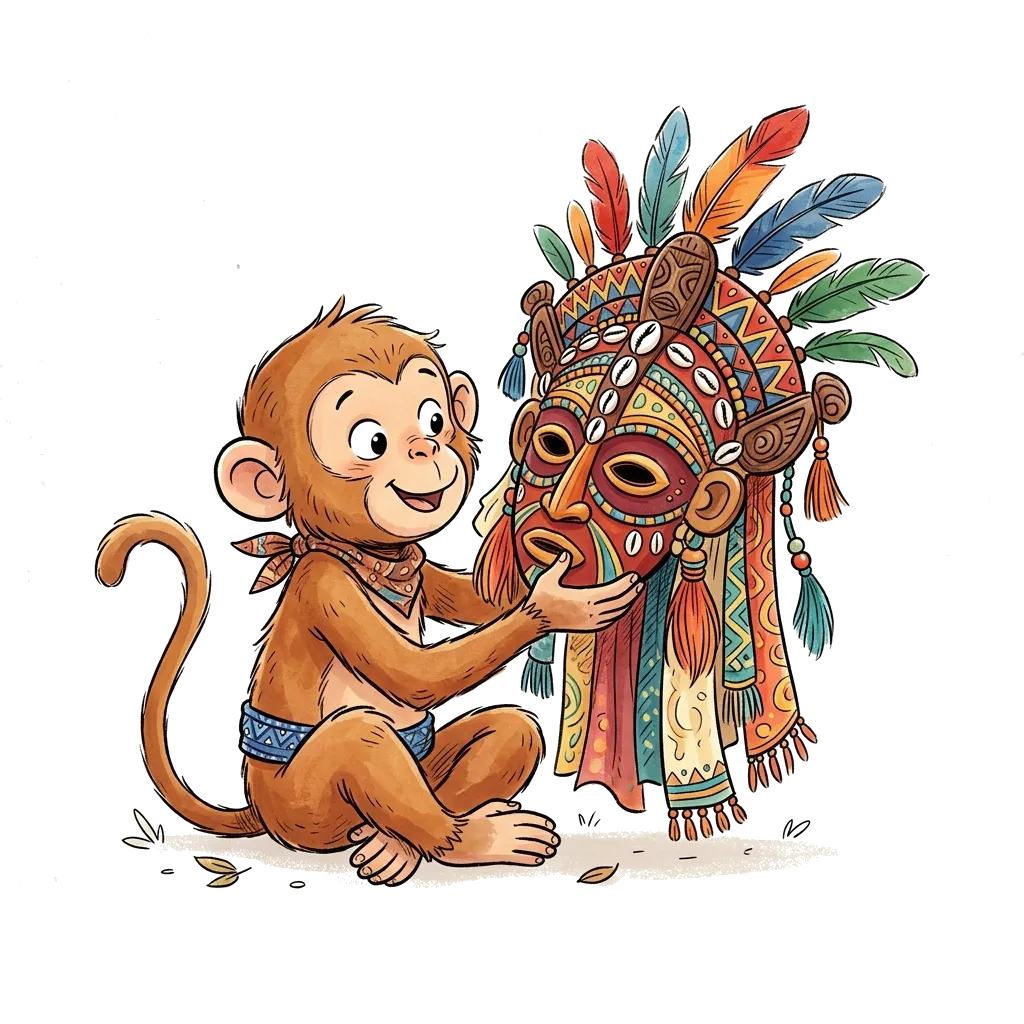
- Cowrie shells and beads sewn onto the costume are offerings to the spirits.
- The fringes that hide the face are a reminder that the Egungun is not a person but a spiritual entity.
The mask (for no human face is visible) is a cone of fabric that whirls and vibrates when the spirit enters trance. The sudden movements and rapid spinning are meant to purify the air of negative influences. Touching an Egungun is strictly forbidden to the uninitiated, as the spiritual charge is considered too powerful.
What guides do not always mention: some Egungun speak. Their voice is altered by a device held in the mouth, producing a deep, resonant sound that belongs to neither the living nor the dead. Hearing this voice for the first time is an experience that stays with you.
The returning spirit ceremony
An Egungun appearance is a ceremonial event governed by ancestral codes. It typically unfolds in several stages:
- The invocation: the Bata drums begin complex rhythms that call the spirits. Their deep, syncopated sounds create a vibrating atmosphere. The rhythm changes according to the ancestor invoked: each lineage has its own sequences.
- The appearance: the Egungun bursts out of the sacred enclosure, often running or spinning. Its arrival is greeted by songs and shouts from the attendees. The air seems to thicken.
- The dance: each Egungun performs a choreography specific to its family. Some salute the elders, others bless houses by stopping at doorways.
- The blessing: when an Egungun stops before a home, it brings prosperity and protection. Residents approach to make their requests to the ancestors. Sometimes the Egungun responds, in that otherworldly voice.
- The withdrawal: after hours of dancing, the Egungun retreats into the sacred enclosure where the spirit is escorted back to the other world.
The ceremony can last several hours, or even an entire day during major annual festivals. Participants do not eat during this time.
When and where to attend: the ancestors' calendar
Egungun appearances follow a calendar that has nothing to do with tourism. They are linked to the seasons, family events (funerals, weddings) and religious festivals. The most favorable periods are:
- January to March: after the harvest, a time of many ceremonies
- August to September: end-of-rainy-season celebrations
- Occasional festivals: funerals of dignitaries, installations of chiefs
The best way to attend a ceremony is through a local guide or Villa Karo, the cultural center that conducts in-depth research on masks and local traditions. Villa Karo guides maintain trusted relationships with Grand-Popo's Egungun families, opening doors that would otherwise remain closed to outsiders.
When the ancestors arbitrate: community role
The Egungun play an essential social role in Grand-Popo. Beyond the spiritual dimension, they are mediators in family conflicts, guardians of genealogical memory and moral arbiters. A person who lies or steals may be confronted by the Egungun, who hold the power to reveal hidden truths.
This system of traditional justice coexists with modern justice and is respected by the community. The Egungun remind us that the ancestors are watching and that social harmony rests on respect for transmitted values.
A detail few travelers imagine: the Egungun can be convened by families to settle inheritance disputes. Their verdict, pronounced before witnesses, carries a symbolic force that sometimes no court can equal. This is not superstition. It is an institution. And like all institutions, its authority depends on collective belief sustained across generations.
Etiquette and photos: what you must know before attending
Observe these rules without exception if you wish to attend a ceremony:
- Always ask permission before filming or photographing. Certain moments of the ritual are strictly secret.
- Keep your distance: never touch an Egungun. The spiritual charge is considered dangerous for the uninitiated.
- Dress appropriately: avoid short or irreverent clothing. A pagne tied at the waist is a sign of respect.
- Do not point: in local culture, pointing at someone is rude.
- Follow your guide's instructions: they know the customs and will save you from unintended offense.
If an Egungun approaches you, do not step back abruptly. Stay calm, lower your eyes and let your guide handle the situation. This is not a threat. It is an acknowledgment.
Egungun and Vodun: two worlds in conversation
Although the Egungun originate from Yoruba tradition, they coexist harmoniously with local Vodun. In Grand-Popo, the same families may honor Egungun masks and Vodun deities. This religious symbiosis testifies to the region's syncretic genius.
Both systems share a fundamental conviction: the dead do not disappear. They change form, change world, but continue to influence the living. In Grand-Popo, this belief is not metaphorical. It is seen, heard and felt.
To go deeper, discover our article on Vodun in Grand-Popo and the one on the Zangbeto, guardians of the night.
FAQ
When does the Egungun ceremony take place? Appearances follow a traditional calendar, mainly between January and March and August to September. Consult a local guide for exact dates.
Can I photograph the Egungun? Yes, but only with explicit permission from the cult guardians. Certain parts of the ritual are off-limits to photography.
Are the Egungun dangerous? No for respectful visitors. The Egungun embody the ancestors and their spiritual power is respected, but they pose no threat to tourists who follow the rules of propriety.
What is the difference between Egungun and Zangbeto? The Egungun are masks of Yoruba tradition representing returning ancestors. The Zangbeto are night guardians of Ogu and Xwla tradition. The former honor the dead, the latter protect the living.
Plan Your Visit
Discover the magic of Grand-Popo with our curated local experiences.