





What is the Vodun Festival
The Vodun Festival is the most important religious celebration in Benin. Every January 10, the entire country honours its ancestral deities in a day of ceremonies, dances and offerings. In Grand-Popo, on the Atlantic coast, this national holiday takes on special intensity.
Vodun is the traditional religion of southern Benin, practised by a majority of the population. The January 10 festival is an opportunity for communities to gather, venerate their deities and transmit ancestral knowledge to younger generations. It is not a performance mounted for outside eyes. It is a living act of faith — as personal as a prayer, as collective as a harvest.
To understand the spirituality that animates this celebration, read our complete article on Vodun in Grand-Popo. You will discover the pantheon of deities and the role of priests in society.
The date of January 10 was not chosen at random. In the Vodun calendar, this day marks a transition between the dry and wet seasons, a period when communication with the spiritual world is considered more accessible. Vodun priests determine each year the precise rituals to perform by consulting Fa, the sacred divination system. The specific offerings, the order of ceremonies and even the colours worn may differ from one year to the next, depending on what the oracle prescribes. This is why attending the festival twice, in different years, can feel like attending two different events.
Origins and official recognition
Long repressed by Christian missionaries and colonial administration, Vodun was officially recognised as a religion in Benin in 1996, under the presidency of Nicephore Soglo. January 10 was declared a national public holiday, on the same level as Christmas or Ramadan.
This recognition marked a reconciliation with the country's spiritual identity. President Thomas Boni Yayi and, later, Patrice Talon participated in official ceremonies, consecrating Vodun as a pillar of Beninese culture. The shift was more than symbolic. It opened space for practitioners who had kept their faith alive through generations of stigma and prohibition. Convents that once operated in the shadows could at last celebrate openly, passing their knowledge to the young without fear.
Grand-Popo has always been an important centre of Vodun. The town has several convents, influential priests and a community of practitioners who have perpetuated the rites for generations. The January 10 festival is celebrated here with particular authenticity. The smaller scale compared to Ouidah means that visitors encounter ceremonies at close range — not separated by crowd barriers, but woven into the life of the neighbourhood streets.
Before 1997, the January 10 ceremonies still happened. Families found ways to observe them — smaller gatherings, less visible, in courtyards away from main roads. The official recognition did not create the faith. It removed the need for concealment. The elders who celebrate openly today are the same people who learned the rituals in conditions that required courage.
Ceremonies in Grand-Popo
In Grand-Popo, the Vodun Festival begins well before January 10. From the first week of the month, preparations are in full swing: families clean the altars, priests consult Fa to determine appropriate offerings, initiates adorn themselves in ceremonial clothes. The altars themselves are repainted, fresh objects placed, the surrounding area swept clean. The week before January 10 has its own particular energy — quieter than the festival itself, but charged with anticipation.
Ceremonies vary by neighbourhood but follow a common pattern. Each of the elements below carries centuries of accumulated meaning. Watching them unfold in silence — without trying to photograph or explain — is itself a form of participation.
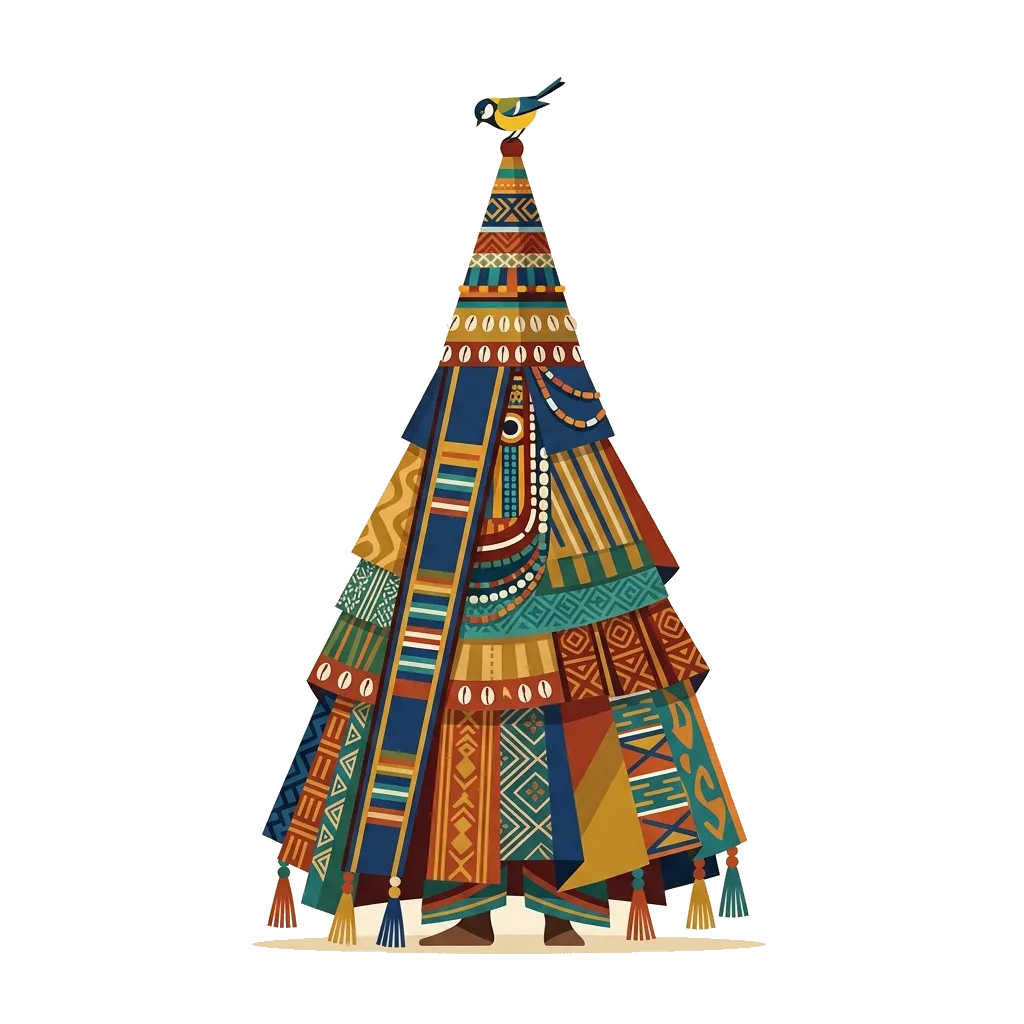
Zangbeto dances — the night guardians emerge from their hiding places to dance in the streets. Their raffia costumes, several metres high, whirl to the rhythm of drums. The Zangbeto are the community's protectors and their appearance is always an intense moment. The spinning accelerates until the massive silhouette seems to move without human agency — a sight that draws gasps even from those who have witnessed it many times.
Egungun masks — ancestors return in the form of colourful masks. Their dances tell the history of families and clans. The Egungun speak in a language that only initiates understand. When they pause beside a family member in the crowd, the exchange is private and charged with emotion.
Offerings to Legba — Legba, the messenger of the gods, is honoured first. Without him, no prayer can reach the other deities. He is offered palm wine, coconut, grilled maize. The care with which each offering is placed reflects a theology of relationship: Vodun deities are not distant abstractions but active presences who must be tended.
Possessions — as the hours pass, the drums accelerate. Initiates enter trance, possessed by the spirit of their deity. This is neither a spectacle nor a performance: it is the beating heart of Vodun faith. Those who receive a spirit do not recall the experience afterward; their bodies serve as vessels, and what the community witnesses is considered a genuine divine visit.
The day's schedule
6am - 8am — families go to family altars for morning offerings. Priests bless the compounds. The smell of incense drifts through alleys still cool from the night.
8am - 10am — public ceremony on the main square. Priests from different neighbourhoods gather. Drums and songs rise.
10am - 12pm — Zangbeto and Egungun dances. Procession through Grand-Popo's main streets.
12pm - 2pm — break. Family meal. Traditional dishes are shared. This pause is itself meaningful: eating together with ancestors honoured in absentia is an act of communion.
2pm - 4pm — divination consultations. Priests receive those wishing to know the future or seek advice.
4pm - 6pm — ceremony at the water's edge for Mami Wata, deity of the oceans. Offerings of fruit and flowers thrown into the lagoon.
6pm - 8pm — closing. Thanks to the deities. Ritual cleaning of public spaces.
8pm - midnight — drums continue in the convents. The celebration continues among initiates in an atmosphere of communion. Vodun songs resonate in the night, carried by the lagoon winds. It is a moment of closure, but also of transmission: the elders teach younger ones the words of sacred songs.
After midnight — calm gradually returns to Grand-Popo. Altars are stored away, costumes carefully preserved until the following year, and the community gathers for one last shared meal.
The exact programme may vary by year and neighbourhood. Each community adapts the schedule to its own traditions. Ask at the tourist office a few days before your visit for the detailed programme of the current year.
Where to attend
The Vodun Festival is celebrated throughout Benin, but some places are more significant than others:
Grand-Popo — ceremonies take place on the central public square, by the lagoon and in the different neighbourhoods. The atmosphere is both solemn and festive. Grand-Popo has the advantage of being less crowded than Ouidah, allowing for more intimate moments. You can follow a procession from beginning to end without being swept off course by the crowd.
Ouidah — the neighbouring town organises grand ceremonies on Place Chacha, but the crowds are considerable.
Cotonou — the capital hosts an official ceremony with the authorities, more protocol-based.
Possotomé and the northern Mono bank — for those seeking an off-the-beaten-track experience.
Our page on events and festivals in Grand-Popo will help you plan your stay around this date.
At Possotomé (on the northern Mono bank), the festival is more intimate and takes place around the local Vodun convent. An interesting option if you seek a less touristy atmosphere.
At Hilacondji (border post with Togo), the celebration blends the communities of both countries in a spirit of cross-border sharing.
Visitor tips
Before attending, take time to read about Vodun's structure and beliefs. The ceremonies will be far richer if you arrive with some understanding of who Legba is, why white is worn, what a possession actually means within the tradition. Preparation is a form of respect.
Book your accommodation early — January 10 attracts visitors from all over Benin and the diaspora. Accommodation in Grand-Popo is fully booked several weeks in advance. Book from November or December.
Arrive the day before — preparations begin on January 9. Arriving the day before lets you soak up the atmosphere and find your bearings.
Dress appropriately — covering clothing, sober colours (white ideal). Avoid shorts and beachwear. You are attending a religious ceremony.
No excessive alcohol — the celebration is sacred before being festive. Drunkenness is frowned upon.
Photograph with respect — always ask permission before taking a photo, especially of initiates in a state of possession. Do not film without explicit agreement.
Do not touch the costumes — Zangbeto and Egungun costumes are sacred. Touching them is a serious offence.
Follow a guide — a local guide will help you understand what you see and avoid social missteps. Expect 10,000-15,000 FCFA (15-23 EUR) for a half-day. The investment pays for itself many times over.
Leave an offering — a small financial contribution to the ceremony (2,000-5,000 FCFA, 3-7.5 EUR) is welcome.
Two things that guidebooks never mention: bring water in a bag you can close. Ceremonies can last several hours in full sun, and there are rarely water sellers nearby during the most sacred moments. And eat breakfast. A solid meal at 6am before you leave is worth more than any other preparation.
Calendar
January 10 is a fixed date each year, making planning easy. Here is the upcoming schedule:
- 2027: Sunday, January 10
- 2028: Monday, January 10
- 2029: Wednesday, January 10
- 2030: Thursday, January 10
Main festivities take place on the day itself, but related events often extend over the preceding or following weekend. Adjacent Mondays or Fridays are sometimes holidays for schools and administrations.
To plan your trip around this date, see our page when to visit Grand-Popo which details the seasons and events of the year.
FAQ
Is the Vodun Festival open to tourists?
Yes, public ceremonies are open to all. Tourists are welcome as long as they respect local codes (appropriate dress, discretion, respect for beliefs).
Can I film and photograph?
Yes, but with permission. Ask before pointing your device. Some moments — particularly possessions — are considered too sacred to be filmed. A guide will indicate the right moments.
Is the festival dangerous?
No. The Vodun Festival is a peaceful family and religious celebration. As with any large gathering, stay alert to your belongings and follow organisers' instructions.
Do I need to be initiated to participate?
No, public ceremonies on the square are accessible to all. Only rituals in the convents are reserved for initiates, but they are not open to the public anyway.
Can children attend?
Yes, families come with their children. It is an intergenerational celebration. Children discover their culture and learn traditions.
What budget should I plan for the day?
Access to public ceremonies is free. Budget for offerings (2,000-5,000 FCFA), a meal with a local family (3,000-7,000 FCFA) and possibly a guide (10,000-15,000 FCFA).
Plan Your Visit
Discover the magic of Grand-Popo with our curated local experiences.