




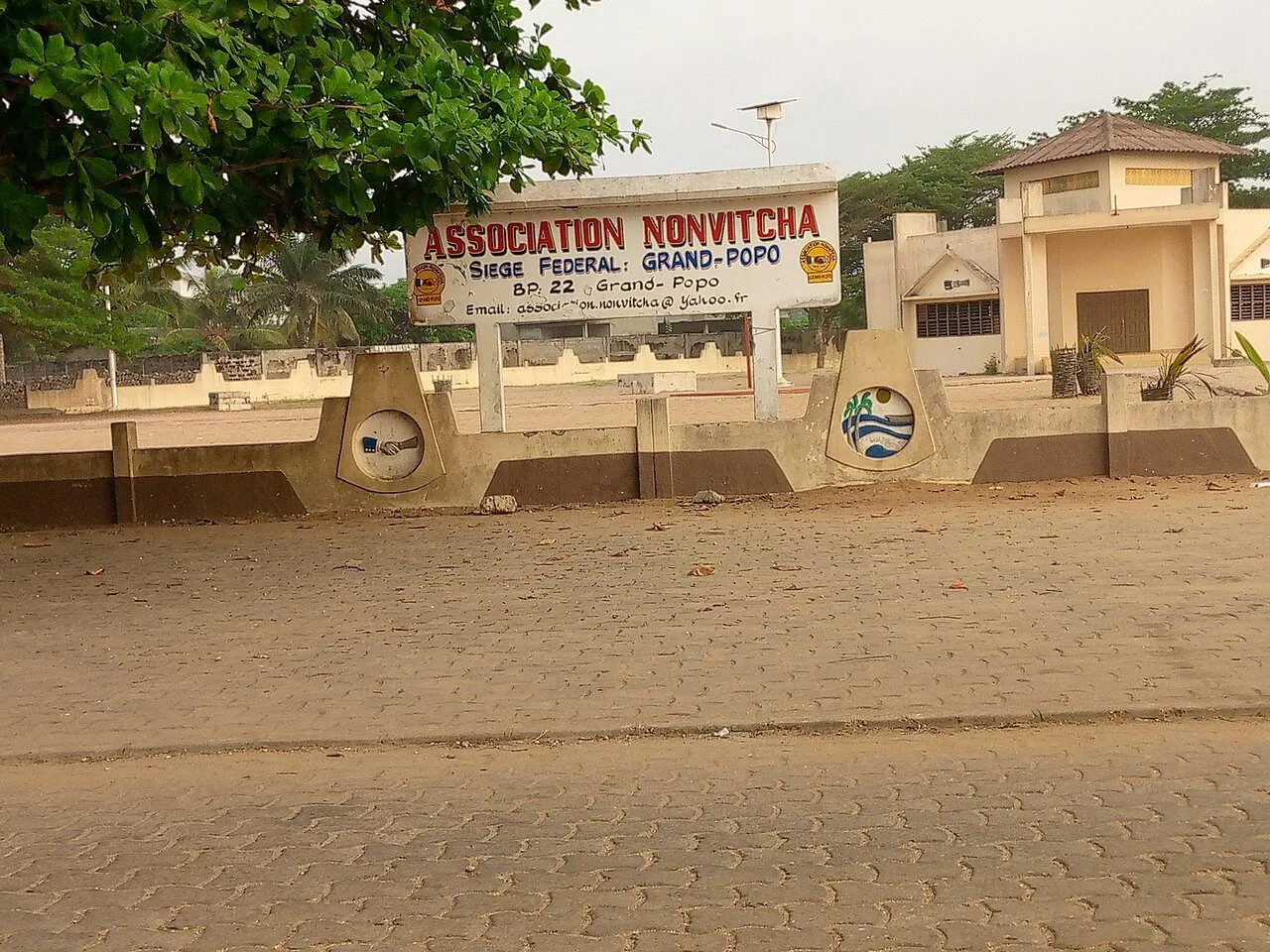
The Nonvitcha Festival is one of the most important cultural events in Grand-Popo. This great celebration of the Popo people brings together, every two years, communities from this region of Benin and Togo, as well as their diaspora from the Americas, Europe and Central Africa. It is a moment of reunion, identity reaffirmation and cultural transmission, where joy and fervour mix in a whirlwind of colours, dances and music.
For a traveller, attending Nonvitcha is total immersion in the living culture of Grand-Popo, far from cliches and tourist shows. It is a chance to share authentic moments with locals and understand the depth of the bonds uniting this people with their history and roots.
Before exploring the festival, dive into our guide to events and festivals in Grand-Popo to discover the complete cultural calendar of the destination.
What is Nonvitcha
Nonvitcha literally means "the festival of the Popo" in the language of the same name. The Popo people are a cultural and linguistic community spread between southwestern Benin and southeastern Togo, with Grand-Popo as one of their most important historic centres. The Nonvitcha Festival was born from the desire to celebrate and preserve this shared identity.
The festival is far more than a simple celebration: it is an identity gathering that allows the Popo to come together, exchange, transmit their traditions to younger generations and strengthen ties with the diaspora. The people of Grand-Popo, Heve, Adjaha and surrounding villages prepare for months for this event. Preparation is visible in the months preceding the festival: new costumes sewn in family courtyards, troupes rehearsing in the early mornings before the heat builds, elders teaching the youngest the old songs.
Nonvitcha takes place every two years, generally during the dry season, between July and August. The festival lasts 3 to 5 days, depending on the edition and programme established by the organising committee.
Between editions, the anticipation itself is part of the festival. Families compare notes from the last time. Troupes adjust their choreography based on what worked and what didn't. Young dancers who were children at the previous edition are now stepping into serious roles. The two-year interval is not an absence — it is a preparation.
Origins and meaning
The origins of Nonvitcha go back to the desire of Popo communities to maintain their unity and cohesion in the face of historical upheavals. The slave trade, colonisation, the partition between Benin and Togo, rural exodus — all scattered the Popo people to the four corners of the world. The festival was born from the need to mend this frayed identity fabric.
The name "Popo" itself has a complex history. According to oral traditions, it originally designated the inhabitants of the coast between the Mono and Volta rivers. The Portuguese, then other Europeans, used this term for the populations of this coastal region. Today, the Popo proudly reclaim this name, and Nonvitcha is the occasion to celebrate this rediscovered identity.
The festival is also a message of hope and reconciliation. By welcoming the diaspora, the Popo reconnect with the descendants of those torn from their land during the slave trade. Nonvitcha is a bridge between the shores of the Atlantic, a hand extended across the centuries.
To understand the broader cultural context of this celebration, our guide to Grand-Popo's culture and heritage explores the different traditions that make up the region's identity.
Festival programme
The Nonvitcha programme is rich and varied, blending ancestral traditions with contemporary expressions. Here are the highlights of a typical edition.
Opening ceremonies set the tone. Customary authorities, village chiefs and diaspora representatives make speeches, libations are offered to ancestors, and sacred drums sound for the first time. The moment when the first drums begin is unmistakable — a silence falls over the square, then the sound arrives and the crowd seems to exhale and inhale simultaneously.
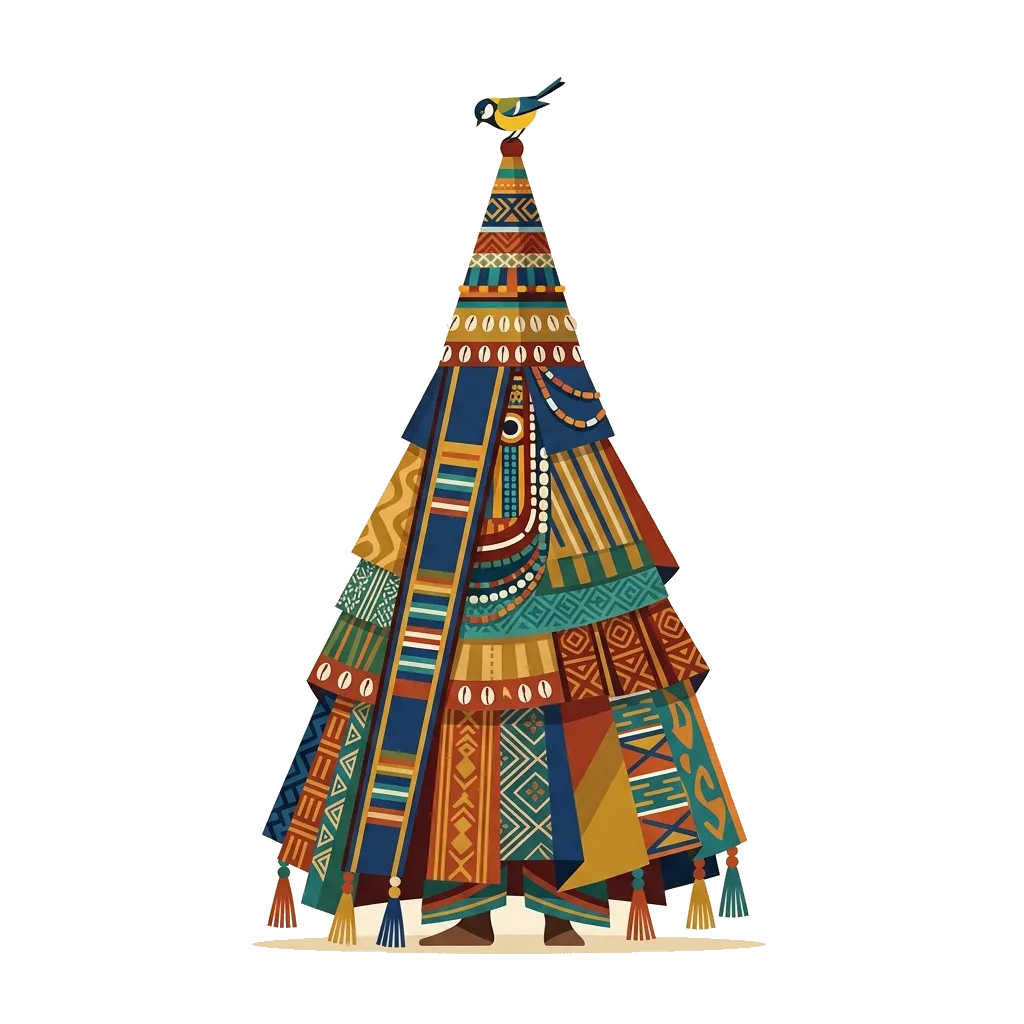
Traditional dance competitions are the heart of the festival. Each village presents its best dancers in spectacular costumes blending traditional fabrics, beads, feathers, cowries and masks. Troupes compete in creativity and energy, encouraged by the audience.
Music concerts bring together local and international artists. Traditional rhythms meet modern influences, creating a unique soundtrack blending percussion, vocals, guitar and sometimes even electronic sounds.
Conferences and debates address themes related to Popo identity, the region's history, the diaspora and local development. Academics, artists and civil society actors exchange their views.
Craft exhibitions showcase the know-how of Popo artisans: weaving, sculpture, pottery, basketry, jewellery.
Fashion shows present contemporary creations inspired by Popo clothing traditions.
Sporting competitions and children's entertainment complete the programme, making Nonvitcha a festival for the whole family.
The evenings are worth staying up for. After the formal programme closes, music continues informally at Lion Bar and in the courtyards of families hosting diaspora visitors. These are the hours when the festival becomes conversation — between cousins who have just met, between elders who remember names the others have only heard, between a continent and its scattered children.
Dances and music
Dances are the soul of the Nonvitcha Festival. Each dance tells a story, expresses an emotion, honours ancestors or celebrates life. The costumes are sumptuous: dancers wear brightly coloured wraps, bead necklaces and sophisticated headdresses. Dancers sport traditional outfits adorned with geometric patterns.
The music is carried by drums, the reigning instruments of Popo tradition. Tam-tams of different sizes, shoulder drums, tambourines and wooden percussion create an enchanting polyrhythm that carries dancers and spectators alike. There is a specific quality to Popo drumming that becomes clearer once you have heard it for an hour: the rhythms do not sit still. They shift, subdivide, and re-emerge altered, as if the music is working something out rather than simply repeating.
Songs accompany each dance. The texts, in the Popo language or Fon, tell the history of the people, the exploits of ancestors, the joys and sorrows of life. Lead singers, seated at the centre of the circle, are joined by the village women's choir.
The festival is also a chance to hear rarer instruments: gankogui (iron bell), axatse (calabash rattle), kaganu (small drum) and reed flutes.
During the dance competitions, the crowd is not passive. It responds. A particularly precise footwork sequence draws a sharp intake of breath, then an explosion of sound. An older dancer who has lost none of her power — the crowd feels it and says so, loudly. The dancers perform for their community, and the community knows how to receive them.
To go deeper, our guide to music and dance in Grand-Popo explores the rhythms and musical traditions of the region.
The diaspora returns
One of the most moving aspects of Nonvitcha is the return of the diaspora. Entire families from the Americas (Brazil, United States, Caribbean), Europe (France, Belgium, Germany) and Central Africa make the journey to reconnect with their roots.
For many, it is the first time they set foot on the soil of their ancestors. Arrival in the village is an emotionally charged moment: embraces, tears, introductions to cousins never before met. Village elders welcome diaspora members with songs and libations, symbolically reintegrating them into the community.
Special ceremonies are organised for diaspora visitors: presentation of family histories, visits to ancestral sites, initiations to traditions. Some take the opportunity to research their genealogical roots with village elders. An elderly woman from São Paulo kneeling before a man who shares her grandmother's surname, in a courtyard she has never seen, in a language she has been slowly learning for three years — this is what Nonvitcha makes possible.
Nonvitcha is also a moment of reflection on the history of the slave trade and the bonds uniting Africa with its diasporas. Discussion circles and memory ceremonies are organised, in a spirit of reconciliation and reconstruction.
For travellers not from the diaspora, witnessing these moments is a lesson in humanity and history. Our article on the Slave Route in Grand-Popo addresses this memory with the respect it deserves.
When and where
The Nonvitcha Festival takes place every two years, generally in July or August. Exact dates are set by the organising committee and announced several months in advance. For the next dates, contact our team or follow announcements on social media.
The festival is held mainly in Grand-Popo, but events may take place in surrounding villages. The heart of the festivities is around the central public square, with stages set up in different neighbourhoods.
Opening and closing ceremonies are generally organised on the main market square. Dance competitions take place on purpose-built stages. Concerts happen in the evening at various locations around town.
Grand-Popo's accommodation capacity being limited, it is strongly recommended to book several weeks in advance for Nonvitcha. See our Grand-Popo accommodation guide to choose your lodging.
Coming to Nonvitcha
Planning your trip to the Nonvitcha Festival takes some organisation, but the experience is well worth it.
Transport. Access to Grand-Popo is from Cotonou (1h30-2h) or from Lomé in Togo via the Hilacondji border (30 min from Grand-Popo). During the festival, shuttles are sometimes organised between accommodations and festival sites. Our guide how to get to Grand-Popo details the options.
Accommodation. Book as early as possible. Hotels, ecolodges and guesthouses fill up weeks in advance. Home stays are an authentic and economical option. Local hosts often provide meals, which is one of the best ways to experience Popo cooking during the festival period.
Budget. Festival entry is generally free or low-cost (2,000 to 5,000 FCFA, 3 to 8 EUR). Bring cash for purchases, offerings and tips.
Attire. Dress lightly but respectfully. A traditional wrap or clothes in local colours are appreciated. Bring a hat, water and sunscreen for outdoor ceremonies.
Arrive at least two days before the opening if you can. The town transforms as it fills. Families repaint walls. Musicians tune instruments in public. Women prepare food in enormous quantities, cooking spread across three generations on the same fire. The festival does not start when the official programme says it starts. It starts when the first diaspora relative walks into the village courtyard and someone who has been waiting four years finally embraces them.
FAQ
When does the Nonvitcha Festival take place? Every two years, generally in July or August. Exact dates are announced several months in advance.
Is the festival free? Outdoor ceremonies are generally free. Some concerts or special events may charge a fee (2,000 to 5,000 FCFA / 3 to 8 EUR).
Can I take photos? Yes, but with respect. Always ask permission before photographing participants, especially during spiritual moments.
Is the festival suitable for children? Yes, plenty of activities are planned for children. It is a family celebration.
How do I get from Cotonou? By private taxi (20,000-30,000 FCFA / 30-46 EUR) or bush taxi (1,500-2,500 FCFA / 2-4 EUR). The journey takes 1h30 to 2h.
Plan Your Visit
Discover the magic of Grand-Popo with our curated local experiences.