





Are you planning a trip to Grand-Popo with questions on your mind? This Grand-Popo FAQ brings together the 25 most common questions travellers ask, with practical, up-to-date answers. Whether you need to know about visa requirements, budgeting or getting around, you will find everything here. For a broader overview, see the complete Grand-Popo guide.
What you need to know before booking your trip
Where exactly is Grand-Popo?
Grand-Popo is a coastal commune in southwestern Benin, located about 60 kilometres from Lomé (Togo) and 90 kilometres from Cotonou. It stretches between the Atlantic Ocean and the Mono River, which marks the border with Togo. The town sits roughly midway along the coastline, making it a natural stopover for travellers exploring both countries. A typical itinerary combines Grand-Popo with Ouidah (45 minutes east) and either Cotonou or Lomé as an arrival and departure point.
What is the best time to visit Grand-Popo?
The dry season, November to March, offers the best climate: temperatures around 30 degrees C, low humidity and little rain. The harmattan wind blows from the north in December and January, keeping evenings fresh and the sky clear. The rainy season (April to October) makes tracks muddy but the landscapes greener and the lodges quieter. August offers an interesting compromise: the Nonvitcha festival takes place then, with pleasant temperatures and significantly lower rates. See our season guide for month-by-month detail.
How long should I stay in Grand-Popo?
Four to seven days allows you to cover the essentials: beaches, river excursions, local culture and a day at Bouche du Roy. Three nights is the minimum to feel the rhythm of the place rather than just passing through. Travellers combining Grand-Popo with Ouidah or Cotonou often stay 2 to 3 nights and find it too short. A week gives you space to slow down, which is precisely the point.
Is Grand-Popo suitable for solo travellers?
Yes. The town is small and easy to navigate on foot or by zemidjan. Solo travellers, including women travelling alone, report feeling comfortable here. The local population is accustomed to visitors and interactions are generally warm and unhurried. Joining a guided excursion is an easy way to meet other travellers if you prefer company. Your lodge can usually connect you with other guests heading to the same sites.
Visa requirements and entry documents for Benin
Do I need a visa for Benin?
Most African, European and American nationals can obtain a visa on arrival at Cotonou airport or an e-visa via evisa.gouv.bj. The tourist visa costs 12,000 FCFA (18 EUR) for a 30-day stay, renewable once. Processing the e-visa online takes 48 to 72 hours, so apply before you travel to avoid queues at the airport. ECOWAS nationals do not need a visa.
What documents are required?
Passport valid at least 6 months after your return date, visa obtained before or on arrival, and a mandatory yellow fever vaccination certificate. A copy of your accommodation booking may be requested at border control. Having a printed copy of your e-visa confirmation saves time and prevents you from depending on mobile data at the arrivals hall.
Is yellow fever vaccination mandatory?
Yes, yellow fever vaccination is mandatory for entry to Benin. Your international vaccination certificate (the yellow booklet) will be checked at border control and occasionally at internal checkpoints. Get vaccinated at least 10 days before departure for the immunity to take full effect. Hepatitis A, typhoid and tetanus vaccines are strongly recommended alongside it. Consult your doctor or travel health clinic at least four weeks before departure.
Is a COVID PCR test still required?
No, no COVID-19 related health restrictions are in effect in Benin since 2023.
Currency, ATMs and what to budget per day
What currency is used in Grand-Popo?
The CFA franc (FCFA) is the local currency. 1 euro = 656 FCFA (fixed rate guaranteed by the French Treasury). Euro cash is accepted at some hotels and restaurants, but at a less favourable rate. US dollars are rarely accepted outside of large hotels in Cotonou.
Can I pay by card?
Visa and Mastercard are accepted at mid-range and upscale hotels, and at a few waterfront restaurants. For small shops and Avlo market, cash is essential. The town has one ATM, located on the main road in Avlo near the petrol station. It accepts international Visa cards and is generally reliable, but carries a withdrawal limit of around 150,000 FCFA per transaction. Bring enough cash from Cotonou to cover several days in case of technical issues. MTN Mobile Money is widely accepted by local vendors, zemidjans and some guesthouses as a practical cashless alternative.
What is the minimum budget for a stay?
A budget traveller spends about 15,000 to 25,000 FCFA per day (23 to 38 EUR) including basic accommodation, local meals and transport. A comfortable budget is around 35,000 to 55,000 FCFA per day (53 to 84 EUR) with a charming ecolodge, local restaurants and one activity. For a detailed breakdown by category, see our budget guide.
Should I tip?
A tip of 1,000 to 2,000 FCFA (1.50 to 3 EUR) for a guide or driver is appreciated and considered polite. In restaurants, 5% to 10% of the bill is common if service is not included. For a pirogue excursion with a local fisherman, rounding up the agreed price by 1,000 to 2,000 FCFA is a generous and welcome gesture. Tipping is not expected for every small transaction: reserve it for service that genuinely impressed you.
Can I exchange money in Grand-Popo?
There is no official bureau de change in Grand-Popo itself. Change your euros or dollars before leaving Cotonou, where banks and licensed exchange offices are easy to find near the airport and in the Haie Vive district. Some lodge owners will exchange small amounts informally, but rates vary. Arriving with FCFA already in your pocket removes a significant source of stress on arrival day.
Health precautions and vaccination requirements
Is malaria present in Grand-Popo?
Yes, malaria is endemic throughout Benin's coastal region and present year-round. Start your prophylactic treatment before departure (consult your doctor at least 4 weeks ahead), sleep under a mosquito net impregnated with permethrin and apply repellent containing DEET in the evenings. Mosquito activity peaks around dusk and in the first two hours after dark.
Is tap water drinkable?
No, tap water is not potable in Grand-Popo. Drink only bottled water (500 FCFA / 0.76 EUR per 1.5 litres) or filtered water. Tourist hotels generally provide drinking water or a filter for their guests. Avoid ice cubes in drinks at local stalls unless you know the water source. Buy bottled water at grocery shops rather than at lodge bars, where the same bottle can cost three times more.
Is Grand-Popo a safe destination?
Grand-Popo is very safe. Violent crime is virtually non-existent. As anywhere, avoid leaving valuables visible on the beach and watch your belongings in busy markets. The local police station is on the main road in Avlo, with a recognisable blue gate. See our safety tips for more detail, including swimming precautions.
What should I do if I get sick?
A small pharmacy near the Avlo market stocks basic medications including antimalarials and rehydration salts. The local health centre on the main road handles consultations and minor ailments. For anything more serious, Cotonou has competent private clinics about 2 hours away. Travel insurance covering medical evacuation is strongly recommended. Carry a basic kit: rehydration salts, paracetamol, antidiarrhoeal medication and antihistamines.
Where to sleep and when to book
What types of accommodation are available in Grand-Popo?
Options range from basic camping (5,000 FCFA / 8 EUR per night) to charming ecolodges (40,000 to 80,000 FCFA / 61 to 122 EUR). Mid-range includes guesthouses and small family hotels from 15,000 to 30,000 FCFA (23 to 46 EUR). Most lodges are located along the waterfront, within walking distance of the beach. Booking directly via WhatsApp often gets you a better price than online platforms.
Do I need to book in advance?
In high season (December to March), booking is strongly recommended several weeks ahead, especially for the most popular lodges which fill up quickly around Vodun Day on 10 January and year-end celebrations. The rest of the year, finding a room on the day is generally possible, though calling ahead saves time. For stays of five nights or more, asking for a reduced rate when you contact the lodge directly is perfectly normal and often succeeds.
Which area should I choose based on my budget?
The waterfront concentrates mid-range and upscale lodges with direct beach access. The town centre (Avlo) offers budget accommodation within walking distance of the market and services. The Mono riverbanks provide immersive ecolodges for travellers seeking nature and quiet. See the neighborhood map to compare your options visually.
Getting around Grand-Popo and reaching it from Cotonou
How do I get to Grand-Popo from Cotonou?
From Cotonou, allow 2 to 2.5 hours by car or bush taxi on the RNIE1 road. The trip costs 3,000 to 5,000 FCFA (5 to 8 EUR) by shared transport departing from Dantokpa station in the Zongo district, or 25,000 to 35,000 FCFA (38 to 53 EUR) by private taxi. Leave before 9am for the smoothest journey. See our access guide for departure points, crossing details and arrival tips.
What local transport is available?
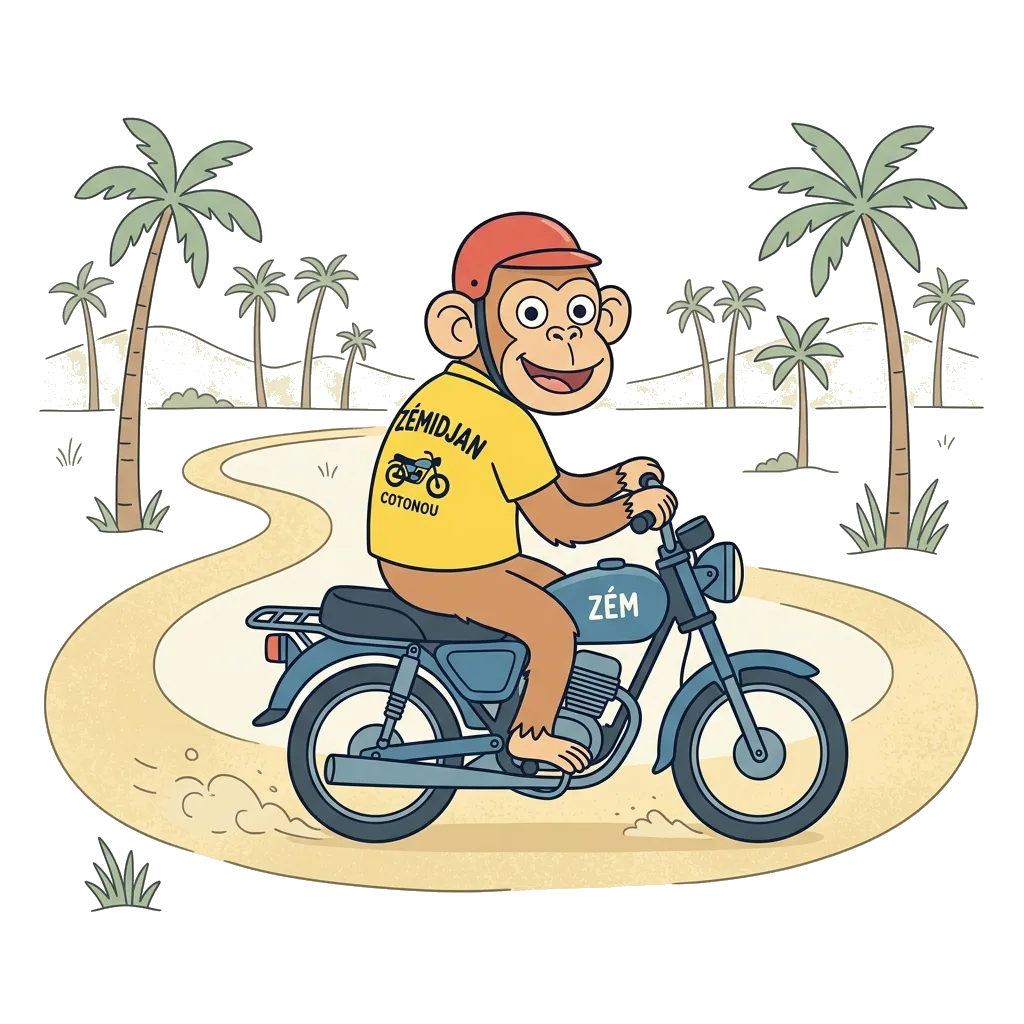
The zemidjan (motorbike taxi) is the most common transport: 200 to 500 FCFA (0.30 to 0.76 EUR) per trip in town. Always agree on the price before getting on, and say "prix local" to avoid tourist rates. Bicycle rental costs 3,000 to 5,000 FCFA (4.60 to 7.60 EUR) per day and is the preferred option for exploring the coast at your own pace. The town is flat and the coastal track manageable even for occasional cyclists.
Can I rent a car?
Car rental with driver is available through lodges or agencies in Cotonou. Coastal tracks, particularly west of Lion Bar toward Bouche du Roy, require a vehicle with sufficient ground clearance. Expect 30,000 to 50,000 FCFA (46 to 76 EUR) per day with driver. Renting a scooter independently is possible but requires a valid international licence and prior experience with unpaved roads.
Local customs, photography and dress code
What is the main religion in Grand-Popo?
Vodun is the dominant traditional religion, practised alongside Christianity and Islam. Vodun ceremonies, particularly on 10 January (National Vodun Day), are major events in local life. During these periods, the town fills with colour, sound and ritual. Street processions are open to respectful observers. Family ceremonies and convent ceremonies are generally not open to outsiders without an explicit invitation.
What photos can and cannot I take?
Photographing landscapes and street scenes is generally welcome. Always ask permission before photographing a person, a Vodun altar or a ceremony. A small gesture of 500 FCFA (0.76 EUR) is courteous when photographing someone at the market or on the beach. Photographing Vodun convents, masked ceremonies or ritual objects without explicit permission from the officiant is considered deeply disrespectful and can create serious friction.
Is there a dress code?
On the beach, swimwear is fine. In villages, markets and places of worship, clothing covering shoulders and knees shows respect for local customs and avoids unwanted attention. Lightweight linen or cotton works well in the heat. During Vodun ceremonies, dress conservatively regardless of your location within town.
Speaking French and staying connected
Is French spoken in Grand-Popo?
Yes, French is the official language and widely spoken, especially by younger people and traders. Local languages are Xwla and Gun. A few words of effort in French go a long way: even basic phrases like "bonjour" and "merci" open doors and shift the tone of interactions. English is beginning to be spoken at tourist hotels, though do not count on it in markets or residential areas.
Does the mobile network work well?
Yes, MTN and Moov offer good 4G coverage in the coastal and urban area. Coverage becomes patchy on isolated tracks west of Lion Bar toward Bouche du Roy. Buy a local SIM card on arrival at Cotonou airport or at any phone shop in Avlo for advantageous rates. A data SIM with 5 GB costs around 2,000 to 3,000 FCFA (3 to 4.60 EUR) and is far more reliable than depending on lodge WiFi.
Can I use WhatsApp to communicate with lodges?
Yes, WhatsApp is the primary communication tool for almost all lodges, guides and tour operators in Grand-Popo. Save contact numbers before departure and use WhatsApp for bookings, directions and activity planning. Most establishments respond faster via WhatsApp than by email, often within the hour during business hours.
Best things to do in Grand-Popo
What are the must-do activities?
Pirogue excursions on the Mono River, visiting Bouche du Roy, cycling along the coast, exploring local markets and birdwatching are the highlights. A sunset at Lion Bar with a cold beer and grilled fish is a ritual no visitor skips. Have you considered the salt flats at Adjaha? This guided visit to the ancestral salt harvest is one of the least crowded and most memorable experiences on the coast. See our activities guide for the full list.
Can I see sea turtles?
Yes, from September to January, sea turtles come to nest on Grand-Popo's beaches. Night trips guided by local conservation volunteers allow you to observe nesting without disturbing the animals. Ask your lodge to connect you with a certified conservation guide rather than joining unofficial groups, which sometimes handle turtles carelessly and undermine the protection programs.
Are there cultural guided tours?
Yes, local guides offer tours of Vodun convents, colonial houses and artisan workshops. Expect 10,000 to 15,000 FCFA (15 to 23 EUR) for a 3-hour tour. Two types of guides are available: certified national tourism guides with broad coverage, and community guides who are village members with deeper knowledge of specific rituals and family histories. Your lodge can recommend the right profile depending on your interests.
Is kitesurfing possible in Grand-Popo?
Lion Bar beach is a recognised kitesurfing spot, particularly from December to March when the harmattan blows steadily from the northeast. The flat water behind the sandbar suits beginners, while the open ocean section is preferred by experienced riders. Equipment rental and lessons for 20,000 to 35,000 FCFA (30 to 53 EUR) are available directly at the beach. Confirm availability when you arrive, as operators work seasonal schedules.
Markets, electricity, internet and day-to-day life
Is there a market in Grand-Popo?
Avlo main market is open daily from 7am to 6pm. You will find fresh produce, fabrics, crafts, groceries and street food. Saturday is the busiest day, when producers arrive from neighbouring villages and the stalls extend well beyond their usual rows. The fish section is liveliest in the early morning, just after the pirogues return from the night's catch. Go before 8am for the most animated atmosphere and the freshest produce.
Is internet access reliable?
Quality lodges and hotels offer free WiFi, sufficient for video calls and basic browsing. In the town centre, cybercafes provide access for 500 FCFA (0.76 EUR) per hour. A local data SIM is more reliable than relying on lodge WiFi, especially if you are working remotely or need consistent connectivity for navigation.
What type of power sockets are used?
Type C and E sockets (European) are standard, with 220 V voltage and 50 Hz frequency. Travellers from the UK or US will need an adaptor. Power cuts occur occasionally, particularly during the rainy season or when demand peaks in the evening. Most lodges have backup generators that kick in within a few minutes. Carrying a small portable charger is useful for full beach days or excursions to Bouche du Roy where you will be away from power points for several hours.
Are there pharmacies in Grand-Popo?
One small pharmacy operates in Avlo, stocking basic medications, oral rehydration salts, antimalarials and wound care supplies. The pharmacist can advise on common ailments and dispense without a prescription for routine treatments. For anything beyond routine needs, Comè has a better-stocked pharmacy about 20 kilometres east on the RNIE1. Always bring prescription medications from home rather than relying on local availability, as specific brands may not exist here.
Plan Your Visit
Discover the magic of Grand-Popo with our curated local experiences.