





Welcome to Grand-Popo, one of West Africa's best-kept secrets. Nestled between the Atlantic Ocean and the Mono River, this coastal town offers far more than beach holidays. It is a place where wild nature meets living culture, where time slows to the rhythm of the waves and the fishing pirogues, and where each neighbourhood holds a different chapter of history. This Grand-Popo guide takes you through everything this still-unspoiled destination has to offer, from practical logistics to the deeper story behind what you see.
Where Grand-Popo sits and what surrounds it
Grand-Popo is a coastal town in southwestern Benin, roughly 90 kilometres from Cotonou and just a few minutes from the Togolese border. It stretches along 15 kilometres of shoreline between the Atlantic Ocean and the Mono River, which forms a natural boundary with Togo.
The town is divided into several distinct areas: the waterfront with its beaches and lodges, the historic centre around the market and Villa Karo, and the Mono River banks where local life unfolds. Unlike standardised beach resorts, Grand-Popo has kept its fishing village soul while developing authentic tourism options that put money directly into local hands.
Its location makes it an ideal stop for travellers exploring the region. From Grand-Popo you can reach Ouidah in 45 minutes and visit the Route des Pêches, the Door of No Return and the Python Temple in a single day trip. Cotonou, Benin's economic capital, is about 2 hours east. Lomé, capital of Togo, is 90 minutes west along a coastal road that passes through fishing villages and coconut groves. Further afield, Ganvié, the famous lake village on Nokoué Lake, is about 2 hours by road and boat. Abomey, the historic seat of the Dahomey kingdom and a UNESCO World Heritage site, is roughly 3 hours north. Pendjari National Park, one of West Africa's finest wildlife reserves, sits 6 hours away, making it a worthwhile extension for travellers with more time.
The name Grand-Popo carries history: it is believed to come from the Xwla word "Popo" referring to the coastal people, combined with the Portuguese "Grande" from the first European navigators who established trading posts here as early as the 16th century. This dual origin hints at the cultural richness awaiting you. It is not a coincidence that the same narrow strip of coast holds traces of Xwla clan society, Portuguese commerce, French colonial administration and Afro-Brazilian architecture all within walking distance of each other.
Five reasons Grand-Popo stands apart from other coastal destinations
Grand-Popo is not like other destinations. Five main reasons explain its growing appeal among travellers seeking authenticity.
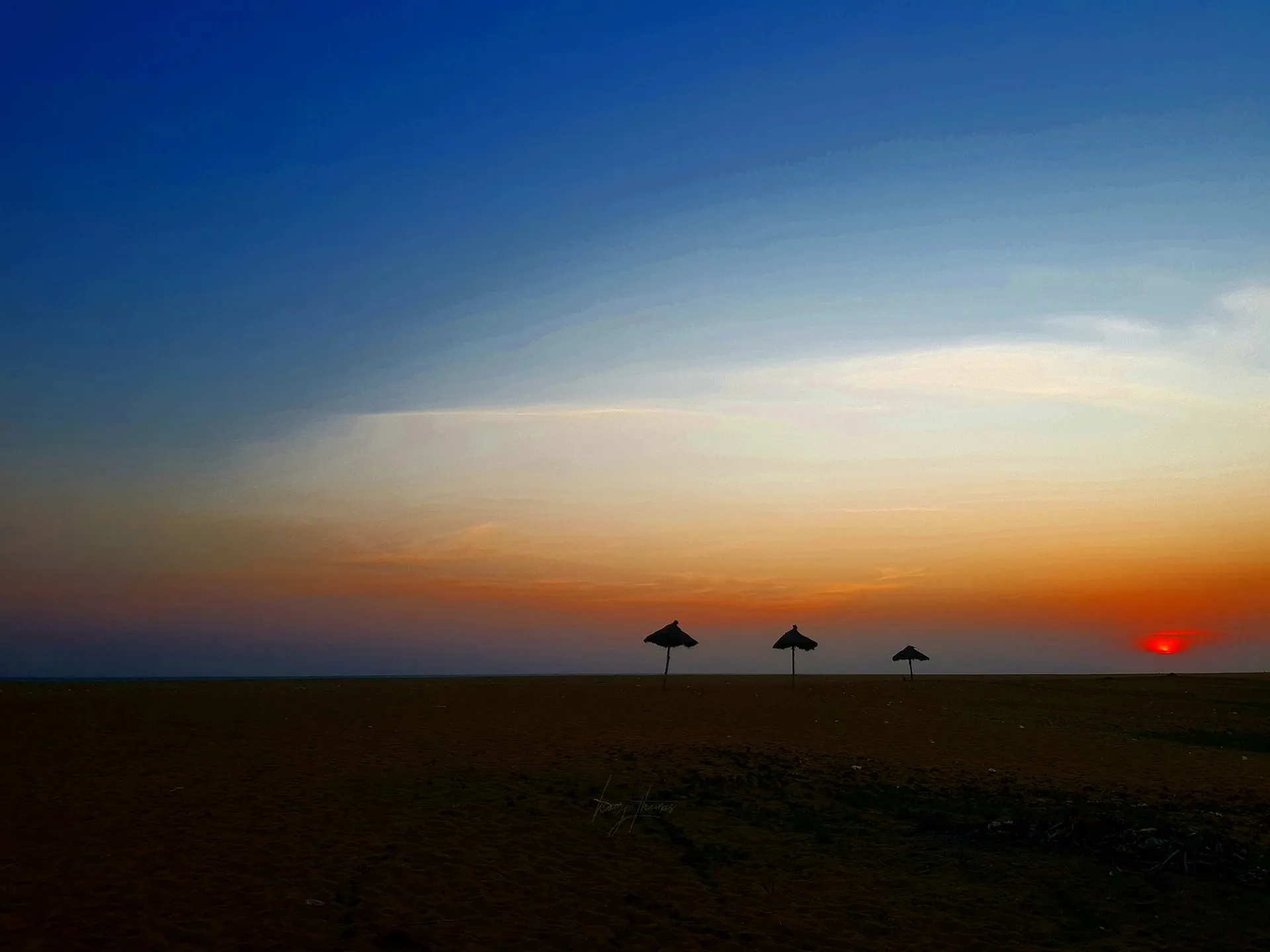
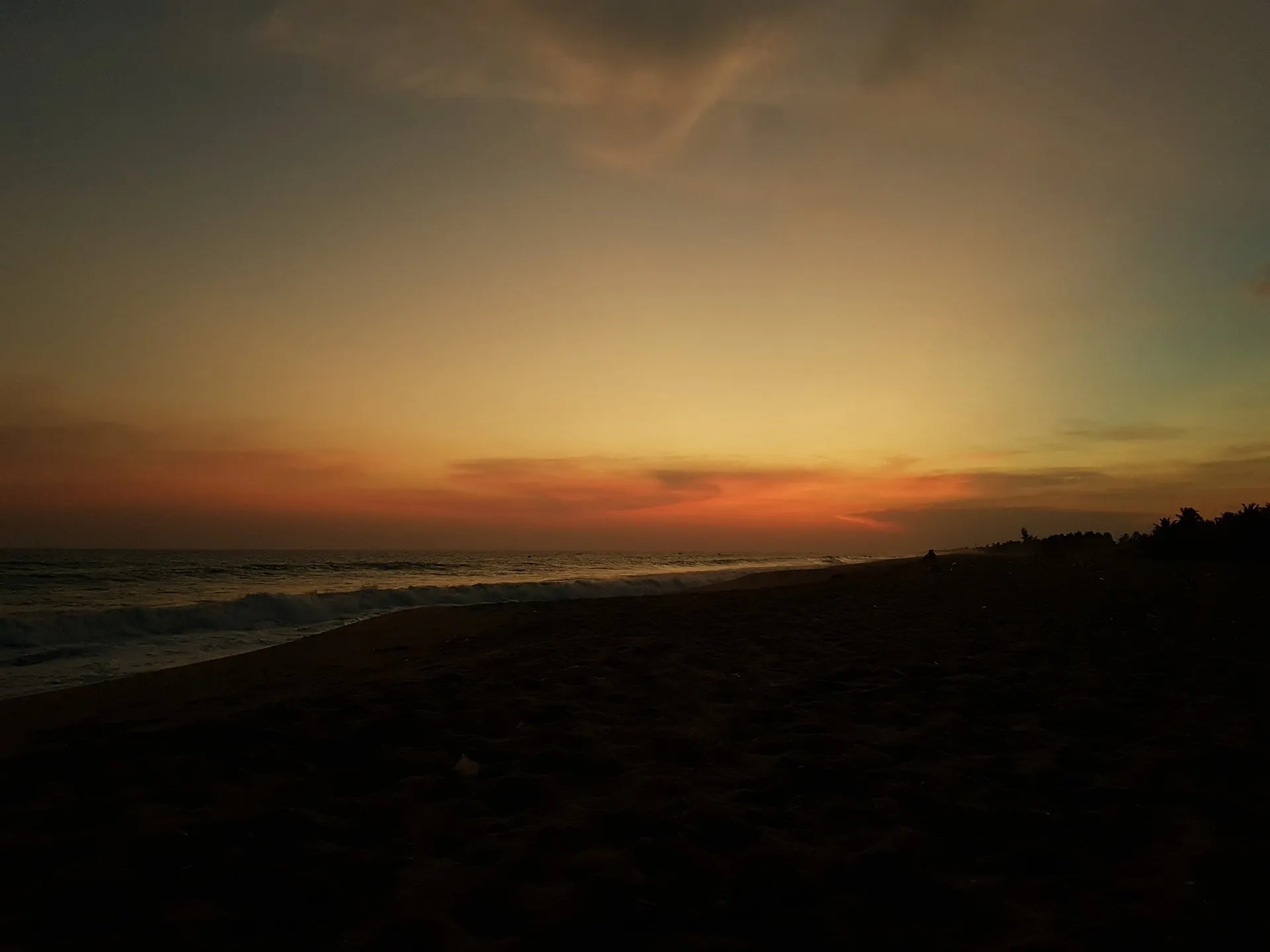
Endless beaches. The coastline offers 15 kilometres of golden sand lined with coconut palms. Unlike crowded beaches elsewhere, you can walk for miles without meeting anyone, accompanied only by the powerful roar of Atlantic waves. The sunrises here are spectacular, painting the ocean in shades of rose and gold. Early mornings are particularly magnetic, when the fishing pirogues return and the beach comes alive with the day's catch being sorted in the shallows.
Living cultural heritage. Grand-Popo is one of the cradles of Vodun and the Egungun and Zangbeto traditions. These spiritual practices are not tourist shows. They shape the daily life of the community and offer visitors a genuine window into Benin's soul. The altar to Legba at the entrance of every family compound is not decoration. It is a daily negotiation between the living and the spirit world.
Bouche du Roy, an ecological jewel. Where the Mono River meets the ocean, nature delivers a grand spectacle. This UNESCO-classified Biosphere Reserve shelters exceptional biodiversity: mangroves, migratory birds, manatees and sea turtles. Reaching it by pirogue, through narrow mangrove channels at dawn, is one of the most memorable experiences this coast has to offer.
Slow living as a philosophy. Grand-Popo is West Africa's slow-living capital. Here, no one rushes. People take time to greet each other, to observe, to savour. It is an invitation to slow down and reconnect with what matters. The rhythm is contagious: within 24 hours, most visitors find themselves stopping to watch the light change rather than checking their phones.
Affordable prices. Unlike other African coastal destinations, Grand-Popo keeps costs accessible. Accommodation, meals, activities: the value for money is outstanding. A grilled fish dinner with attieke costs 3,000 to 5,000 FCFA (5 to 8 EUR), a night in an ecolodge between 25,000 and 60,000 FCFA (38 to 91 EUR). A full day including meals, transport and a river excursion rarely exceeds 60 EUR even on a mid-range budget.
What to do in Grand-Popo: from river excursions to cultural visits
Activities are plentiful, whether you love nature, culture, or simply doing nothing.
Pirogue excursion on the Mono River. Glide on the calm waters between mangroves and fishing villages. A peaceful experience that reveals another side of Grand-Popo. Early morning departures offer the best light and the chance to see fishermen setting their nets while kingfishers dart between the roots.
Birdwatching at Bouche du Roy. With over 200 recorded species, this is a paradise for birders. Flamingos, herons, egrets, pelicans: bring binoculars and your camera. Best sightings are before 8am or in the last hour of afternoon light.
Kitesurfing at Lion Bar. When the harmattan blows from December to March, Lion Bar beach turns into one of West Africa's best kitesurfing spots. The combination of steady offshore wind and flat water behind the sandbar suits all levels. Equipment rental and supervised lessons are available directly on the beach from local operators.
Visit the salt flats near Adjaha. Women have harvested salt here using ancestral techniques for generations. A guided visit to the salines lets you watch the evaporation process, taste raw sea salt and understand a craft that is quietly disappearing. Allow two hours including the walk along the riverbank. The white crust of the pans against the blue sky makes for photographs that need no filter.
Sea turtle observation. Between September and January, olive ridley and leatherback turtles come to nest on Grand-Popo's beaches. Conservation programs coordinate night walks with trained local guides. The experience of watching a turtle lay eggs under a torch-lit sky, then helping release hatchlings at dawn, is one that stays with you for years.
Swimming and lounging on the beaches. Grand-Popo's beaches invite relaxation. Be aware of occasionally strong currents: ask your accommodation about the safest zones before entering the water, and always ask a local fisherman first.
Tasting sodabi and local cuisine. Sodabi, artisanal palm alcohol, is a local institution. Sip it in moderation alongside grilled fish or freshly caught seafood. Every producer's batch tastes slightly different, influenced by the palm trees used and the fermentation time.
Visit Villa Karo. This Finnish-African cultural centre is the artistic heart of Grand-Popo. Exhibitions, artist residencies, a library: an essential stop. Check the programme at reception, as events are not always announced online.
Sunset at Lion Bar. Set on the beachfront, Lion Bar is the spot for watching the sun dip into the Atlantic, a fresh fruit juice in hand. No tickets, no reservations, no agenda required.
For a full list of activities, check our activities and experiences guide.
Cultural heritage: Vodun, Agoudas and the Xwla people
Grand-Popo is a cultural crossroads where ancestral traditions meet outside influences in a way that has no precise equivalent anywhere else on this coast.
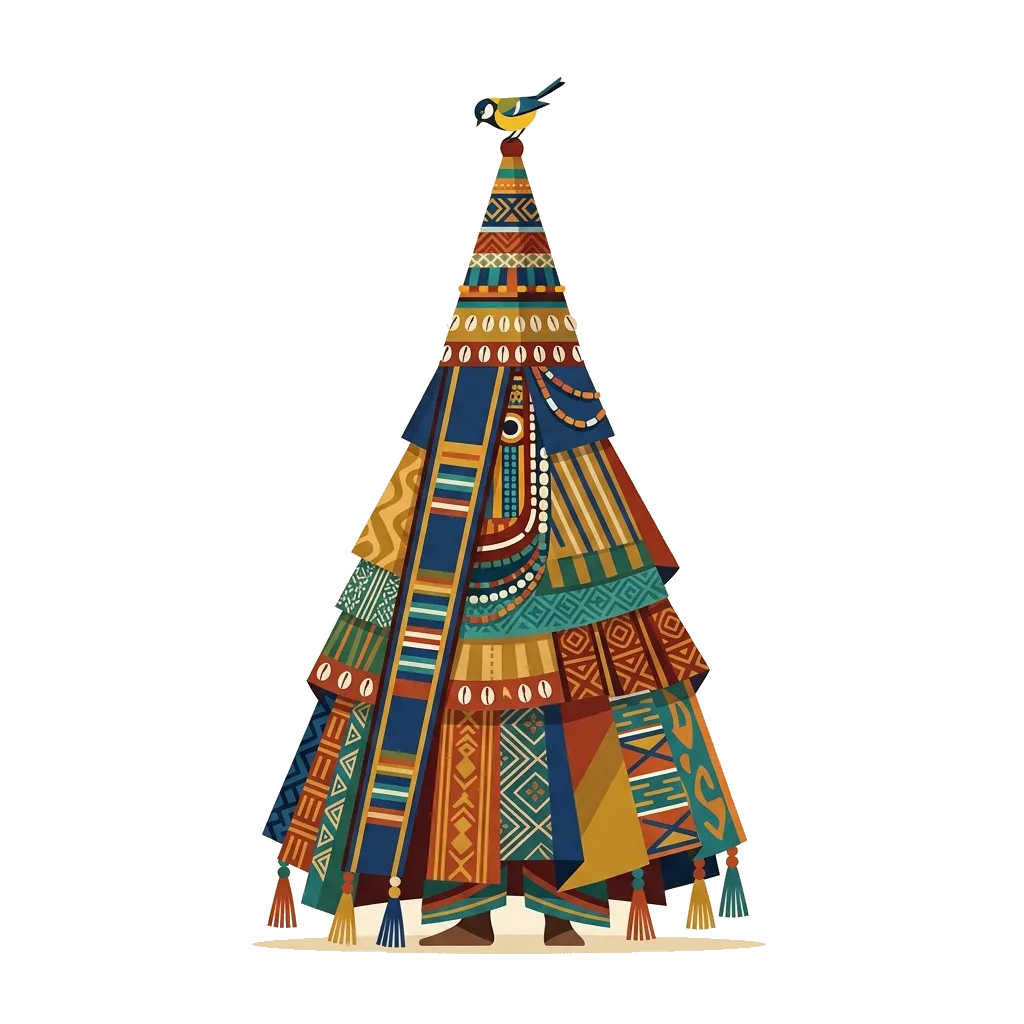
Vodun, the religion born in Benin, is everywhere in Grand-Popo. Far from Hollywood cliches, it is a complex spirituality that structures the community's social and ritual life. Vodun ceremonies, Egungun masks embodying the return of ancestors, and Zangbeto night guardians who protect villages are all living traditions. During the National Vodun Day on 10 January, the town opens its street processions to visitors in a way that is rare elsewhere in Benin. Attend with respect: cover your shoulders, follow the lead of local observers, and ask before raising a camera.
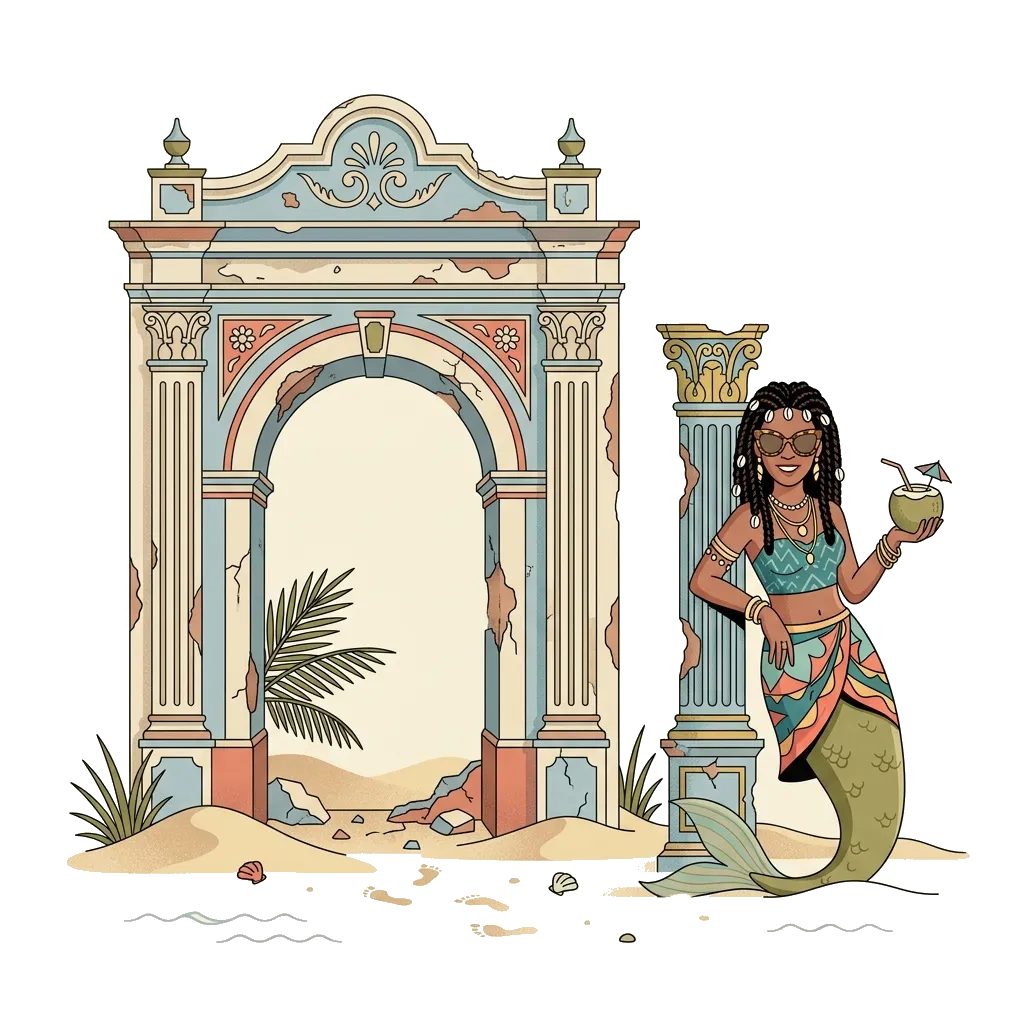
The Afro-Brazilian heritage of the Agoudas, descendants of former slaves who returned from Brazil in the 19th century, has deeply marked Grand-Popo's architecture and culture. Sobrado houses with their colourful facades and wrought-iron balconies testify to this cultural fusion between Benin and Brazil. Look closely at the ornamental ironwork on these buildings: the patterns often blend West African geometric motifs with Brazilian baroque flourishes, a visual record of a journey made in both directions across the Atlantic. Several of these houses survive on the main road through the town centre and are best visited with a local guide who can explain the families' histories and point out details invisible to the untrained eye.
The Xwla people, founders of Grand-Popo, maintain fishing traditions and a way of life in harmony with the ocean. Their language, their relationship to the sea and their ancestral knowledge of weather patterns and fish cycles are an intangible cultural heritage as precious as any monument. A morning spent watching a Xwla pirogue crew prepare their nets tells you more about this knowledge than any museum display could.
For a deeper dive, read our complete culture and heritage guide.
Architecturally, the town centre preserves several colonial buildings and Sobrado houses that tell the region's eventful history. Villa Karo, a restored former colonial residence built in 1910, is now a dynamic cultural centre hosting artists from around the globe. The contrast between these remnants of the past and the daily life of Xwla fishermen creates a layered atmosphere that rewards the curious traveller.
Nature and wildlife: Bouche du Roy and the mangrove ecosystem
Grand-Popo is a biodiversity sanctuary. The emblematic site is Bouche du Roy, a UNESCO Biosphere Reserve where the Mono River meets the Atlantic in a delta of mangroves and lagoons, roughly 12 kilometres west of Avlo village.
The mangroves play a crucial ecological role: they protect the coast from erosion, serve as fish nurseries, and shelter exceptional birdlife. Sea turtles nest on the beaches between September and January, a moving spectacle you can observe through conservation programs without disturbing the animals. Manatees live in the river channels year-round and are most visible during early morning excursions when the water is calm.
Birdwatching is a highlight: flamingos, grey herons, little egrets, ospreys and many other species delight ornithology enthusiasts. More than 200 species have been recorded in the area. Early morning pirogue excursions through the narrow mangrove channels offer the most intimate encounters with wildlife, away from any noise or engine.
The salt flats near Adjaha add another dimension to the natural landscape. Shallow pans edged with white crust stretch between the lagoon and the beach, worked by women who channel seawater and wait for evaporation. The resulting crystals are sold at the market and used in local cooking. This is a working tradition, not a staged demonstration, and visiting it on a weekday morning gives you a more honest picture than arriving with a tour group.
Discover our nature and ecotourism guide for deeper exploration.
Where to stay: ecolodges, guesthouses and charming hotels
Accommodation ranges across all budgets, with authenticity as a common thread.
Ecolodges. Grand-Popo's specialty. Built with local materials, integrated into nature, offering simple but authentic comfort. Most are positioned along the waterfront or on the Mono riverbanks. Expect 25,000 to 60,000 FCFA (38 to 91 EUR) per night. Booking directly via WhatsApp often gets you a better rate than third-party platforms.
Charming hotels. A few establishments offer higher comfort with pools, restaurants and attentive service. Budget: 60,000 to 120,000 FCFA (91 to 183 EUR) per night.
Guesthouses and rentals. For longer stays, villa rentals and guesthouses are excellent options from 15,000 FCFA (23 EUR) per night. Stays of five nights or more often attract a discount if you ask when booking.
Homestays. An immersive experience for travellers wanting to experience Grand-Popo from the inside. Expect 10,000 to 15,000 FCFA (15 to 23 EUR) per night, breakfast included. This is the format that generates the most meaningful exchanges with local families.
In high season (December to March), book accommodation several weeks in advance. The best lodges fill up quickly, particularly around Vodun Day on 10 January.
See our accommodation guide for a detailed selection by budget and style.
Where to eat: local cuisine, seafood and street food
Grand-Popo's gastronomy is a festival of flavours. Seafood takes centre stage, freshly caught each morning by local fishermen.
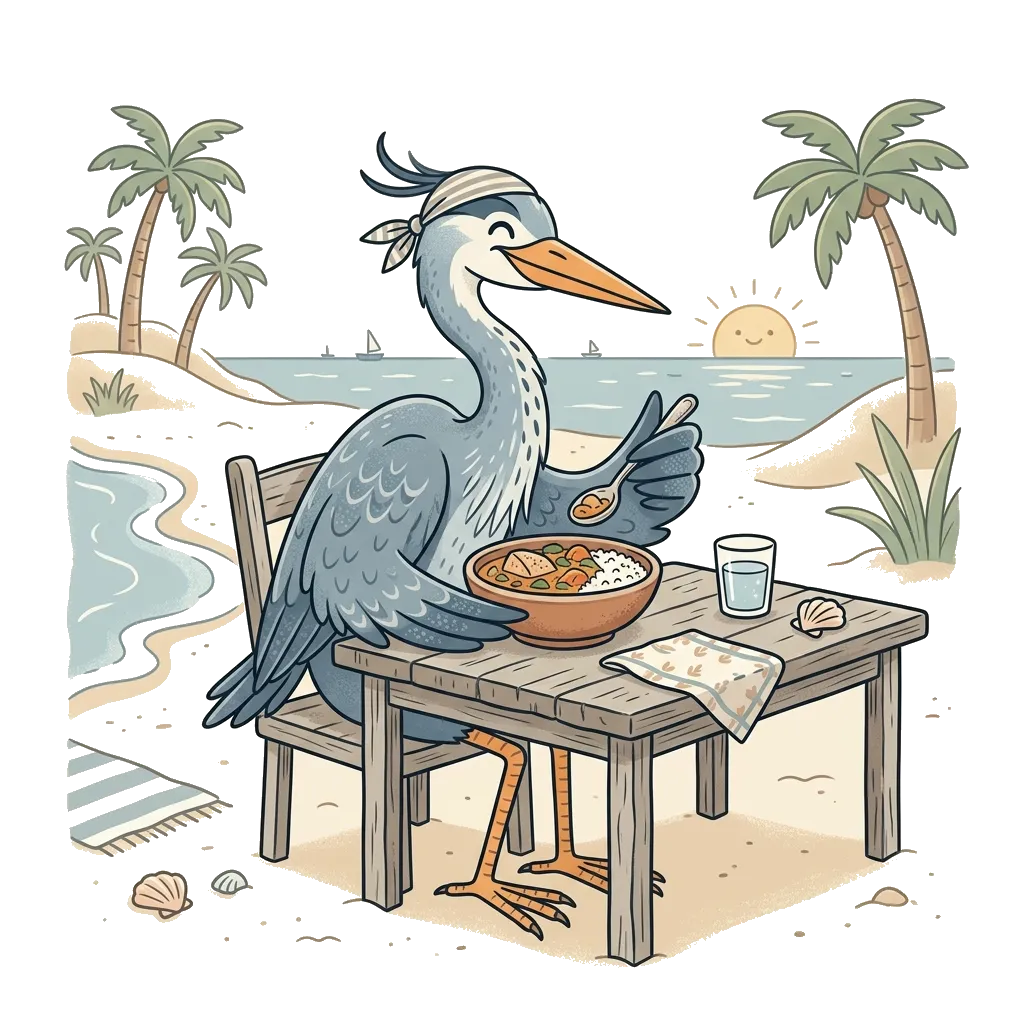
Grilled fish. The signature dish. Charcoal-grilled, served with attieke (cassava semolina) and spicy sauce. Expect 3,000 to 5,000 FCFA (5 to 8 EUR). Sea bream, barracuda and captain fish are the most common varieties.
Local specialities worth seeking out. Accra are deep-fried black-eyed pea fritters, crisp outside and soft inside, sold hot from street stalls every morning. Okra soup, cooked with dried shrimp and smoked fish, is served over cornmeal paste and eaten with your hands in the traditional way. Crab bouillon, made with whole crabs simmered in tomatoes and spices, is the dish locals order for celebrations and the one most visitors remember longest. Ask your lodge to arrange it with one day's notice.
Sodabi. Artisanal palm alcohol is a local pride. Traditionally distilled, enjoyed neat or in cocktails. A bottle costs 1,000 to 3,000 FCFA (1.50 to 5 EUR). Taste before you buy if possible, as quality varies between producers.
Restaurants. Establishments like Chez Paterne serve generous local cuisine. Lion Bar is ideal for a sunset drink and grilled barracuda with a view of the Atlantic. Budget 5,000 to 15,000 FCFA (8 to 23 EUR) for a full dinner.
Street food. Fish skewers, beignets and accara sold at the market are delicious and cheap: 500 to 1,500 FCFA (under 2 EUR). The Avlo market on Saturday mornings is the best moment to sample everything at once.
For a full guide, see our food page.
How to reach Grand-Popo from Cotonou, Lomé and Europe
Grand-Popo is easily accessible from several entry points.
From Cotonou (2h to 2h30). By car, take the RNIE1 national road toward Lomé. The road is well paved and police checkpoints are frequent: keep your documents accessible. By bush taxi, expect 3,000 to 5,000 FCFA (5 to 8 EUR) per person, departing from Dantokpa station in Cotonou. By private taxi, 25,000 to 35,000 FCFA (38 to 53 EUR). Leave before 9am to avoid heat and midday traffic.
From Lomé, Togo (1h30). A taxi from Lomé to the Hilacondji border costs about 10,000 to 20,000 FCFA (15 to 30 EUR), then a zemidjan or bush taxi from the border to Grand-Popo about 1,500 FCFA (2.30 EUR). ECOWAS nationals cross without a visa; European nationals need a Beninese e-visa obtained in advance at evisa.gouv.bj.
From Europe. Cotonou International Airport (COO) receives direct flights from Paris, Brussels and Istanbul. Expect 450,000 to 900,000 FCFA (687 to 1,372 EUR) return depending on the airline and season. From the airport, a private taxi takes you to Grand-Popo in about 2 to 2h30.
Full details are in our how to get to Grand-Popo page.
When to visit Grand-Popo: seasons, climate and monthly guide
Grand-Popo has a tropical climate with two dry seasons and two rainy seasons. The sea temperature averages 28 degrees C year-round.
Best period: November to March. The long dry season. Clear skies, moderate humidity, pleasant temperatures (25 to 32 degrees C). The sea is calm and sunsets spectacular. The harmattan brings cool evenings in December and January, sometimes with a thin haze of Saharan dust that turns the light golden. This is also high tourist season: book accommodation early, especially for the Vodun Day period in January.
Shoulder season: August to October. Short dry season followed by lighter rains. Fewer crowds, gentler prices, lush green nature. Sunny days with occasional quick showers. Sea turtle nesting peaks from September onward, making this a good time for conservation-minded visitors. The Nonvitcha festival in August brings cultural events to the town.
Rainy season: April to July. Rains are more frequent but rarely continuous. Landscapes are luxuriant and rates are at their lowest, with lodges sometimes offering 20 to 30% discounts. Some activities (pirogue excursions) remain possible, though laterite tracks can become muddy after heavy downpours.
For a month-by-month calendar, see our when to visit Grand-Popo guide.
Travel budget: what a trip to Grand-Popo costs
Grand-Popo offers excellent value compared to other African coastal destinations.
Budget (15,000 to 25,000 FCFA / 23 to 38 EUR per day). Homestay or basic guesthouse, meals at local eateries, bush taxi travel, free activities (beach, market, sunrise).
Mid-range (35,000 to 55,000 FCFA / 53 to 84 EUR per day). Ecolodge or guesthouse, local restaurants, one paid activity per day, bicycle or zemidjan hire.
Comfort (70,000 to 120,000 FCFA / 107 to 183 EUR per day). Charming hotel with pool, dinners at the best restaurants, private guided activities, driver.
For precise details, read our Grand-Popo travel budget guide.
As a guide, a mid-budget couple will spend about 200,000 to 300,000 FCFA (305 to 457 EUR) for a one-week stay including accommodation, meals, activities and local transport. This is roughly half what a comparable week would cost in Dakar or Libreville.
Practical information: visa, health, money and connectivity
Visa. The e-visa is mandatory for most nationalities. Apply online at evisa.gouv.bj at least 72 hours before departure. Allow 12,000 FCFA (18 EUR) for a 30-day stay. Print your approval document and carry it alongside your passport.
Health. Recommended vaccines: yellow fever (mandatory, certificate checked on arrival), typhoid, hepatitis A and B. Malaria is present year-round: take preventive treatment starting before departure, sleep under mosquito nets and use repellent containing DEET from dusk onward.
Currency. The CFA franc (FCFA) is the local currency. 1 EUR is approximately 656 FCFA. ATMs are rare in Grand-Popo: there is one in Avlo on the main road near the petrol station. Bring sufficient cash from Cotonou to cover your stay. MTN Mobile Money is widely accepted as a cashless alternative for everyday transactions.
Language. French is the official language. Xwla and Gun are spoken locally. English is sometimes understood at tourist accommodations, but do not rely on it for everyday interactions. A few words of French open doors immediately.
Phone and internet. Mobile networks (MTN, Moov) work well in Grand-Popo. 4G is available in the urban area and along the waterfront. Most accommodations offer WiFi. A local data SIM purchased at Cotonou airport costs 2,000 to 3,000 FCFA for 5 GB of data. Coverage becomes patchy west of Lion Bar toward Bouche du Roy.
Power cuts. Electricity supply in Grand-Popo is generally reliable, but outages occur, particularly during the rainy season when grid demand spikes in the evening. Most lodges and hotels have backup generators that activate within a few minutes. Carry a portable charger for days on the beach or on excursions away from power points.
Find all practical information in our practical info guide.
Do not forget travel insurance before departure. It covers medical costs, repatriation and cancellation. Allow 15,000 to 40,000 FCFA (23 to 61 EUR) for a week of coverage depending on the plan. Confirm that water activities and medical evacuation are explicitly covered, as these are sometimes excluded from basic policies.
Ready to discover Grand-Popo?
You now have everything you need to plan your Grand-Popo stay. Whether you come for the beaches, culture, nature or simply to slow down, this destination will deliver more than you expect.
To organise your trip, our advisors are available. Contact us on WhatsApp for any questions or bookings.
FAQ
Is Grand-Popo a safe destination? Yes, Grand-Popo is considered one of the safest destinations in Benin. The people are welcoming and violent crime is very rare. As anywhere, stay vigilant at night, do not leave valuables unattended on the beach, and use taxis recommended by your lodge after dark.
Do I need a guide to visit Grand-Popo? No, you can explore Grand-Popo independently. For pirogue trips, Bouche du Roy excursions or cultural visits, a local guide is recommended for a significantly richer experience. Two types exist: certified national tourism guides and community guides with deeper ritual knowledge. Your lodge can advise on which suits your interests.
How long should I spend in Grand-Popo? Three to five days covers the essentials. A week is ideal to absorb the atmosphere fully and explore nearby areas (Ouidah, Cotonou, Lomé). Travellers who stay less than three nights often say afterwards they left too soon.
Can I swim at Grand-Popo? Yes, but with caution. Atlantic currents can be strong, particularly near river mouths. Ask your accommodation or a local fisherman about safe zones before entering the water. Avoid swimming alone and do not stray far from the shore.
What is the best way to get around Grand-Popo? Bicycles are ideal for exploring Grand-Popo and its surroundings at your own pace. Motorbike taxis (zemidjans) are very practical for short distances: always agree on the price before getting on. For excursions or longer journeys, choose a private taxi through your lodge.
Plan Your Visit
Discover the magic of Grand-Popo with our curated local experiences.