




Grand-Popo is not a place you visit. It is a place you experience. Between the Mono River and the Atlantic Ocean, Grand-Popo activities are as varied as the landscape itself: gliding by pirogue through calm mangrove-lined waters, hauling nets with fishermen at sunrise, watching a Zangbeto performance at nightfall, or doing nothing before the vast ocean. This guide covers everything you need to choose your activities and plan your stay.
How to pace your days: a rhythm that fits the light
Grand-Popo offers a range of activities that shift with the time of day. Mornings on the river are calm and birds are active. Ideal for a pirogue excursion or birdwatching. Midday is perfect for the beach and swimming, when the water is at its warmest and the sand at its most golden. Late afternoon brings cooler temperatures and a lower, softer light for cycling or walking. Evenings belong to the beach bars and traditional ceremonies.
Salt is in the air from the moment you step outside. The breeze carries it from the Atlantic, mixing with woodsmoke from nearby kitchens. This is the first sensory signal that Grand-Popo operates on its own clock, one that has little to do with the itineraries printed in travel guides.
For a complete experience, plan at least 3 to 4 days. This lets you combine water activities, cultural discoveries and rest without rushing. Activities suit all levels and can be adapted for families as well as solo travellers.
The complete Grand-Popo guide helps you organise your stay around the rhythms of the place.
Pirogue on the Mono: the river that reveals everything
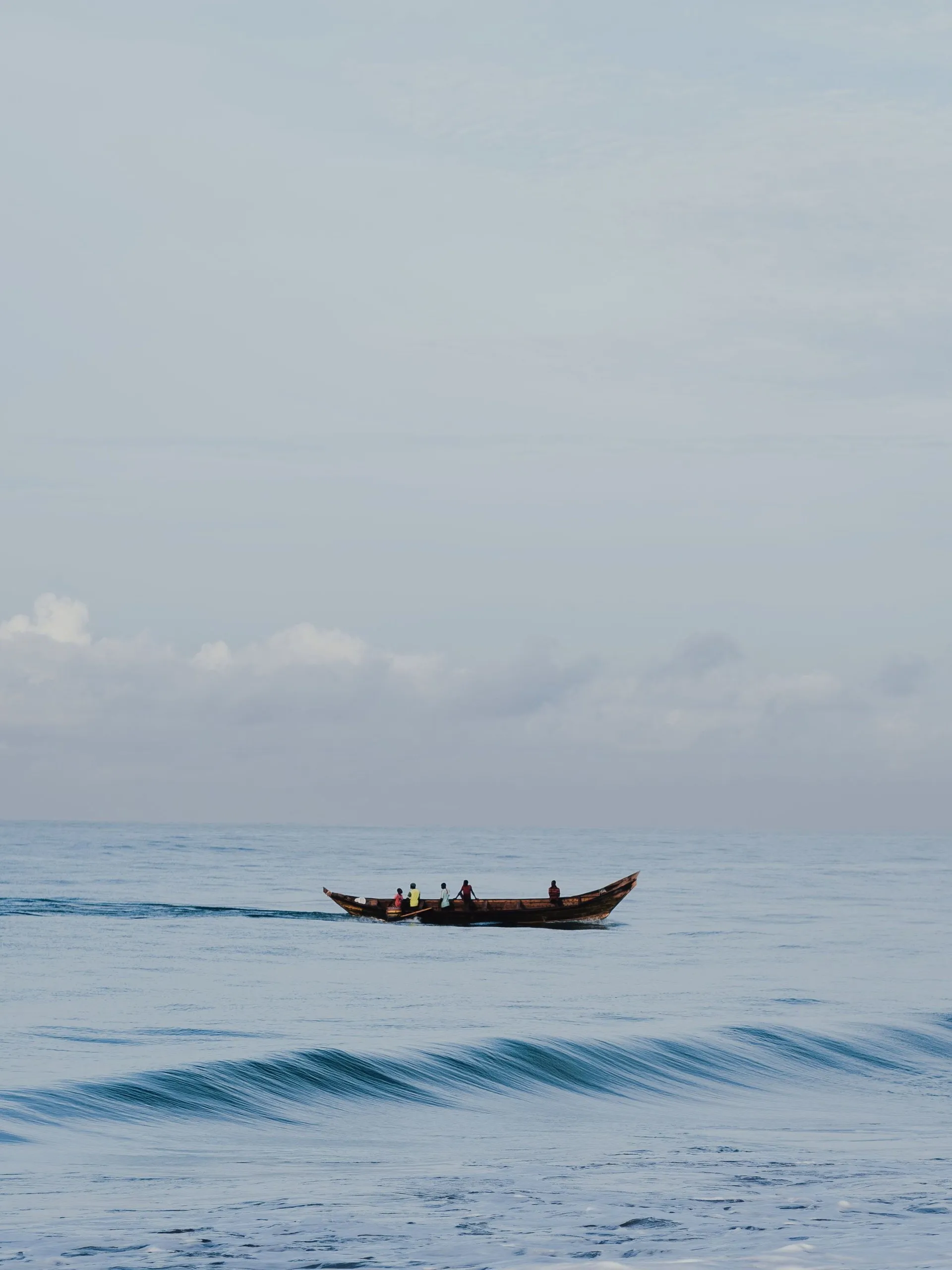
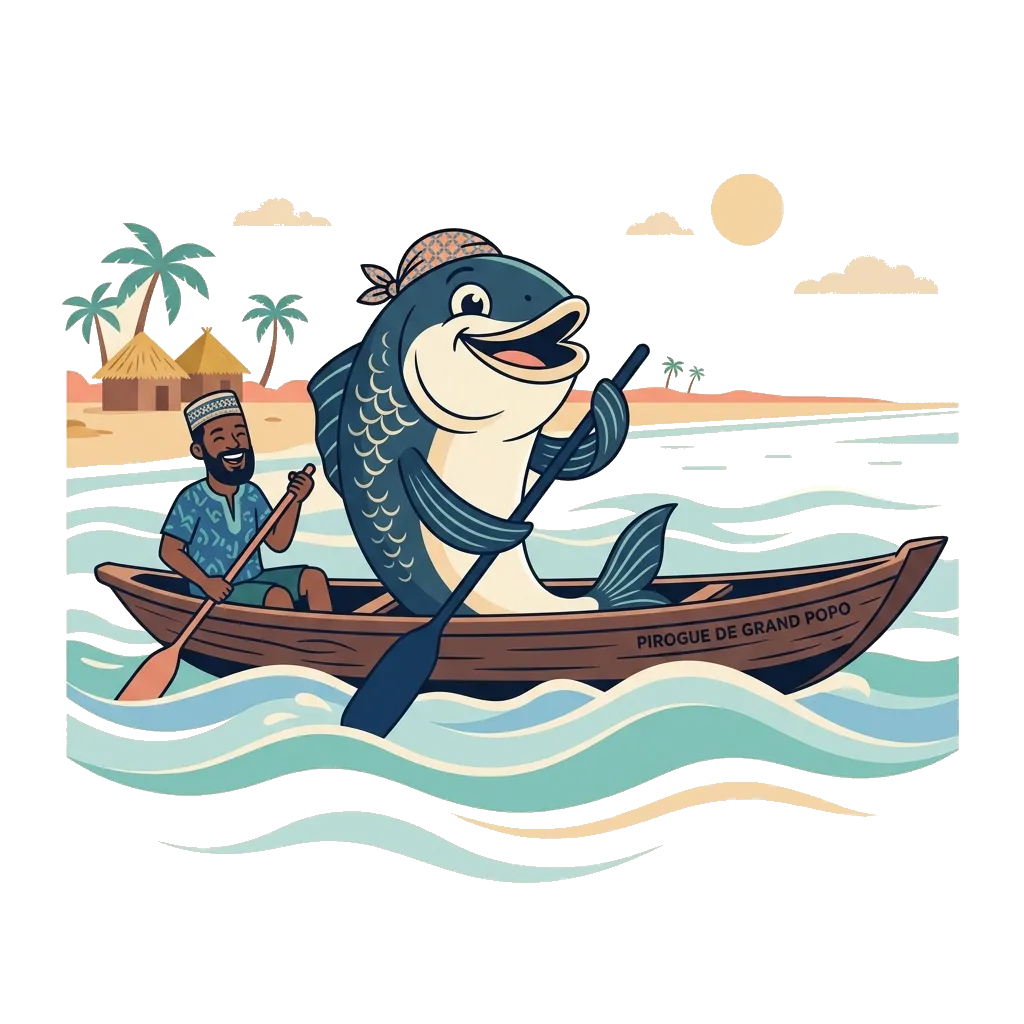
The pirogue excursion on the Mono River is the most popular activity in Grand-Popo, and for good reason. It offers the best way to discover the region from the water, penetrate the mangroves and get close to the fishermen's way of life.
Departures are early morning, ideally between 7am and 8am. The river is calm, the light is golden and low, and the birds are most active at this hour. Kingfishers dart between the roots of mangroves. Egrets stand motionless on half-submerged trunks. The only sounds are the paddle cutting the water and the occasional splash of a fish breaking the surface.
The trip lasts between one and a half and three hours depending on the route. Three routes are worth knowing:
- Upstream through fishing villages: small communities perched at the river's edge, where nets dry on bamboo frames and smoke rises from clay ovens in the early morning
- Downstream to Bouche du Roy: where the Mono meets the Atlantic in a wide sandy estuary, one of Benin's most striking natural landscapes
- Through the mangrove channels: a vegetal labyrinth where the canopy closes overhead, light filters in shifting patterns, and the roots arch into dark water like columns in a flooded cathedral
Local guides who know the river better than anyone steer the pirogues. They will point out birds, explain fishing techniques, name trees by their medicinal use and share knowledge of the ecosystem that takes years to accumulate. The information is practical and personal. Worth listening to carefully. Expect 10,000 to 20,000 FCFA (15 to 30 EUR) per person for a two-hour excursion.
Our dedicated page tells you more about the pirogue excursion.
Fishing at dawn with Xwla fishermen: no performance, pure life
Spending a morning fishing with the Xwla fishermen is an experience that changes your perspective. No mass tourism here: you board a traditional pirogue, take part in casting and hauling nets, and discover fishing techniques passed down through generations.
Fishermen usually leave before dawn. The sky is still dark when you meet at the beach. The air smells of brine and wood fires from the night before. It is demanding work, and those who do it come back transformed by the scale of what they have seen.
The pirogue rocks with each wave. Ropes burn when pulled fast. The catch empties onto the hull floor: mullet, sea bream, the occasional octopus. Your host will know each species by name in Xwla before offering you the French word. The ocean at sunrise, the collective effort, the fishermen's quiet pride in showing you their daily life. This is Grand-Popo at its most authentic.
This activity is physical and depends on weather conditions. Not recommended for those prone to seasickness: the sea off Grand-Popo can be deceptively choppy even on clear mornings. Prices vary by duration; expect 15,000 to 25,000 FCFA (23 to 38 EUR) per person.
For more details, see our guide on artisanal fishing in Grand-Popo.
Grand-Popo's beaches: where to swim safely and when to go
Grand-Popo's beaches are one of the main reasons to come, and their expanse takes your breath away. Fifteen kilometres of golden sand lined with coconut palms, a sea stretching to the horizon, and often no other tourist in sight.
Swimming requires caution. The Atlantic Ocean is not a pool: currents can be strong and waves impressive. The safest areas are those near ecolodges whose staff know the local tide patterns and swim conditions. Always ask before entering the water. Water shoes are recommended because of rocks and sea urchins near the shoreline.
Morning, between 7am and 10am, is the best time to enjoy the beach. The light is soft, the heat bearable, the sand still cool underfoot. Late afternoon, from 4pm, the beach is ideal for a long walk or lying on the sand before sunset. The angle of the light at that hour turns everything copper. Avoid the stretch between noon and 3pm: the sun is vertical, the sand radiates heat, and the shade of coconut palms offers only partial shelter.
Our Grand-Popo beaches guide details the safe swimming areas and explains how conditions shift with the season.
Villa Karo: culture, shade and unexpected conversations
Villa Karo is the cultural heart of Grand-Popo. Housed in a beautifully restored former Finnish-African colonial home, it hosts resident artists from around the world. Writers, musicians, photographers, artisans: all come to draw inspiration from this unique ocean-facing setting, and many stay longer than planned.
The building itself rewards attention. High ceilings, wide verandas, tiles worn smooth by decades of use. The garden is generous: large trees cast deep shade over benches where you can read for an hour without being disturbed.
Villa Karo is open to visitors. You can explore the exhibition spaces, consult the well-stocked library, attend concerts or performances, and sometimes encounter the resident artists in the middle of their work. A painter explaining a canvas halfway done. A musician running through scales before a rehearsal. These moments are unscripted and occur precisely because Villa Karo makes no effort to package them for tourists.
Entry is free or low-cost depending on events. Check the programme on site or at your accommodation. Villa Karo regularly runs workshops open to the public, covering batik, ceramic work, percussion and creative writing. Some are drop-in, others require advance sign-up.
Our complete guide on Villa Karo gives the events programme and visit tips.
Yoga and wellness: slowing down is also an activity
Grand-Popo's setting lends itself naturally to wellness. The sound of the waves, the sea breeze, the slow rhythm of local life: everything invites you to stop. Several accommodations offer yoga sessions on the beachfront, often at sunrise, when the air is still cool and the horizon faintly pink over the Atlantic.
Yoga in Grand-Popo is not a standardised activity. Each teacher brings their own approach, and sessions adapt to the location. On the beach with sand underfoot. On a terrace overlooking the ocean, where the breeze picks up mid-session and cools the sweat. In a garden shaded by coconut palms where geckos run along the wall during the final relaxation.
Some accommodations offer wellness packages including massages and treatments using local ingredients: shea butter, monoi oil, black soap from the market. Practical, effective, with none of the packaging designed to reassure tourists.
Expect 5,000 to 15,000 FCFA (8 to 23 EUR) per session depending on the location and duration. Ask directly at your accommodation. Most sessions do not require advance booking.
Discover our selection on yoga and wellness in Grand-Popo.
Cycling to Bouche du Roy: flat roads, big skies
Cycling is the ideal way to explore Grand-Popo and its surroundings. The terrain is flat, distances are reasonable, and roads are quiet except at market hours when mopeds and carts slow everything down. In one hour you can reach Bouche du Roy from the town centre on a paved road that hugs the coast.
Several accommodations lend bicycles to their guests at no extra cost. Otherwise, rentals are available in the town centre for 3,000 to 5,000 FCFA (5 to 8 EUR) per day. Bring water and sun protection. The sun is generous and there is little shade on the coastal road between Grand-Popo and Bouche du Roy.
Three routes cover the main territory:
- Coastal road to Bouche du Roy (10 km, easy): paved the whole way, with ocean views on one side and lagoon on the other, ending at the wide estuary where the Mono meets the sea
- Lagoon circuit through fishing villages (15 km, some sandy patches): slower, more textured, with stops at salt pans and boat-building yards where craftsmen shape pirogues from single tree trunks
- Ride to the Togolese border (20 km, paved road): cross-border market days bring extra life to the road on Tuesdays and Fridays, worth timing your ride around if you can
A bicycle gives you access to places no organised tour reaches. The fisherman repairing a net under a tree. The women pounding grain in the shade of a courtyard wall. Scenes that disappear the moment a vehicle stops nearby.
Our cycling in Grand-Popo guide offers detailed routes and waypoints.
Surf and bodyboard: honest waves, no crowds
The Atlantic Ocean that washes Grand-Popo's shores offers powerful, regular waves, especially between November and March during the dry season. While you will not find Californian tubes, Grand-Popo's breaks offer honest conditions for surfing and bodyboarding in a crowd-free setting.
The main spot is in front of Lion Bar and the central beach ecolodges. Waves are moderate (one to two metres depending on swell), with a sandy bottom that limits risks. Best conditions are in the morning, between 6am and 9am, when the wind is still light and the water surface smooth. In the late afternoon the wind picks up and waves become more irregular.
Equipment (bodyboards, leashes) can be rented from some accommodations or bought at the Grand-Popo market. Surfboards are rarer: better to bring your own if you are a regular surfer. Expect 5,000 to 10,000 FCFA (8 to 15 EUR) for a day's bodyboard rental.
Safety matters here more than elsewhere. Atlantic currents can be treacherous, especially at low tide when the pull away from shore is strongest. Never surf alone. Ask local fishermen about the day's conditions before entering the water: they read the sea better than any app. Beginners can find guided sessions through some ecolodges. For experienced surfers, the waves at Bouche du Roy are worth the detour: the channel where the Mono meets the ocean creates longer, more hollow waves with a distinctive lateral pull.
Photography: chasing the light that makes Grand-Popo hard to leave
Grand-Popo is a playground for photographers. The light is particular: the clear sky, the sun's reflection on the ocean, and the salty haze floating above the waves create conditions that change by the hour, especially at sunrise and sunset. Both seasoned photographers and keen amateurs will find plenty of material.
Good subjects are everywhere. Landscapes: Bouche du Roy at low tide when the sand patterns are most visible, reflections of mangroves in the still lagoon, pirogues beached on the sand in geometric rows that shift with each season. Portraits: fishermen preparing their nets at dawn, women bent over salt pans that glitter like broken mirrors in the afternoon light, children playing in the shallows at the edge of the surf.
A few practical points:
- Light is harsh between 10am and 3pm: favour the golden hours (7am-9am and 4pm-6pm) for landscapes and portraits
- A polarising filter reduces reflections on water and saturates the greens of coastal vegetation noticeably
- Always ask permission before photographing someone; a smile and a greeting usually suffice, and a small tip (500 FCFA, less than one euro) is appreciated without being expected
- Fishermen and artisans are generally willing to pose if approached with patience rather than a camera already raised
Photographers with a macro lens will find their reward in the mangroves and garden plants, where insects and butterflies create abstract patterns against the light. Those who prefer wide open spaces will take away images of deserted beaches that stretch without interruption toward the horizon, a composition that is almost impossible to take badly.
Local cooking classes: the market first, then the fire
Grand-Popo's cuisine deserves serious attention. A blend of Xwla traditions (based on fish and shellfish), Afro-Brazilian influences (palm oil, gari, tropical fruits) and colonial-era techniques, it offers a palette of flavours that surprises even seasoned West Africa travellers. Several families and small restaurants offer classes to learn the region's signature dishes.
A typical class lasts about three hours and begins at the market. Arrive early: the best fish goes fast. Your guide explains how to recognise fish caught that day by the clarity of the eye and the firmness of the flesh. Capitaine, bar, sole. Fresh prawns still jumping on the wooden table. The spice section is dense with dried shrimp paste, smoked peppers and ground locust beans whose smell is sharp and ancient.
Back in the kitchen, you prepare one or two complete dishes under your host's supervision. No written recipes: everything is taught by hand and by eye, the way it has always been done.
Dishes worth learning:
- Gba na: dried shrimp sauce with tomato and chilli, eaten with akassa or rice, with a heat that builds slowly rather than hitting immediately
- Kplala: fish steamed in banana leaves with herbs, unwrapped at the table in a cloud of scented vapour that fills the room
- Akassa: fermented corn cakes with a mildly sour flavour, served with a clear, peppery sauce that each family adjusts to their own taste
Classes end with sharing the meal together. The host family sits with you. Stories come out between bites. This is where the activity earns its cost.
Expect 20,000 to 35,000 FCFA (30 to 53 EUR) per person for a complete class including the market. Some accommodations offer combined packages. Ask at your accommodation or contact us to be put in touch with a host family.
Sunset at Lion Bar: the reason everyone stays one more night
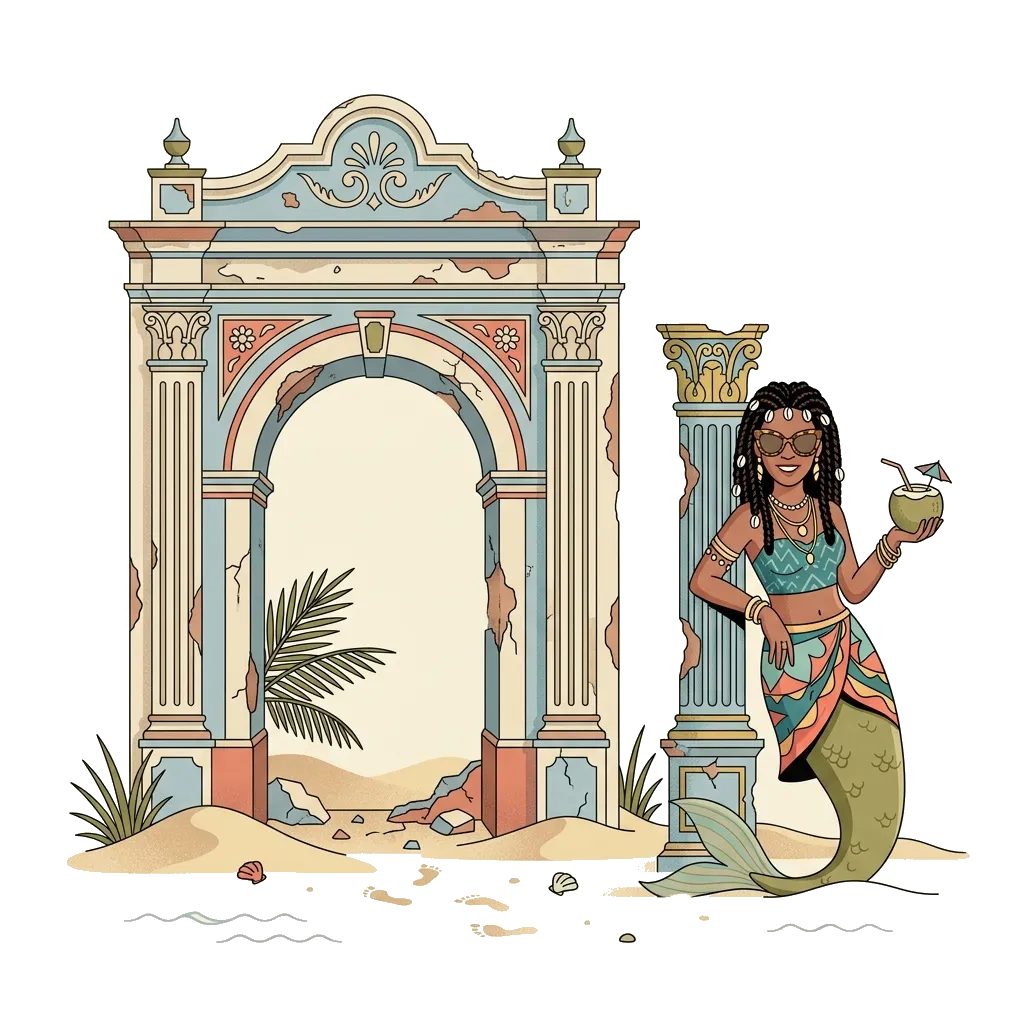
Lion Bar is an institution in Grand-Popo. Set directly on the beach with uninterrupted views of the ocean, it is the point where the day ends for most travellers passing through. Tables are placed on the sand, at the water's edge, close enough that the foam from spent waves reaches your feet on bigger swells.
The atmosphere is relaxed. Soft music, fresh fruit cocktails, local beer, sodabi poured into small glasses that go back empty faster than expected. Conversation drifts easily. The light changes every few minutes as the sun descends. Then the moment: the sun touches the waterline, the sky opens into orange and purple, and the ocean surface turns the colour of hammered copper. Sometimes clouds catch the colour and hold it for five minutes after the sun has gone below the horizon.
Arrive thirty minutes before sunset to get a good table. Bring a light jacket: the temperature drops fast once the light is gone and the onshore wind picks up.
Lion Bar also serves quality local food. Fresh grilled fish, fried plantain, sauces made from what the market offered that morning. Ideal for dinner after sunset, feet in the sand, lulled by the sound of the waves.
See our Lion Bar guide for opening hours and what to order.
Activity catalogue
The table below gives an overview of the main activities with indicative durations and budgets. Prices may vary by season, group size and provider.
| Activity | Duration | Budget (FCFA) | Budget (EUR) |
|---|---|---|---|
| Mono pirogue excursion | 2-3h | 10,000-20,000 | 15-30 |
| Fishing with fishermen | 3-4h | 15,000-25,000 | 23-38 |
| Beach yoga | 1h | 5,000-15,000 | 8-23 |
| Bike rental per day | 1 day | 3,000-5,000 | 5-8 |
| Villa Karo visit | 1-2h | Free-5,000 | 0-8 |
| Wellness massage | 1h | 15,000-30,000 | 23-46 |
| Cooking class | 3h | 20,000-35,000 | 30-53 |
| Sea turtle outing | 2-3h | 10,000-20,000 | 15-30 |
| Bodyboard/surf | 2-3h | 5,000-10,000 | 8-15 |
| Guided photo tour | 2-3h | 10,000-20,000 | 15-30 |
Local guides and ecolodges sometimes offer package rates combining several activities at a reduced cost, particularly for stays of three nights or more. Worth asking when you arrive.
Book your activities before arriving or on the ground
What makes Grand-Popo activities valuable is that they are not standardised. Every pirogue excursion is different. Every encounter with a fisherman is unique. Every sunset at Lion Bar is a surprise that no photograph fully captures.
Some activities, particularly fishing outings and cooking classes, are best arranged a day in advance through your accommodation. Others, like Villa Karo visits and cycling, can be done on a whim. Lion Bar requires no booking: just arrive before the sun does.
To book your activities or get personalised advice, contact us on WhatsApp. Our local partners are selected for the quality of their welcome and their respect for the environment.
Plan Your Visit
Discover the magic of Grand-Popo with our curated local experiences.