



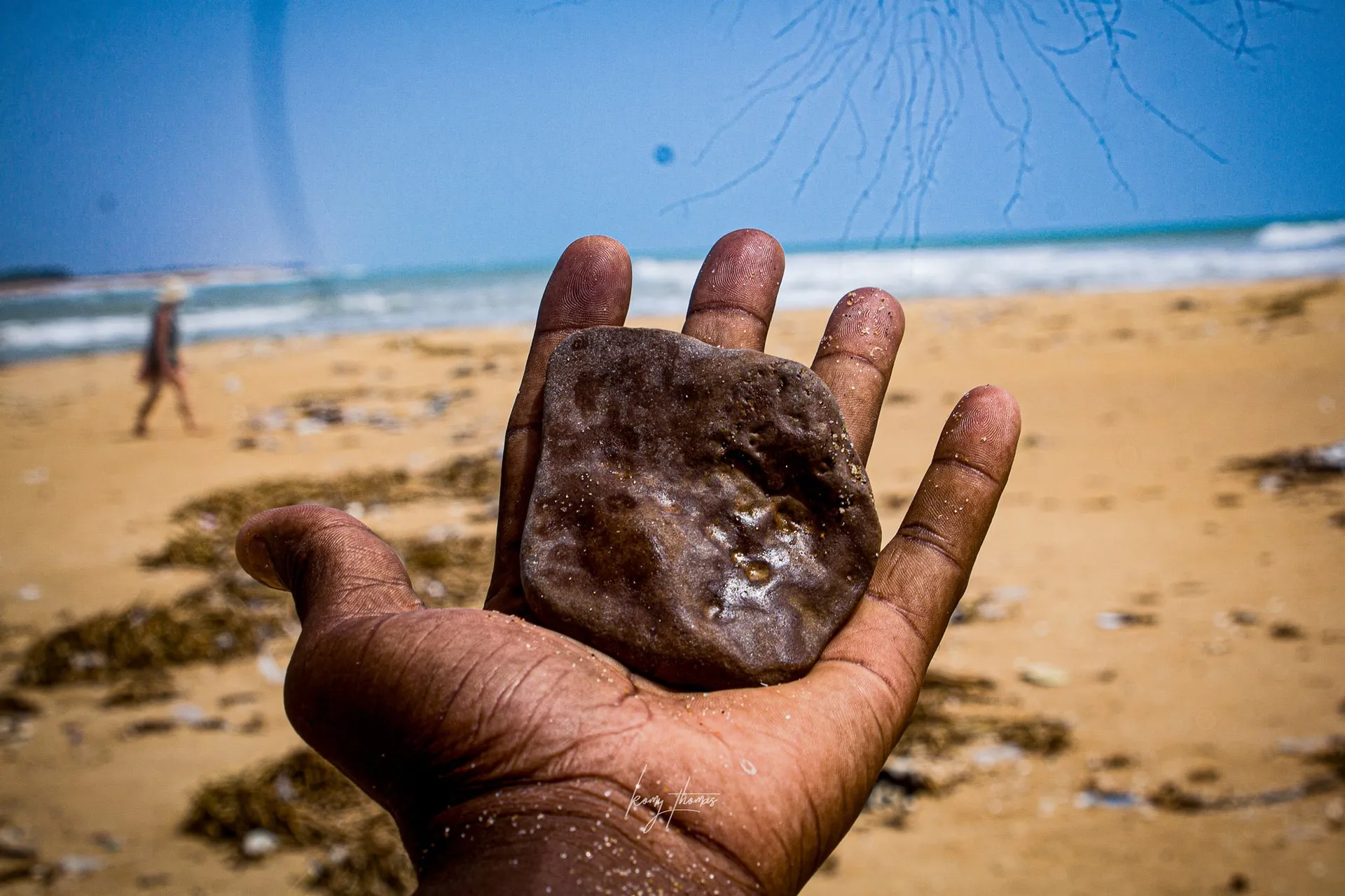
Grand-Popo's beaches rank among the finest in Benin. Fifteen kilometres of golden sand lined with coconut palms, with an often powerful sea that puts on a permanent show. Unlike developed beach resorts, nature dominates here and development remains discreet.
The Grand-Popo beaches offer travellers an authentic Atlantic experience. Whether you come to walk for hours without meeting anyone, to watch the sunset from a thatched shelter or to swim in the waves, this preserved coastline delivers on every desire.
To understand how this coastline fits into a unique ecosystem, see our nature and ecotourism guide.
A coastline that rewrites itself with every tide
The Grand-Popo coastline stretches about fifteen kilometres, from the Togolese border in the west to Agoue village in the east. The coast faces south-southwest, meaning it receives the full swell of the South Atlantic. The waves that break here have travelled thousands of kilometres from the Antarctic coast.
This exposure gives Grand-Popo's beaches a powerful, sometimes imposing character. The sea is rarely calm. The surf is constant, waves roll in regular succession, and the sound of the ocean is ever-present. At six in the morning, before the village wakes, the roar of the Atlantic is the only sound. It fills every corner of the air with a low, continuous percussion that you feel as much as hear. This is what gives these beaches their charm: a sense of raw nature, of wild ocean, far from the turquoise, flat waters of tropical lagoons.
The coastline geology is dynamic. Ocean currents constantly shift the sand, carving and filling beaches with the seasons. The beach you knew in November may look completely different by May. This instability is natural and testifies to a living coastal system. Stretch after stretch of shoreline can disappear overnight during a strong groundswell, only to rebuild over the following weeks — a humbling demonstration of the Atlantic's power.
The vegetation bordering the beaches is characteristic of the West African coast: coconut palms, casuarinas (Casuarina equisetifolia), sea purslane (Sesuvium portulacastrum) and pink-flowered morning glory (Ipomoea pes-caprae). These plants do more than provide shade — their root systems hold the first dune in place against the endless push of wind and spray. Behind the first dune begin the palm groves and plantations, then the lagoon. At low tide, fragments of cowrie shells, driftwood smoothed by the surf and the occasional iridescent wing case of a coleopteran caught in the foam all gather at the water's edge. The beach is a border zone, in permanent negotiation between land and sea. The smell of warm sand and iodine mixes with the faint sweetness of coconut husk drying in the sun — a combination that stays in the memory long after you leave.
Four beaches, four atmospheres
Grand-Popo central beach stretches from the main jetty to the Lion Bar. It is the most accessible and lively, though never crowded. You will find a few thatched shelters and beach restaurants (including Chez Paterne), fishermen repairing their nets in small circles, children playing football with a makeshift goal of sandals. The atmosphere is relaxed and authentic. Early morning, the smell of smoked fish mingles with salt air as women prepare the day's catch on long wooden racks, the smoke drifting sideways in the sea breeze. By seven, the first light turns the water from grey to pale copper, and the sound of nets being folded and stacked reaches you before you see the hands doing it.
Bouche du Roy beach is the wildest and most spectacular. Located at the eastern end of the area, where the Mono River meets the ocean, it offers kilometres of virgin sand with no construction. The power of the elements is palpable here. Access is by pirogue or by road to Avlo, then on foot. The transition zone where river current clashes with Atlantic surge creates an ever-shifting spectacle of foam and colour — brown Mono water swirling into green ocean swell in braided patterns that no two tides repeat. Stand at the meeting point at low tide and the collision of the two bodies of water produces a continuous low roar entirely distinct from the wave sound behind you.
The beach in front of the ecolodges (Villa Karo area) is the most frequented by travellers. Several accommodations line this stretch, ensuring a minimum of maintenance and safety. Swimming is generally possible under supervision. The Lion Bar on this beach makes it a pleasant spot both day and night, its palm-thatch roof catching the offshore breeze. The lights from the terrace at dusk draw flying insects, which in turn draw bats from the palm grove behind — a brief, invisible spectacle played out just above your head.
Agoue beach, a few kilometres east, is even wilder. The coconut palms are denser, the beach wider, and the rare dwellings along it are simple fishermen's huts with nets drying across bamboo poles. It is the ideal spot for a solitary walk or a sunset picnic. Black-bellied plovers (Pluvialis squatarola) pick at the tideline in small, restless flocks here, barely disturbed by the rare passerby. The beach at Agoue holds the heat of the day long into the evening; the sand is still warm underfoot at nine o'clock, long after the sky has gone dark.
Where the water is calm enough to enter
Swimming in Grand-Popo is possible but requires caution. The Atlantic Ocean is powerful on this coast, and currents can be dangerous. Here are the rules to follow for safe swimming.
The safest areas are the beaches in front of the ecolodges, where the water is sometimes calmer thanks to rock formations or sandbars that break the swell. Ask your accommodation about the day's conditions before entering the water. The same beach can be swimmable on a Tuesday and dangerous by Thursday if a deep Atlantic low has sent a new groundswell rolling in. Local staff check the sea every morning and their assessment is worth more than any weather app.
Bouche du Roy beach is not recommended for swimming due to tidal currents and the deep channel of the Mono River flowing into the ocean. The difference between calm-looking surface water and strong underwater currents can surprise even good swimmers. The river water, opaque with silt, hides the true speed of the flow beneath.
Never swim alone. Always stay with others or near people who can raise the alarm. Do not go far from the shore. Even a strong swimmer can be caught by a rip current, those channels that form between sandbars and pull toward the open sea.
Avoid swimming in rough seas or during groundswell. If the sea is rough, stay on the beach. The beauty of the waves alone is enough to occupy hours. Watching a wave collapse from twenty metres, the white foam shooting forward faster than you expect, is its own complete experience.
The most favourable months for swimming are November to March, when the sea is calmer and currents weaker. From June to September, the sea is generally more dangerous. If you feel a current pulling you out, do not fight it. Swim parallel to the beach until you exit the current, then head back to shore. Staying calm and clear-headed is your best defence.
Reading the water before you enter it
Atlantic currents on the Grand-Popo coast are the main danger for swimmers. Understanding them is essential for staying safe.
Rip currents are the most dangerous. They form when water trapped behind a sandbar finds a channel to flow back out to sea. The surface appears calm, but the underwater current is powerful. These channels shift with tides and storms. Even the most experienced locals can be caught out. You can spot them by looking for a line of slightly smoother, darker water moving away from shore — that strip of unusual calm, often with a faint seaweed line along its edge, is where you do not want to swim. The foam patterns on either side of a rip run parallel to the shore, while the rip itself cuts perpendicular: once you recognise the geometry, you see it everywhere.
Tidal currents are significant at the Mono River mouth. At low tide, the river pushes toward the ocean with force. At high tide, the ocean floods the riverbed. These currents are particularly violent at Bouche du Roy, where the collision of the two bodies of water creates unpredictable boils and eddies on the surface.
To stay safe, follow a few simple rules: always ask fishermen or locals before swimming, watch the water for a few minutes to spot current zones, and never go deeper than waist height. Grand-Popo fishermen are experts on the currents. They know every sandbar, every channel, every shift the tide brings. If you see them pulling their pirogues ashore with more urgency than usual, the sea is becoming dangerous. Follow their lead without question.
What the beach offers beyond swimming
Grand-Popo's beaches offer much more than swimming. Here are the activities not to miss.
Walking on the beach is the quintessential activity. Covering the fifteen kilometres of coastline on foot, feet in the water, is a total sensory experience. The powerful sound of the waves, the smell of iodine, the wind on your skin, fishermen hauling their pirogues, women collecting driftwood: every step is an immersion. Start at dawn to have the beach entirely to yourself. The sand holds the cold of the night until around eight, when the first warmth arrives from the east and your shadow, long and precise, begins to shorten.
Beach volleyball happens spontaneously on the central beach, especially on weekends. Locals will gladly invite you to join. Matches are friendly but passionate, and the sand makes every dive a comedy of lost balance.
Kite flying is enjoyable on Grand-Popo's windy beaches, especially from December to March when the harmattan blows in dry, steady pulses from the north. The air is clear enough on harmattan mornings to see the horizon razor-sharp.
Beachcombing at low tide is a local tradition. People collect shells, small crabs and shrimp in residual pools. Children will show you how with expert gestures. The large coffee-bean cowries (Cypraea moneta) prized as currency across West Africa for centuries still wash up here occasionally — a tangible link to the region's trading past, small enough to fit in a palm but heavy with history. Look also for the pale disk of a sand dollar, perfectly intact if the sea has been gentle, or the stranded violet sail of a Velella velella blown in from the open Atlantic.
Sunset picnics are a ritual. Buy grilled fish from Chez Paterne or a nearby shelter, a fresh coconut, settle on the sand and watch the sun disappear into the ocean. There is no finer way to end a day in Grand-Popo.
For more ideas, see our activities in Grand-Popo guide.
The hour the sky turns orange
Grand-Popo's sunsets are famous across Benin. Every evening, as the sun dips into the Atlantic, the sky ignites in shades of orange, purple and pink, offering a show that changes every moment. The light flattens, lengthens every shadow on the sand, and turns the spray above breaking waves into something briefly golden.
The best spots to watch the sunset are Lion Bar beach (with a cocktail in hand), the beach in front of Chez Paterne (with grilled fish), Bouche du Roy beach (in absolute silence) and Agoue beach (far from everything).
The ideal time is between 5:30 pm and 6:30 pm depending on the season. The phenomenon lasts about thirty minutes, but colours continue to evolve for another fifteen to twenty minutes after the sun disappears. This is the blue hour, when the sky takes on deep hues before nightfall and the first bats emerge from the palm groves overhead. The temperature drops noticeably in those twenty minutes — a shift you feel on your forearms before you consciously register it.
Photographers should bring a tripod and wide-angle lens. Casual visitors can manage with a smartphone, but the spectacle is so magnificent that even the simplest photo will be beautiful. The silhouettes of fishing pirogues returning from the day's work cut across the orange sky — a composition that repeats every evening yet never looks identical twice.
Beaches that reward the effort of finding them
Beyond the main beaches, Grand-Popo hides a few coves and secret beaches known only to regulars.
Fishermen's beach lies about two kilometres east of the jetty, past the cemetery. Access is by a path through a palm grove where the ground stays cool even at midday. The beach is narrower but more intimate, with black volcanic rocks emerging from the sand at low tide. Fishermen store their pirogues and nets here. It is the ideal spot to observe fishing life without the tourist gaze. At dusk, the rocks become perches for cattle egrets (Bubulcus ibis) returning to roost in long diagonal lines from the fields. The sound of their wings settling is the last sound before silence takes over the beach for the night.
Estuary beach is accessible from Avlo by walking west for about twenty minutes. You reach a spot where the lagoon and ocean are separated only by a thin strip of sand that tides reshape daily. The landscape here is raw and beautiful, particularly in the late afternoon when the light hits the water from a low angle and turns everything briefly copper. The strip of sand is sometimes narrow enough to straddle — one foot in lagoon water, one in Atlantic foam.
The eastern beaches, between Grand-Popo and the Togolese border, are the wildest. Access is difficult, paths poorly marked, but the reward matches the effort: kilometres of completely deserted beach where the only sounds are the surf and the wind. Ghost crabs (Ocypode cursor) sprint across the sand at these hours, their pale bodies almost invisible against the pale shoreline until they stop and freeze. At this distance from the village, you notice things the noise of habitation normally masks: the distinct note of a different species of tern, the particular frequency of a wave that has come an especially long way.
To reach these secret beaches, a local guide is essential. They know the paths, tide times and places where the beach is passable. Count 10,000 to 15,000 FCFA (15 to 23 EUR) for a half-day guided excursion.
Keeping the coast intact
Grand-Popo's beaches are a fragile ecosystem. Sea turtles lay their eggs here from September to March. Migratory birds rest here. The dunes and coastal vegetation protect the coastline from erosion.
To preserve this heritage, a few simple actions suffice.
Leave no waste on the sand. Plastics in particular kill marine life — sea turtles mistake plastic bags for jellyfish, ingest them and die. Pick up even waste you did not generate. Grand-Popo beach is beautiful thanks to those who respect it, and it takes only minutes to carry out what others left behind.
Do not collect live shells, sand or plants. Every element of the coastline has a role in the ecosystem. The sea purslane holding the dune in place is as important as the coral holding the reef. Its removal creates a gap that the wind fills with erosion.
Do not disturb sea turtles or nesting birds. If you see a nest marked by conservation associations, keep your distance and report it to your guide. At night between September and March, walk with red-filtered light only.
Use biodegradable sunscreen before swimming. Chemical creams pollute the water and affect coral and marine life far beyond what is visible from the shore.
Support local beach clean-up initiatives. Several associations regularly organise operations that visitors can join. A morning spent picking up plastic along the tideline is one of the most useful things you can do here — and one of the most revealing, as the variety of distant origins printed on washed-up packaging tells you something about the breadth of the ocean that delivered it.
FAQ
What are the most beautiful beaches in Grand-Popo? Bouche du Roy beach is the most spectacular. Lion Bar beach is the liveliest. Agoue beach is the wildest.
Can you swim in Grand-Popo? Yes, with caution. Ask your accommodation for advice, do not swim alone, stay near the shore and avoid Bouche du Roy.
Are the beaches dangerous? Atlantic currents can be powerful. Follow local advice and never underestimate the sea.
What is the best season for the beaches? The dry season (November to March) offers the best conditions: calmer sea, maximum sunshine.
Are there private beaches in Grand-Popo? No, all beaches are public. Some ecolodges maintain the stretch in front of their establishment but it remains accessible to everyone.
Where to see the most beautiful sunset? At Lion Bar, Chez Paterne or Bouche du Roy. Every evening is different but always worth staying for.
Plan Your Visit
Discover the magic of Grand-Popo with our curated local experiences.