


There are roads that carry you beyond the landscape. Benin's coastline is one of them. This story is of a three-day road trip from Grand-Popo to the Togolese border, on the ochre tracks of the Atlantic.
Departure: Monday, 7am, the sea is calm
I left Grand-Popo on a Monday morning, a little before 7am. The sky was that milky tropical blue, slightly veiled by the night's humidity. The sea was calm, for once. No Barre, just a lazy roller dying on the sand.
My 4x4 was loaded: a travel bag, two bottles of water, a notebook, a camera and a paper map that nobody uses any more but gives charm to the adventure. No programmed GPS, no hotel booked. Just the road and the certainty that it would lead me somewhere.
The first five kilometres
My first stop was the Avlo coconut grove, five kilometres from Grand-Popo. I wanted to greet it, this sea of leaning trunks that dances with the wind. The fishermen had already returned. Their pirogues, lined up on the sand, looked like sleeping silhouettes.
The air still carried the coolness of the night. An old woman balanced a bundle of firewood on her head, her sandals quiet on the red earth. Dogs stretched in the shade of a low wall. Grand-Popo was waking up slowly, unhurried, as it always does.
I checked the tyre pressure, filled a thermos with coffee from the hotel kitchen and pulled back onto the track. Ahead, the Atlantic glittered through the palm trunks. The road trip had begun in earnest.
The Fishing Route: 60 kilometres of living road
The Fishing Route gripped me from the first kilometres. This ochre track winding between the ocean and the lagoon is a living being. It changes face every day, every hour.
In the morning, it is covered in fresh shadows cast by the coconut palms. The potholes are visible, the dust still damp with dew. You drive with windows open, the smell of salt mingling with the scent of palm flowers.
I passed women walking to the market, fruit baskets on their heads. Children in blue and white uniforms were going to school. A herd of goats crossed the road without hurrying.
At that moment, I understood that the road trip in Benin is not a race. It is a surrender to the rhythm of the country.
Practical notes for driving this section
Distance: Grand-Popo to Ouidah along the Route des Pêches is approximately 60 kilometres. In dry season, a standard car handles it. In the rainy season (June to October), a 4x4 is strongly recommended — sections between Avlo and the Bouche du Roy junction become muddy ruts.
Time: allow 2 to 3 hours for the full track, not counting stops. With stops at Gle, Avlo and Bouche du Roy, budget a full morning.
Fuel: fill up in Grand-Popo before leaving. There are no petrol stations on the track itself. The first reliable station after Grand-Popo is in Ouidah.
To follow the same route, see our Fishing Route guide.
Fishing villages: Gle, Avlo and the keepers of the coast
In Gle, I cut the engine. The silence was sudden, almost deafening after the engine noise. Only the sound of the waves and the distant cry of gulls.
An old man was mending his net, sitting in the shade of an upturned pirogue. I approached, hesitant. He smiled. We talked without words, just through gestures and smiles. He showed me how he braided nylon with a wooden needle. A skill passed from father to son for generations.
Avlo, further on, was already lively. German tourists were having breakfast on an ecolodge terrace. A group of young Beninese were playing football on the beach. Life, simply.
What to know about each village
Gle sits directly on the ocean. No harbour, no jetty — the fishermen drag their pirogues straight up the sand. The surf here is powerful; the Barre (the wall of Atlantic waves characteristic of this coast) breaks close to shore. Do not swim without asking locals about currents.
Avlo is livelier and more accessible to visitors. Several ecolodges welcome day visitors for lunch. The beach is wider and slightly calmer. From Avlo, a wooden bridge crosses the lagoon toward Ahozon — the view of pirogues and birds from this bridge justifies a five-minute stop.
The people of these villages are the guardians of the coast. To get to know them better, our article on the Xwla people dives into their history.
Bouche du Roy: where the Mono River meets the ocean
Around 10am, I reached Bouche du Roy. The place was deserted. Not a tourist, not a seller. Just the lagoon, the mangroves and the ocean in the distance.
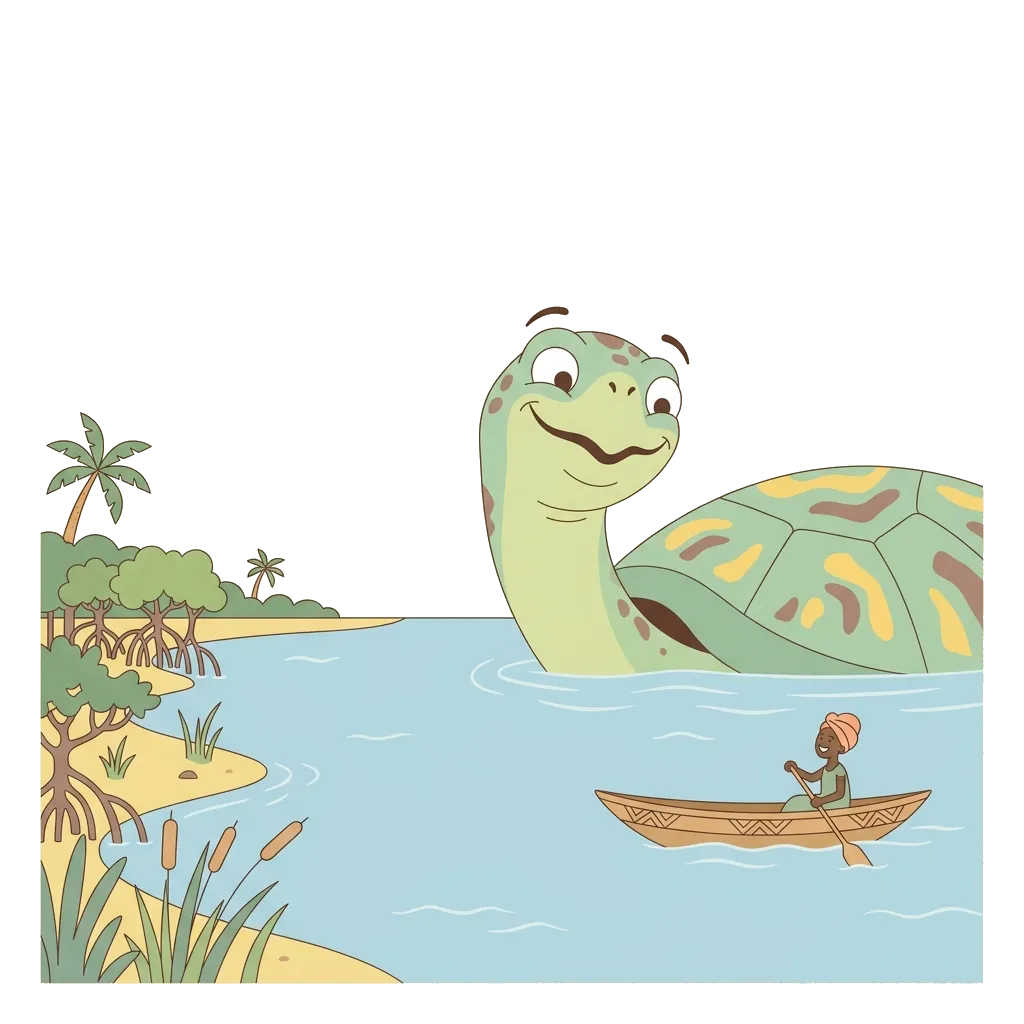
I found a fisherman who agreed to take me across by pirogue. The wood of the boat was warm under my fingers. We glided on the calm lagoon water, between the roots of the mangroves. Birds took off as we approached: herons, kingfishers, egrets.
Where the river meets the ocean, the spectacle is striking. Fresh water and salt water mix in a foamy whirlpool. The power of nature is palpable.
"Bouche du Roy," the fisherman said, pointing to the horizon, "is where everything begins and ends."
We stayed there, silent, watching the waves break on the sandbank.
Logistics at Bouche du Roy
Pirogue crossing: negotiate directly with fishermen at the landing. Expect 2,000 to 5,000 FCFA for the crossing and a short tour of the lagoon. Fix the price before boarding.
Duration: a minimum stop is 45 minutes. With a pirogue excursion through the mangroves, allow 2 hours.
Best time: early morning (8am to 10am) for bird activity and soft light. The site is shadeless at midday.
To plan your visit, our Bouche du Roy guide is essential.
Ouidah, memory: weight and light on the same afternoon
Midday, I took the road to Ouidah. The track gave way to a paved road. Coconut palms made way for colonial houses and churches.
Ouidah is a town that weighs. Its history is there, everywhere. On the Slave Route, I walked with my head bowed, as if in prayer. The bronze and iron statues along the path tell the unspeakable: the four-kilometre walk of captives to the ships.
The Door of No Return stands facing the ocean, monumental and fragile at once. An arch of memory looking west, there where millions of Africans disappeared.
I spent an hour sitting on the beach, listening to the waves. The same sound that those who left heard, three centuries ago.
The Python Temple offered a striking contrast. Sacred snakes coiled around altars, worshippers in prayer, offerings of milk and honey. Life continuing, spirituality crossing time.
Timing Ouidah on a road trip
If you are passing through rather than devoting a full day, the minimum circuit is Place Chacha → Python Temple → 30 minutes walking the Slave Route → Door of No Return. This takes about 2.5 hours and covers the emotional and historical core of the city.
For a full day in Ouidah, our guide to the Grand-Popo to Ouidah excursion will help you prepare your visit.
Towards the border: Hillacondji in 20 minutes
The second day, I headed for the Togolese border. The road was good, paved. In twenty minutes, I was at Hillacondji.
The border post was busy without being chaotic. Goods lorries waited their turn, sellers offered beignets and bottles of water. The customs officer glanced through my passport with a practised air, stamped it, and I was in Togo.
The difference was subtle. Shop signs changed colours. Motorbikes were more numerous. Women wore wraps with different patterns.
Border practicalities
Documents: valid passport (6 months' validity remaining), vehicle registration and driving licence. If driving a rental car, bring written authorisation from the rental company.
Crossing time: 20 to 45 minutes in normal conditions. Friday and Sunday evenings are the busiest. Avoid the last hour before the 10pm closure.
Cross-border insurance: compulsory for vehicles entering Togo. Sold at the border post for around 5,000 FCFA for one week.
Visa: ECOWAS nationals need no visa. Other nationalities obtain one on arrival for approximately 10,000 to 15,000 FCFA depending on nationality.
I drove to Aneho, the first Togolese town after the border. A market, a church, children playing football. Africa in its most everyday and beautiful form.
Formalities are detailed in our Grand-Popo to Lome Togo guide.
Lome and the return: the Grand Market, the beach, the drive home
The third day, I pushed on to Lome. The Togolese capital is an elegant anthill. The Grand Market swallowed me for two hours. Fabrics, spices, crafts, smiles. I bought a batik for my mother and a mask for my office.
Lunch on Lome beach: grilled fish, attieke (cassava semolina), sauce graine. An explosion of flavours for 4,500 FCFA (6.86 EUR).
What to prioritise in Lome on a tight schedule
If you have only one day in Lome, the non-negotiables are the Grand Market (two hours minimum, three if you enjoy fabric shopping), lunch on the seafront (any of the fish grills near the beach), and a walk past the Sacred Heart Cathedral and Independence Monument.
The craft village next to the monument is worth 30 minutes if you want textiles or wooden objects. Prices are negotiable and generally slightly lower than equivalent items in Cotonou or Ouidah.
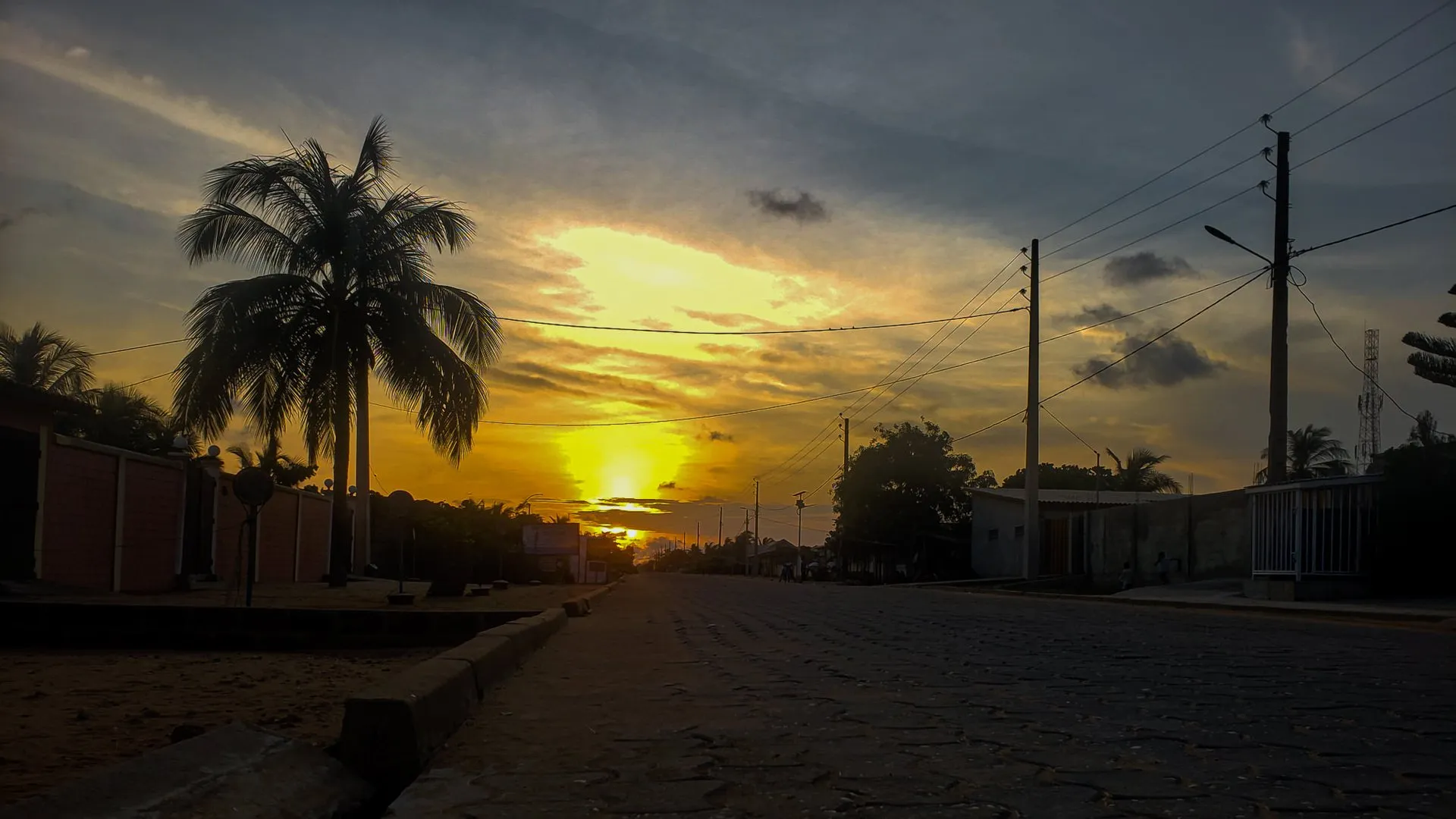
The return to Grand-Popo, in the late afternoon, had a taste of conclusion. The sun was declining over the ocean, golden light bathed the road. I drove slowly, windows open, hair in the wind.
Arriving in Grand-Popo at nightfall. Lion Bar was lit with lanterns, music carried to the road. I stopped for a glass of sodabi and one last look at the ocean.
The road trip was over. But the road, it continues.
Tips from the road
If you follow in the footsteps of this story, here is what I learned:
- Do not plan everything: the best discoveries are unplanned. An invitation to share a meal, a detour to an unknown beach.
- Take your time: the road trip in Benin is not measured in kilometres travelled but in encounters and suspended moments.
- Be curious: talk to people. Beninese are open and proud of their culture. A smile opens all doors.
- Respect the sites: historic sites like Ouidah are places of memory. Behave with respect and dignity.
- Travel light: a 15-kilo bag is enough for a week. The essentials are in the eyes.
- Keep cash in small denominations: FCFA coins and small notes are useful for markets, border sellers, pirogue fishermen and coconut vendors. ATMs are available in Ouidah and Lome but rare on the track.
To plan your own road trip, our complete coastal circuit gives a detailed itinerary with all the stops.
Plan Your Visit
Discover the magic of Grand-Popo with our curated local experiences.