


Why combine Grand-Popo and Ouidah
Grand-Popo and Ouidah are the two gems of the Beninese coast, barely 35 kilometres apart. Linking them in a single excursion is an obvious choice for any traveller wanting to understand the cultural and historical richness of southern Benin.
Ouidah is far more than a simple coastal town. A former colonial trading post and among the most active slave ports in West Africa, it carries the memories of the transatlantic slave trade. Its monuments — the Slave Route, Python Temple, Door of No Return — are UNESCO World Heritage sites and attract visitors from around the world.
Grand-Popo, more intimate and natural, offers the ideal setting to begin or end this day of discovery. Between the two towns, the road runs along the Atlantic Ocean, offering panoramas of coconut palm beaches that rank among the most beautiful in Benin. The 40-minute drive is part of the experience.
To place this excursion within a broader programme, see our guide to itineraries and excursions from Grand-Popo.
Distance and journey: 35 kilometres, four ways to travel
The distance between Grand-Popo and Ouidah is about 35 kilometres via the coastal road. The journey takes between 40 minutes and 1 hour depending on the mode of transport.
By private car or taxi
The most practical option. The road is paved for almost the entire route. From Grand-Popo, head east on National Road 1 (RNIE1) toward Cotonou, then turn toward Ouidah at the Pahou junction. Allow 45 minutes.
Cost of a day taxi: 25,000 to 35,000 FCFA (38 to 53.50 EUR), including waiting time while you visit. The driver drops you at Place Chacha, waits and takes you back to Grand-Popo at the end of the day. This is the most flexible and comfortable option — you control the pace of every site visit.
By shared bush taxi
Bush taxis leave regularly from Grand-Popo market toward Ouidah. The trip costs about 1,500 FCFA (2.30 EUR) per person. Less comfortable than a private car and dependent on the taxi filling up, but perfectly feasible for a solo traveller or couple on a budget.
Once in Ouidah, the main sites are accessible on foot. The Slave Route is a 4-kilometre walk by definition. For quick links between sites, zemidjan (moto-taxis) wait at Place Chacha and charge 200 to 500 FCFA per short trip.
By zemidjan (moto-taxi)
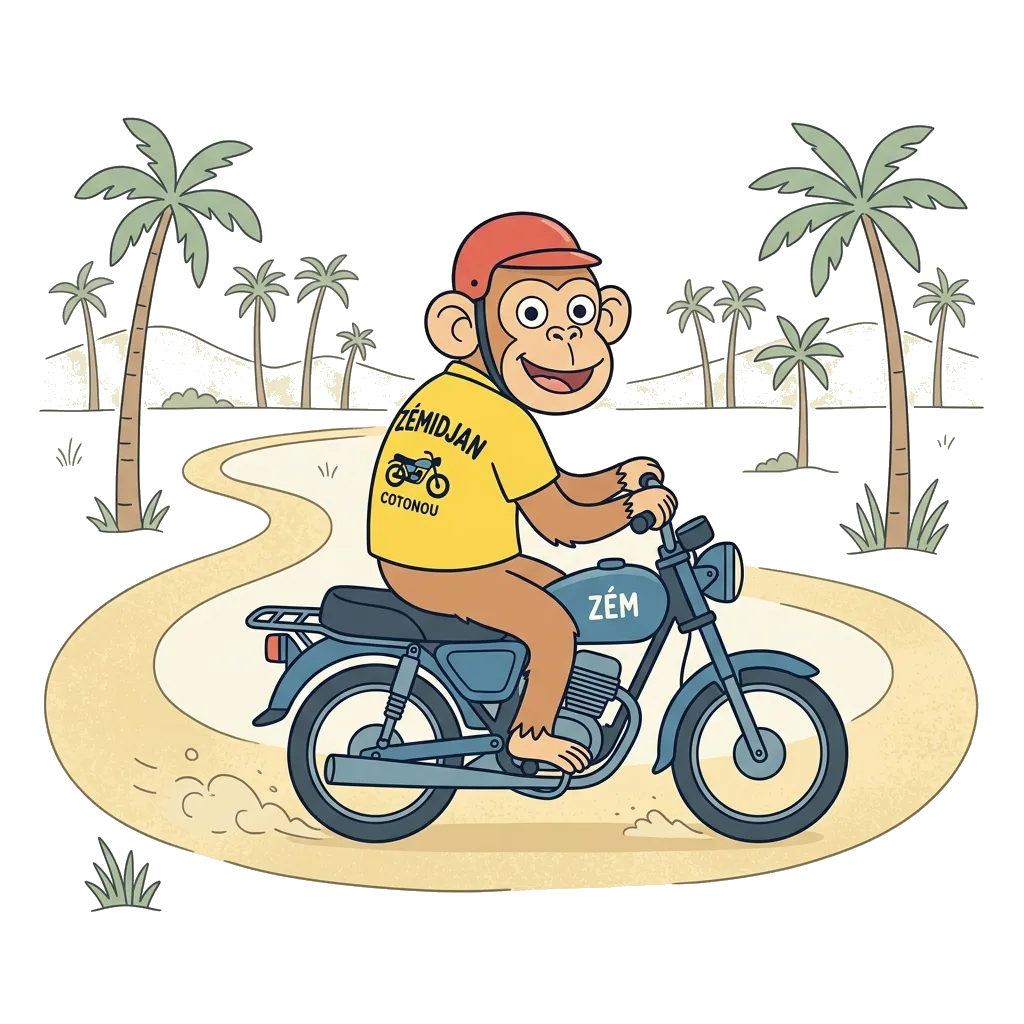
For the adventurous. Cost: 2,000 to 3,000 FCFA (3 to 4.50 EUR) and about 50 minutes on the back of a moto-taxi. Ask the driver to drop you at Place Chacha, Ouidah's historic centre. Wear sunglasses against the dust and keep your bag in front of you.
Our recommendation
Take a private taxi for the day. You will enjoy each site without time constraints and can stop along the way to admire the coast or take a photo of a particularly beautiful stretch of beach.
For transport details and prices, read our guide how to get to Grand-Popo from Cotonou.
What to see in Ouidah: the complete list
Ouidah is an open-air museum. Here are the unmissable sites, organised for an efficient day:
Place Chacha — the historic heart
The town's central square, surrounded by former colonial forts: Portuguese, French, English and Danish. The Basilica of the Immaculate Conception and the neighbouring mosque testify to Ouidah's remarkable religious syncretism. Place Chacha is where guides, ATMs, taxis and restaurants are clustered — start here every morning.
Portuguese Fort (History Museum)
Built in 1721, the Portuguese fort now houses the Ouidah History Museum. One-hour guided tour to understand the historical context of the slave trade: objects, maps, photographs and Vodun artefacts. Entry: 2,000 FCFA (3 EUR). This is the best starting point — context makes the Slave Route walk far more powerful.
Python Temple
A Vodun sanctuary where royal pythons live freely, embodying the spirit of Dan, the serpent deity. The pythons are calm and habituated to humans — the temple keeper will drape one over your shoulders if you wish. Entry: 1,500 FCFA (2.30 EUR). The pythons are most active in the cooler morning hours; visit before 11am for the best experience. Do not make sudden movements and follow the keeper's instructions at all times.
Slave Route
A 4-kilometre avenue lined with bronze statues telling the story of the captives, from the slave market to the beach. The Route starts at Place Chacha and ends at the Door of No Return. Walk it — do not drive. The statues are spaced along the route for a reason; the pace of walking gives the narrative time to land.
Door of No Return
A monumental arch on the beach, commemorating the captives' last step on the African continent before deportation to the Americas. The ocean view from this place is deeply moving. Sit for a while — the sound of the waves arriving from the west carries its own weight. No entry fee; the beach is public.
Sacred Forest of Ouidah
On the edge of town, this forest houses statues of Vodun deities, centuries-old trees and monkeys. A cool, shaded contrast to the beach walk. Entry: 2,000 FCFA (3 EUR). Visit after lunch, when the canopy shade is welcome.
Ouidah Beach
Wilder than Grand-Popo's beaches, with stronger surf. Ideal for a late-afternoon walk before returning. The beach stretches for kilometres in both directions from the Door of No Return.
Afro-Brazilian architectural heritage
Ouidah has several houses and churches built in the Afro-Brazilian style by freed slaves who returned from Brazil in the 19th century. Look for the distinctive painted facades around Place Chacha. Our article on Afro-Brazilian heritage explores this in depth.
The Slave Route: six stations of memory
The Slave Route is the most striking site in Ouidah and one of the most important in Benin. Classified as a UNESCO World Heritage site, it traces the path taken by millions of Africans deported to the Americas.
The 4-kilometre route starts at Place Chacha and descends to the beach. Along the way, bronze statues punctuate the narrative:
- The slave market — starting point. Captives were sold here.
- The tree of forgetfulness — a centuries-old kapok tree. Captives circled it three times to "forget" their origins and identities.
- The memory hut — captives underwent body markings to be identified as property.
- The tree of return — legend: one could still turn back before this tree. After it, there was no return.
- The lagoon — last frontier before the shore, crossed by boat.
- The beach and the Door of No Return — embarkation toward the unknown.
The Zinsou open-air museum, halfway along, exhibits contemporary African artworks in dialogue with this painful memory. Pause here — the juxtaposition of art and history is deliberately unsettling.
A guide is strongly recommended for the Slave Route. The statues tell a story only a guide can explain in full detail. Without context, the walk can feel like a list of sculptures; with a guide, it becomes a coherent, harrowing narrative. Official guides (yellow badge) wait at the entrance to Place Chacha. Cost: 10,000 to 15,000 FCFA (15 to 23 EUR) for a complete tour of the main sites.
Sample day itinerary from Grand-Popo
Here is a programme for a successful excursion:
8:00am — Depart from Grand-Popo Light breakfast at your accommodation. Leave early to enjoy the cool morning hours and beat the midday heat.
9:00am — Arrive in Ouidah, Place Chacha Drop-off at Place Chacha. Coffee on the square (500 FCFA at a local stand) before the sites open at 8:30am. Book your guide here if you want one for the day.
9:30am — History Museum (Portuguese Fort) One-hour guided tour. The chronological exhibits set the scene for the entire day.
10:30am — Python Temple 30-minute visit. The pythons are calm in the morning and most active. Don't rush — the atmosphere in the temple is unlike anywhere else.
11:00am — Slave Route on foot 4-kilometre walk to the beach. Allow 1h30 with stops at each statue. Wear closed shoes, carry 1.5 litres of water per person.
12:30pm — Door of No Return Arrive at the beach. Free time for contemplation, photography and a moment of silence facing the ocean.
1:00pm — Lunch Restaurant Le Jardin du Monde on the beach, or Chez Melissa near Place Chacha.
2:30pm — Sacred Forest 45-minute guided tour in the shade of centuries-old trees. The coolest visit of the day.
3:30pm — Art and shopping Galleries and craft workshops around Place Chacha. Ouidah has some of the best Vodun art and Afro-Brazilian crafts in Benin.
4:30pm — Return to Grand-Popo Enjoy the late afternoon light on the coastal road. If your driver takes a beach track shortcut through Avlo, the drive back is itself a scenic bonus.
5:30pm — Arrive in Grand-Popo End of excursion. Time for the beach, a shower and sunset.
Where to eat in Ouidah
Le Jardin du Monde
Restaurant facing the beach, near the Door of No Return. Beninese and international cuisine — grilled fish, chicken yassa, fragrant rice. Budget: 7,000 to 12,000 FCFA (10.50 to 18 EUR) per person. The terrace facing the ocean is the best table in Ouidah.
Chez Melissa
Restaurant in a restored Afro-Brazilian house near Place Chacha. Beninese specialities. Budget: 5,000 to 8,000 FCFA (7.50 to 12 EUR). The interior courtyard is pleasant at noon.
La Case à Palabre
Relaxed atmosphere, local cuisine. Ideal for a quick lunch between sites — grilled chicken, rice and sauce. Budget: 4,000 to 6,000 FCFA (6 to 9 EUR). Tables fill up fast at 1pm; arrive early or eat at 12:30pm.
Bring cash: few restaurants and no sites accept bank cards. ATMs are available at Place Chacha (BIA Benin and Ecobank branches).
Practical tips
Leave early and use the cool hours
The heat becomes intense from 11am. Sites open at 8:30am. The Slave Route on foot should be done in the morning — 4 kilometres in the midday sun is uncomfortable. Schedule the Sacred Forest for the afternoon when you want shade.
Water and sun protection
Bring at least 1.5 litres per person for the day. Bottled water is available in Ouidah at 300 to 500 FCFA per bottle, but having your own ensures you always have enough on the Slave Route walk.
Sun protection: hat, sunglasses, sunscreen. The reflection of sun on the ocean is intense at the Door of No Return — the beach section has no shade.
Dress comfortably but cover up
Shorts and t-shirts are accepted everywhere. For the Python Temple and Sacred Forest, light long trousers are recommended — mosquitoes and dense vegetation. Also useful: closed shoes for the Slave Route walk (the path is uneven in places).
The pythons
The royal pythons at the temple are harmless and accustomed to humans. They move slowly and deliberately. Do not make sudden movements. The keeper instructs visitors throughout — follow the instructions and you will have an extraordinary experience.
How much time to budget
A full day (8am to 5pm) is the minimum to discover the essentials without rushing. If you have two days, spending a night in Ouidah allows you to explore in more depth: the Afro-Brazilian quarter at sunset, the early-morning market on Place Chacha, the less-visited colonial forts.
FAQ
Can the Grand-Popo to Ouidah excursion be done in half a day? Yes, if focusing on the essential sites — Python Temple and Door of No Return. But a full day allows you to truly discover Ouidah at a pace that does it justice.
Do I need a guide for Ouidah? Not compulsory, but warmly recommended. The statues on the Slave Route tell a story that only a guide can explain in detail. Without a guide, the visit loses much of its depth.
What is the best day to visit Ouidah? Weekdays (Tuesday to Thursday) are quieter. At weekends, especially Sunday, Ouidah attracts many local visitors. Avoid January 10 (Vodun Festival) if you prefer calm visits — Ouidah is extremely busy and accommodation fills months in advance.
Can I visit Ouidah without a car? Yes. From Grand-Popo, shared taxis leave regularly from the market. Moto-taxis (zemidjan) are an alternative. Once in Ouidah, all main sites are accessible on foot or by zemidjan.
What currency do I need? FCFA (West African CFA franc), cash. ATMs on Place Chacha. No sites or restaurants accept bank cards reliably.
Plan Your Visit
Discover the magic of Grand-Popo with our curated local experiences.