






Some destinations you visit. Grand-Popo you live, savour, breathe. There is no compulsory programme, no checklist, no attraction you must not miss. Here, luxury is taking your time, following your intuition, letting chance encounters guide your day.
Yet for those who like a framework, an idea of what a perfect day in Grand-Popo could be, here is a story. It is not a model to follow, but an invitation to imagine your own. Every day here is different, shaped by the light, the wind, the moods and happy coincidences. Grand-Popo activities are many, but the most beautiful might be doing none of them and letting yourself be carried along.
6:00am: the rooster wakes you before any alarm could
No alarm needed. The rooster takes care of that, impertinent and punctual. His rasping voice pierces through the coconut palms, relayed by his counterparts, until the whole neighbourhood is awake. You grumble, turn over, pull the sheet. But the light filtering through the shutters is so soft, so promising, that you get up without regret.
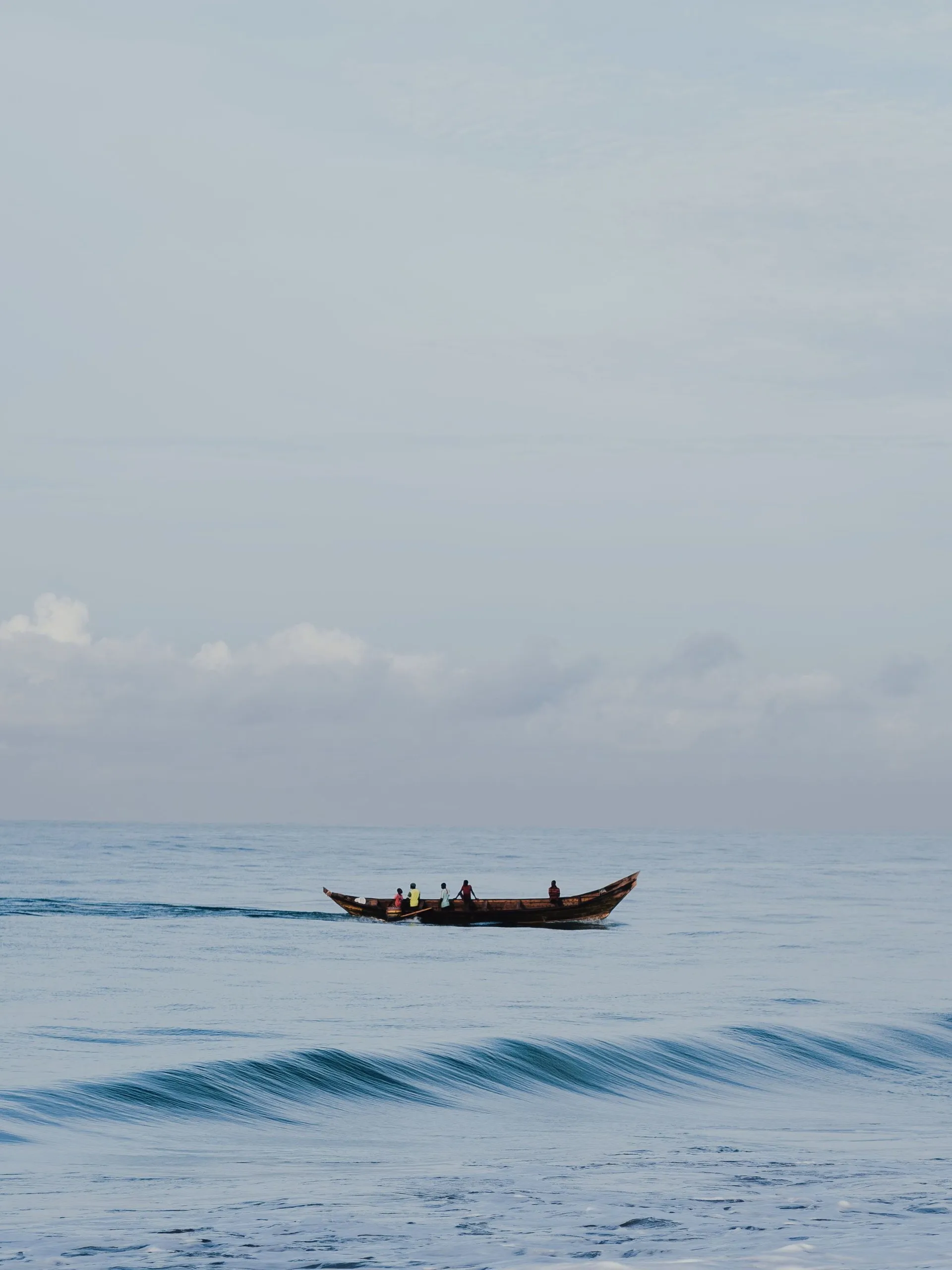
The ecolodge terrace is still cool at this hour. The ocean is there, vast and calm, its first ripples edged with pink foam. A fisherman hauls in his nets a few metres from the shore, a dark silhouette in the nascent light. The salty haze floats above the sand, softening every outline. You can smell the sea and something woody — probably palm wood smoke from the first cooking fires in the village.
You make coffee in the kitchenette, or better, go down to the restaurant for the breakfast the household has prepared: crusty baguette, butter, homemade mango jam, cut fruit, a boiled egg, and a tall glass of fresh ginger juice that clears the sinuses instantly. You eat slowly, watching the first swimmers venture into the water, listening to birds calling from one coconut palm to another. The day has barely begun, and already it is beautiful.
The sky at 6am in Grand-Popo carries colours that disappear by 7am. A thin orange band sits at the horizon above the ocean, fading through pink into a pale blue that deepens as you look overhead. The fisherman on the beach is working into this backdrop without looking at it. He has seen it every morning for thirty years.
To choose where to stay and live this waking experience, our Grand-Popo accommodation guide will help you find the ideal place.
7:00am: the market — colours, noise and the best introduction to local life
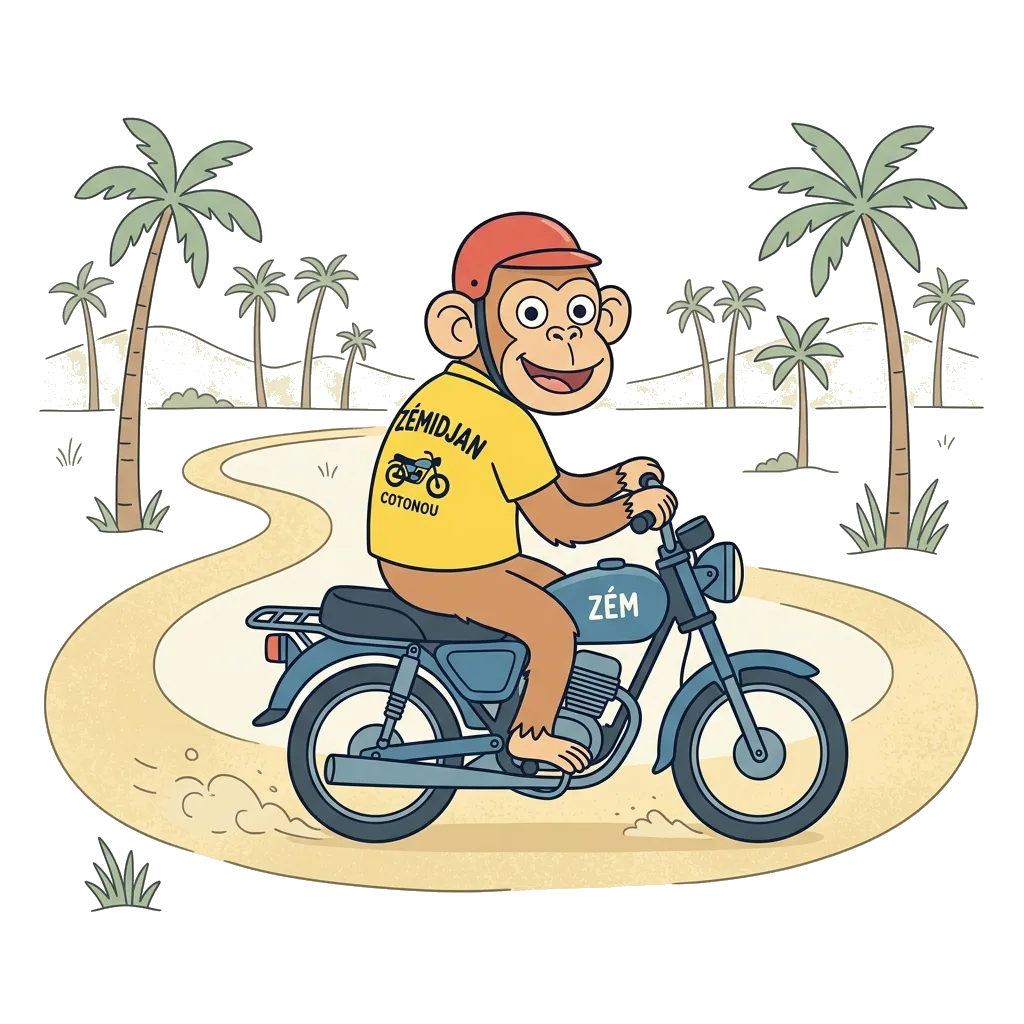
An hour later, the town truly awakens. Head to the central market, on foot or by moto-taxi (zemidjan) for 200 FCFA (0.30 EUR). As you approach, you hear the hum: the calls of sellers, bargaining, laughter, motorbikes weaving between the stalls.
Grand-Popo market is a sensory explosion. Pyramids of red tomatoes and green chillies, mountains of cassava and yams, basins of fresh fish with still-glistening scales, piles of tropical fruits filling the air with sweet scents. Each aisle is a living picture, each stall an invitation.
You buy dried prawns to take home, juicy mangoes for lunch, a piece of wax fabric you do not need but is too beautiful to resist. The sellers joke, try to lure you, compliment your French. The market is also a human spectacle, the best introduction to life in Grand-Popo. A few words of Fon or Xwla — even badly pronounced — produce instant laughter and warmth. Ask someone to teach you "merci" in their own dialect; the answer varies by quarter.
7am is the best time. The ice is still cold, the fish still stiff from overnight. By 9am the sun is higher and both fish and patience begin to wilt. Buy what you need, then find a stall selling fresh pineapple juice — one woman near the fabric section has been pressing it with the same hand-cranked machine since before you were born.
9:00am: pirogue on the Mono — into the silence of the mangroves
The heat begins to rise, but the Mono River offers its coolness. A guide waits at the jetty, a dazzling smile under his faded cap. He helps you into his pirogue, a long wooden boat painted in bright colours, and pushes you out with an expert paddle.
The river is calm at this hour. Birds are active — kingfishers dive for fish, egrets advance in measured steps through the shallows. The guide points out a crocodile motionless on a low branch, a weaver bird nest suspended over the water, a family of monkeys in the riverside trees. He knows the individual crocodiles in this stretch of river the way a farmer knows his fields.
After an hour, the mangroves close in. The mangroves form a vegetal tunnel where light filters in green shafts. The guide cuts the engine and paddles in silence, not to disturb the animals. You hear the lapping of water, the rustle of leaves, the distant call of a hornbill. The air is cooler and smells of mud and green water. It is a moment of absolute fullness, suspended outside time.
The pirogue sits low. You can trail your hand in the water and feel the temperature change as you move from sun patches into shade — a difference of three or four degrees, enough to register on your palm. The guide notices you doing this and says something in French too fast to catch, then grins. You grin back. Language, it turns out, is optional on a good river morning.
This excursion is Grand-Popo's flagship activity. To book and choose your circuit, our guide on the pirogue excursion details available options.
11:30am: Chez Paterne — the finest fish of the morning, on a table in the sand
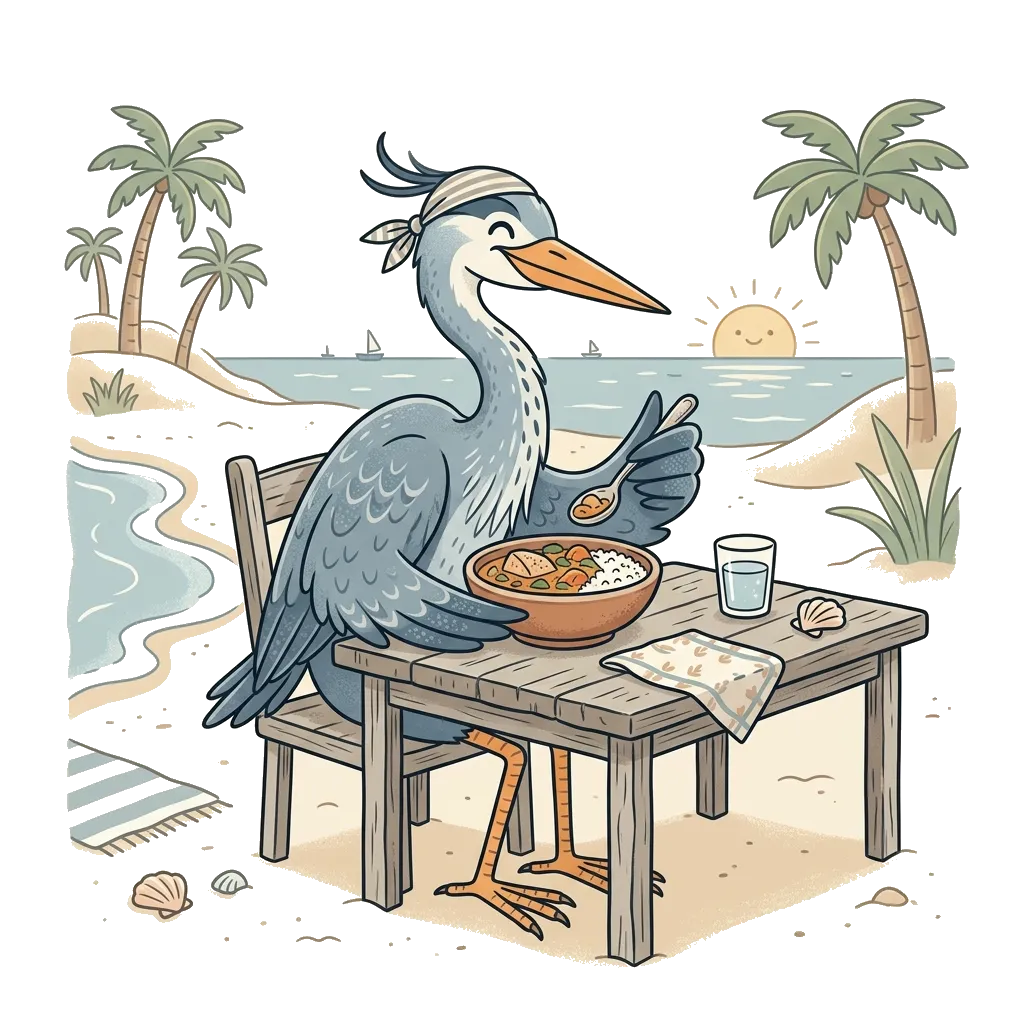
Your appetite sharpened by the river air, head to the beach for the essential stop of any Grand-Popo day: lunch at Chez Paterne. Arrive around 11:30am to be sure of a table, and already the smell of palm wood burning and marinating fish fills the air.
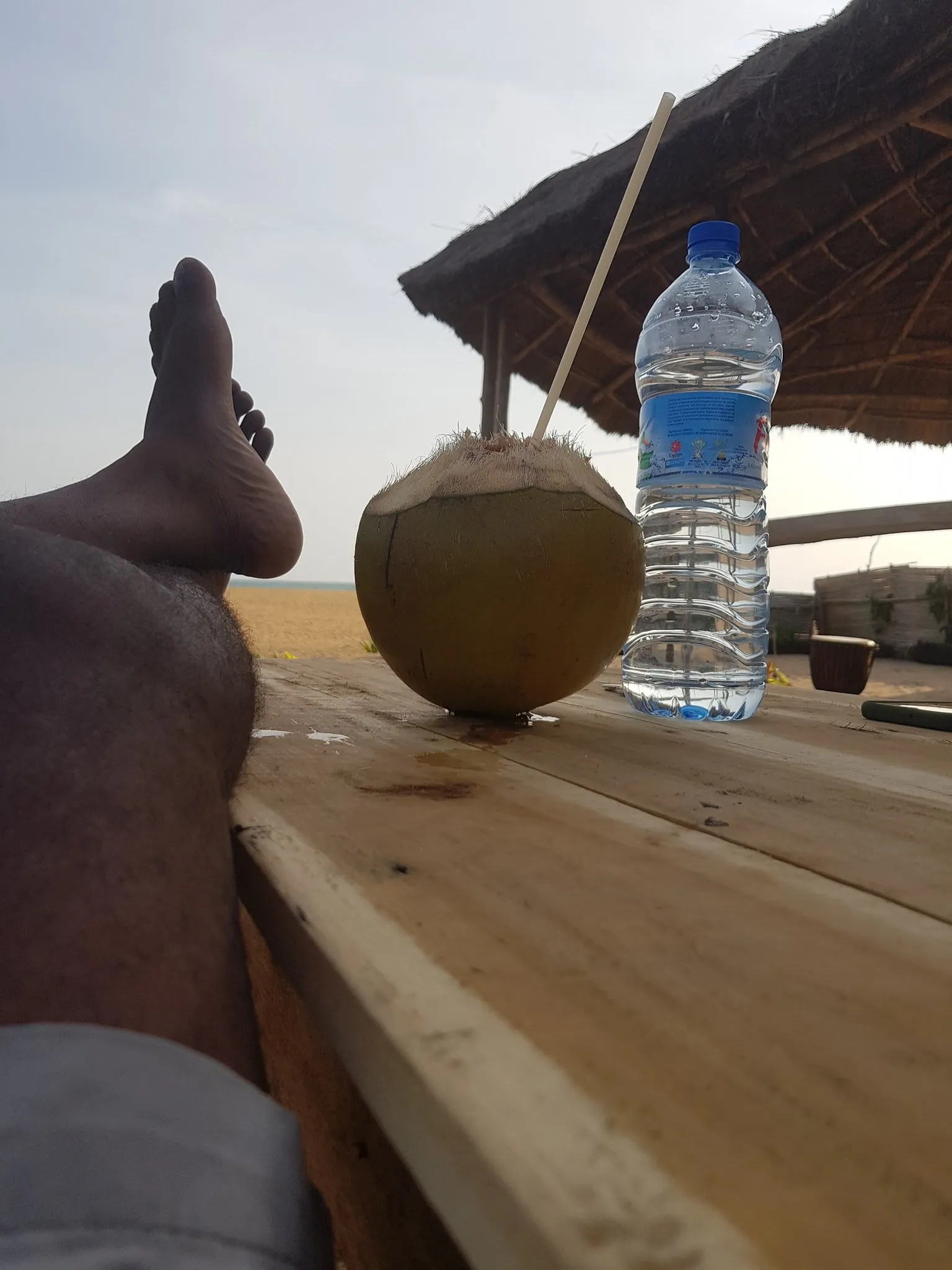
Paterne greets you with a broad smile, seats you at a table with your feet in the sand, facing the ocean. A fresh-squeezed pineapple juice appears before you have even ordered. You do not need a menu: Paterne comes to describe the day's catch with painterly gestures. Dorade coryphene, he tells you. The finest of the morning. He shows you the fish, still twitching on ice.
The wait is part of the experience. You watch the waves, read, chat with neighbouring tables. When the fish arrives, set on a large platter, conversation stops. The skin is crispy and golden, the flesh white and tender, perfumed by Paterne's secret marinade. You eat with your fingers, dip each piece into the hot sauce, close your eyes to savour better.
The meal ends with a small glass of sodabi on the house. Expect 7,000 FCFA (11 EUR) per person for this feast. A meal remembered for a lifetime.
2:00pm: Villa Karo — art, shade and a library in a colonial garden
After lunch, the heat is at its peak. It is time for a siesta, or better yet, a visit to Villa Karo. This Finnish-African cultural centre, housed in a beautifully restored former colonial home, offers a cool, inspiring break.
The garden is a haven of peace. Large century-old trees provide precious shade, benches invite reading under the frangipani trees — the scent of frangipani in still afternoon air is one of Grand-Popo's secret pleasures. The library is well stocked, with works on African art, Vodun culture, the region's history. You can also visit the resident artists' studios, chat with a sculptor or writer who has come from around the world to draw inspiration in Grand-Popo. Some artists welcome questions; others are in mid-session and you leave them to work.
Villa Karo regularly organises events: concerts, exhibitions, performances. The programme is posted at the entrance. You sometimes discover unsuspected talents, works that stay long in the memory.
Late afternoon is the best time to arrive. Mornings at Villa Karo belong to the artists — you hear typing, the scrape of a tool, the occasional murmured conversation. By 2pm the pace relaxes and the garden fills with a different quality of light: lower, warmer, coming through the trees at an angle that turns the white walls amber. Bring a book. Stay longer than you planned.
For opening hours and programme, our Villa Karo guide keeps you informed of events not to be missed.
4:00pm: beach and relaxation — when the light turns gold and the day slows down
The heat begins to ease. It is the ideal time for a long walk on the beach. The fifteen kilometres of golden sand offer an endless playground, and at this hour, the light is magnificent.
You walk barefoot, the cool sand underfoot, the small waves sometimes wetting your ankles. You meet fishermen mending their nets, children playing football, a group of women returning from the salt pans with basins of salt on their heads. Every encounter brings a smile, a wave, a cheerful "hello". The children near the fishing quarter sometimes follow for a few minutes, asking where you are from, then veering off to their own games.
You stop for a quick swim, watching the currents. The water is warm, the waves buoyant. You float for a while, eyes lost on the infinite horizon. It is this kind of moment that gives full meaning to "letting go". The late afternoon water has a reddish cast from suspended silt, and the waves feel slightly more powerful than in the morning.
The light at 4pm in Grand-Popo is not the same light as at noon. It comes from lower, catches the tops of waves differently, turns the wet sand into a mirror for twenty seconds after each retreat. Photographers who arrive only for sunset miss the most useful hour of the day.
5:45pm: the magic hour — Lion Bar, a Sunset Punch and the whole town holding its breath
Every evening in Grand-Popo, at the same time, the whole town seems to hold its breath. Lion Bar gradually fills, the last fishermen bring in their pirogues, families settle on the sand. The sunset show begins.
You settle at Lion Bar with a Sunset Punch. The terrace is full, but nobody speaks loudly. All eyes are turned to the horizon, where the sun slowly descends into the ocean, where the sky puts on colours that are always renewed.
This evening, the show is particularly fine. The sky is orange at the horizon, pink above, mauve higher still. The light clouds are fringed with gold, reflections dance on the water. When the sun touches the horizon line, it seems to hesitate for a moment, then slips quickly, swallowed by the sea. Applause breaks out, as it does every evening — spontaneous, genuine, from everyone on the terrace.
Colours linger long after the sun has disappeared. This is the gentlest moment of the day, the blue hour, when the light is so beautiful you wish you could hold it back. The sunset in Grand-Popo is a spectacle you never tire of watching.
7:30pm: an evening that extends itself naturally
Night has fallen, but the day is not over. Lion Bar comes alive with soft music, candles are lit on the tables. You order a last drink, watching the stars appear one by one. Without city light pollution, the stars here have a density that city dwellers rarely see — the Milky Way can be faint but visible on clear nights.
For dinner, you can stay at Lion Bar for a simple meal, or head to a neighbouring beach restaurant. On lucky evenings, Lion Bar hosts a concert: a local guitarist, a blues singer, a traditional percussionist. The music blends with the sound of the waves, and the evening stretches out naturally.
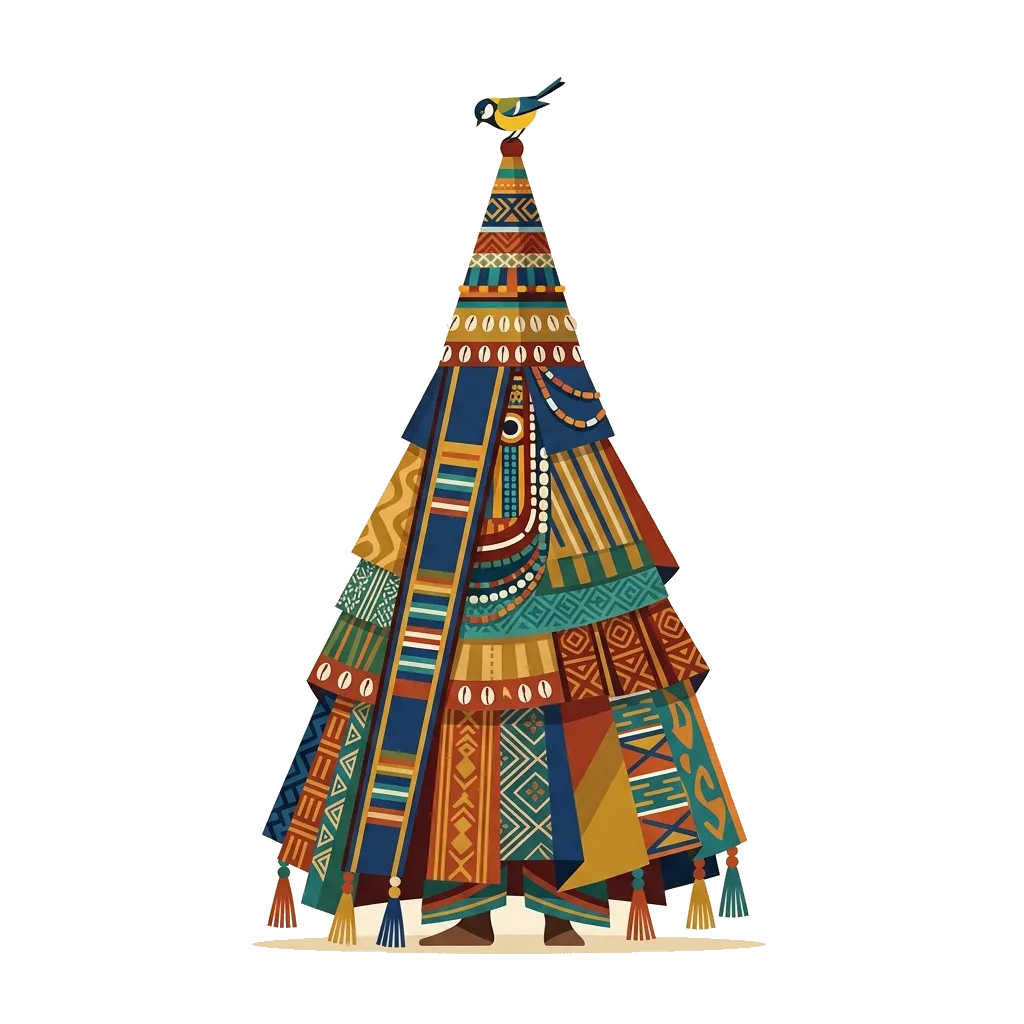
Sometimes a Zangbeto evening is organised in a nearby village. The night guardians, those watchful sentinels in raffia costumes, dance to the rhythm of drums to protect the community from evil spirits. It is a fascinating spectacle, a dive into the ancestral traditions of Benin. Ask your accommodation whether one is planned during your stay — they happen spontaneously and are rarely advertised in advance.
You walk back to the ecolodge along the beach. The moon reflects in the water, crickets sing in the coconut palms. The night air has dropped to something that feels almost cool after the heat of the afternoon — a difference of eight or ten degrees that your skin registers with relief. You slip under the mosquito net with a smile. Tomorrow will be another day, different but just as beautiful.
To organise the following days, our complete Grand-Popo guide accompanies you in planning your stay.
Plan Your Visit
Discover the magic of Grand-Popo with our curated local experiences.