







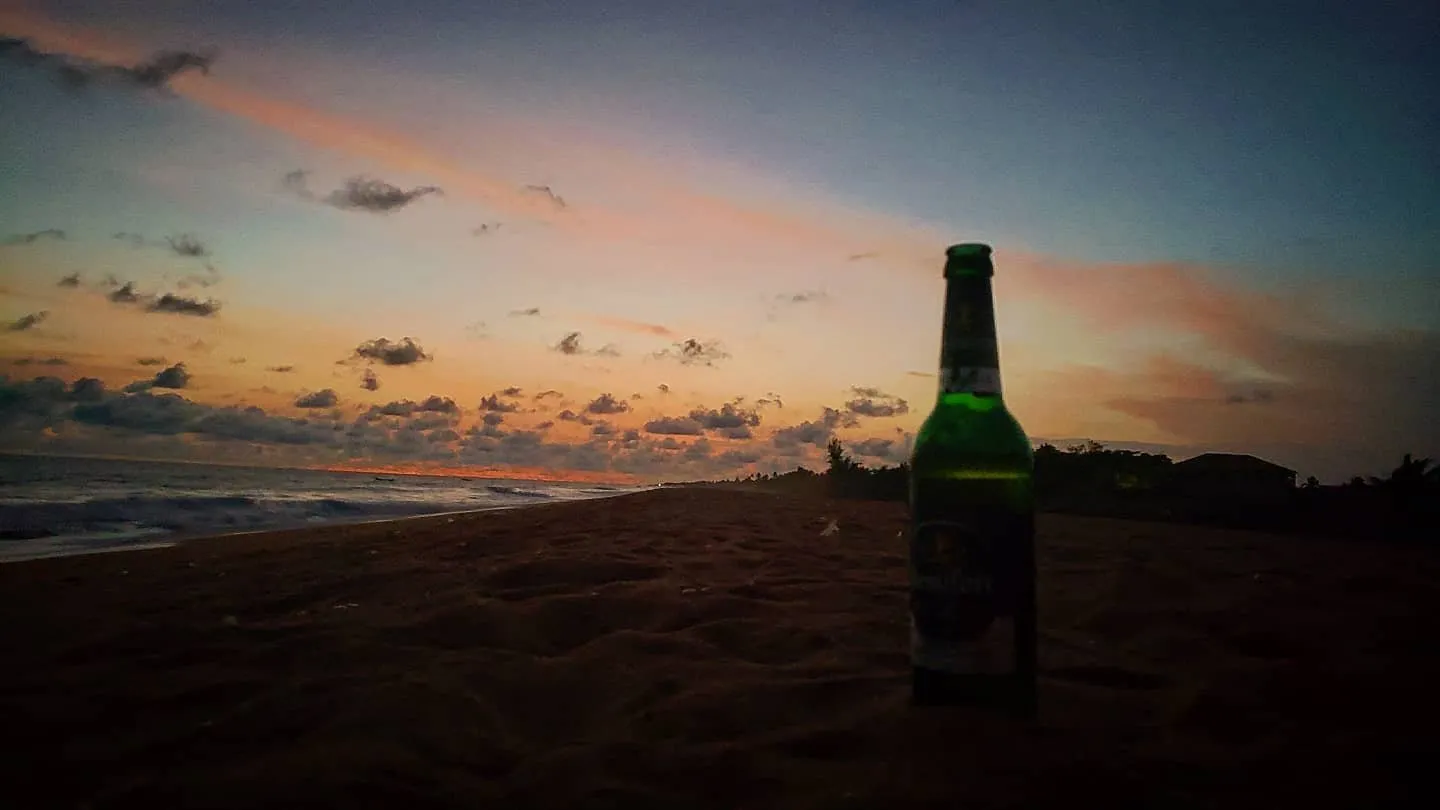
Every evening in Grand-Popo, the sky puts on a free, ever-changing show. The Grand-Popo sunset is one of the finest on the West African coast, a daily ritual that locals and travellers never tire of watching. When the sun plunges into the Atlantic, setting the sky ablaze with orange, purple and violet hues, time seems to stand still.
There is a reason sunset is such a sacred moment in Grand-Popo. It is when the day's heat subsides, the salty haze softens every outline, fishermen bring in their pirogues, and families gather on the beach. It is a shared moment of grace, when the whole community stops to watch the same horizon. Grand-Popo activities are many, but none matches this daily spectacle. To complete your evening, our selection of Grand-Popo restaurants awaits for dinner with your feet in the sand.
What makes the Grand-Popo sunset different from everywhere else
What makes the Grand-Popo sunset so special is the quality of the light. The African sky, charged with sand particles and humidity, diffracts sunlight in a unique way, creating hues found nowhere else. Colours seem more saturated, contrasts more marked, shadows deeper.
Every sunset is different. Sometimes the sky blazes deep red when Saharan sand particles carried by the harmattan are most numerous — the air itself turns a dusty rose, and the horizon burns copper for a full twenty minutes after the disc drops. Other evenings, the tones are softer: gentle pink, mauve, pale orange. On stormy evenings, the spectacle is dramatic: black clouds crossed by lightning, with the sun fringing them gold as it disappears over the horizon.
Grand-Popo's location, at Benin's southwestern tip, offers an unobstructed maritime horizon towards the setting sun. The ocean is to the west, meaning the sun sets directly over the sea — a spectacle only the west coasts of Africa and the Americas can offer. The absence of any headland, harbour wall or high-rise means the full disc is visible from the moment it begins to colour the sky to the last second of its disappearance.
There is also something about the people. Wherever you watch the sunset in Grand-Popo, you watch it with others. Strangers who would not speak during the day find themselves leaning forward together as the disc touches the horizon. That collective attention — the held breath of twenty people facing the same direction — changes what you see. It adds a social warmth that no empty horizon can replicate.
Four sunset spots, four different atmospheres
Grand-Popo offers several prime spots to watch the sunset, each with its own atmosphere and unique viewpoint. From the lively beach bar to the wild tip of Bouche du Roy, via the tranquil riverbanks, there is a spot for every mood.
For a complete experience, start your evening with a sunset at one of these spots, then continue with dinner at one of Grand-Popo's restaurants to prolong the magic.
Lion Bar: community ritual at the ocean's edge
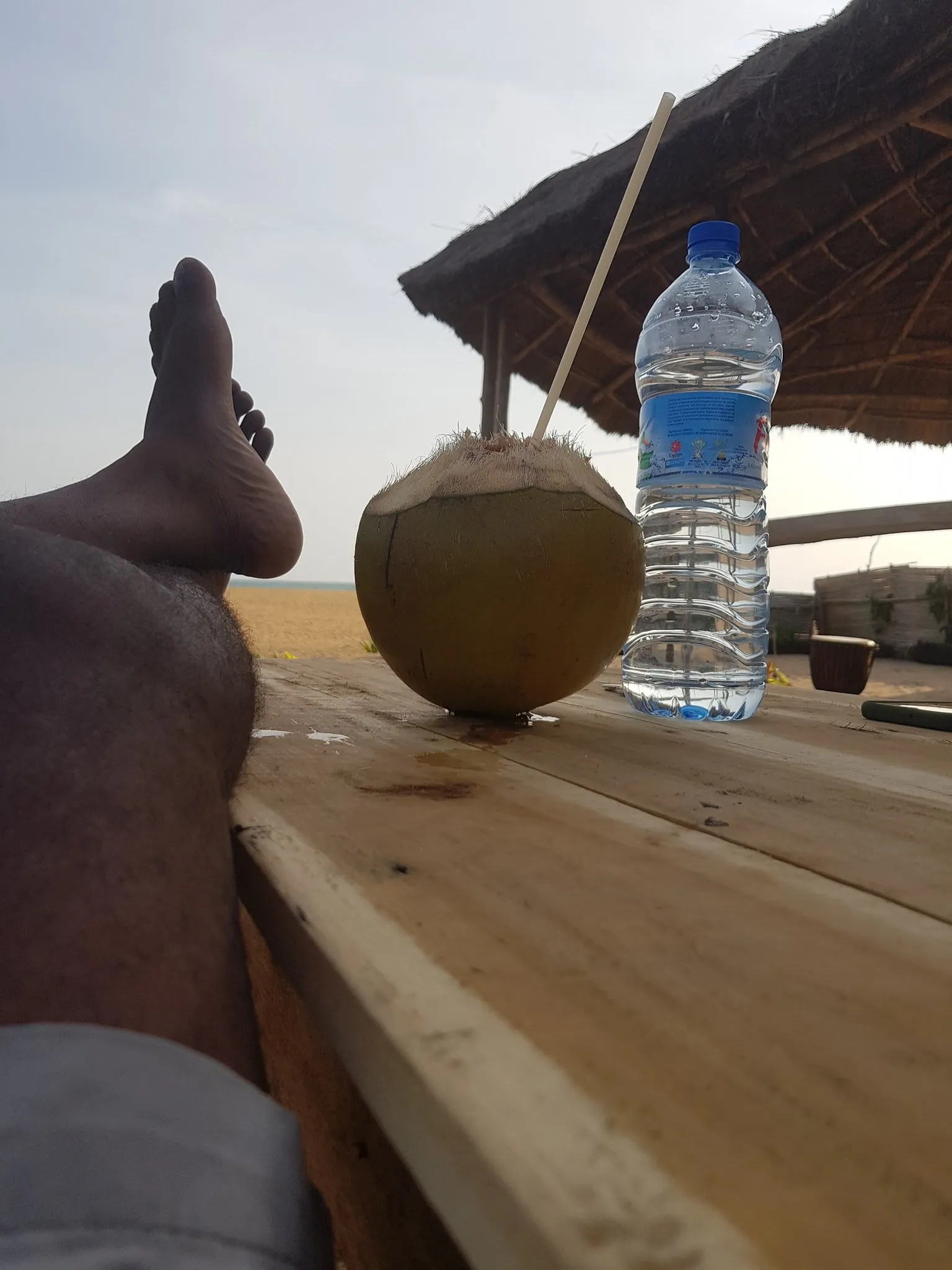
Lion Bar is the most famous spot to watch the sunset in Grand-Popo. Set directly on the beach with uninterrupted ocean views, this open-air bar-library is the daily meeting point for travellers and expats.
The atmosphere is unique. Wooden tables placed on the sand, shelves full of books, a menu of fresh fruit cocktails, and the sound of waves as a backdrop. As the sun descends, conversations quieten, as if everyone is holding their breath. When the orange disc touches the horizon, a near-religious silence falls — you can hear the waves, a distant generator, the chink of a glass. Then, as the last rays disappear, spontaneous applause erupts.
Lion Bar serves its most famous cocktails at sunset: the Sunset Punch (pineapple juice, local rum, ginger syrup) and the Popop Colada (coconut cream, pineapple, white rum). To be sipped slowly, watching the colours change in the sky.
Arrive by 5pm to secure a table facing the ocean. By 5:30pm on peak evenings, the front row fills quickly. Standing is fine — the view is equally good from anywhere on the beach — but a seat on the sand is the true Lion Bar experience.
For those wanting to learn more about this legendary spot, our article on Lion Bar tells its story and cultural role.
Grand-Popo beach: solitude and the full weight of the Atlantic
For those who prefer a wilder, less crowded setting, Grand-Popo beach offers an equally magnificent spectacle in silence and space. Just walk a few hundred metres from the town centre to find a deserted stretch of beach where sunset is experienced in complete privacy.
The best beach spot is east of Lion Bar, where coconut palms thin out and the beach widens. Sit on the sand facing the ocean. The waves die at your feet, the sea breeze cools your skin, the sky unfolds in a palette of changing colours. It is a moment of pure contemplation.
The beach is also the favoured spot for fishermen returning at sunset. The silhouettes of pirogues against the blazing horizon offer scenes of striking beauty. Do not hesitate to chat with them — they are often happy to share a moment and pose for a photo. A few words of greeting in the local Xwla language — ask your host to teach you one — will earn a wide smile.
Walking east without stopping, you can cover two kilometres and still be back before dark. The beach between Lion Bar and the first village cluster is especially wide after the spring tides, and the wet sand reflects the sky in a second, wobbling canvas below your feet.
To complement this experience, artisanal fishing in Grand-Popo lets you experience sunrise on the ocean, offering a symmetrical counterpart to this sunset.
Mono River: reflections, night creatures, and unhurried beauty
The sunset viewed from the Mono River has a more intimate, gentler beauty. Here, no powerful waves or infinite horizon: the water is calm, the banks lined with mangroves, and the sky reflects in the river's mirror with impressive precision.
Lodges and restaurants on the Mono's banks offer terraces overlooking the water, ideal for a drink or dinner at sunset. The spectacle is doubled: the sky ablaze above you, and its perfect reflection in the water below. When the sun has disappeared, colours linger in the sky and water for another twenty minutes, in a gradual fade that seems never-ending.
The most magical moment is when the first bats leave their perches in the mangroves for their night hunt, crossing the sky in silhouette against the last orange light. It is the sign that night has fallen and the nocturnal animals are taking over — an hour later, if you stay, you may hear the calls of nightjars from the coconut groves.
For a unique experience, combine sunset with a pirogue excursion on the river. Local guides know the best angles and exact times to enjoy the spectacle.
Bouche du Roy: the most dramatic viewpoint in Grand-Popo
Bouche du Roy, where the Mono River meets the Atlantic Ocean, offers the most spectacular sunset in Grand-Popo. The site is about 10 kilometres east of the town centre, accessible by car or pirogue.
The spectacle is grand: the river and sea mix in a play of opposing currents, ocean waves die on the sandbar separating the two waters, and the sun sets exactly in the axis of the channel, creating a unique light effect. Colours reflect in both the fresh river water and the salty ocean, creating parallel mirrors. The foam catches the orange light and holds it for a second before dissolving into dark water — a composition that no photographer forgets.
It is also an excellent spot for long-exposure photography. Photographers capture ethereal images of reflections on the river's smooth water, contrasted with the foaming ocean waves. The site is particularly photogenic in the dry season, when the sky is clearest.
One thing to plan for: Bouche du Roy is further than it looks on a map. Leave Grand-Popo by 4:30pm at the latest if you are going by car, 3pm if you take a pirogue. Arriving in a hurry, sand-dusted and flustered, is the one way to miss the quality of the light that makes this spot worth the effort.
Access to Bouche du Roy is by car (15 minutes from the centre) or pirogue (30 to 45 minutes). For a complete experience, our Bouche du Roy guide gives all practical information.
When to arrive: timing, seasons and what nobody tells you
Sunset in Grand-Popo follows a regular rhythm, with variations by season. On average, the sun sets between 5:45pm and 6:45pm depending on the time of year.
During the dry season (November to March), the sky is generally clear and sunsets are more spectacular. Days are longer and the sun sets around 6:30pm-6:45pm. This is the best season for sunset photography enthusiasts.
During the rainy season (April to October), sunsets are less predictable. Clouds can mask the horizon, but when the sky clears at the right moment, colours are intensely rare. Storm clouds add a dramatic dimension to the spectacle. The sun sets around 6:00pm-6:15pm in this season.
Whatever the season, arrive at least 30 minutes before the expected sunset time to enjoy the first hues and find the best spot. The golden light preceding sunset (the golden hour) is as beautiful as the sunset itself — portraits taken in this light have a warmth that midday sun never produces.
The detail most visitors miss: the fifteen minutes after the sun disappears. The disc drops, the applause sounds — and most people immediately check their phones. Stay another fifteen minutes. The afterglow is slower and stranger than the sunset itself, the sky cycling through colours that have no names. That is when the best photographs happen.
How to photograph the sunset
Grand-Popo is a paradise for sunset photographers. Here are some tips for capturing the spectacle.
Recommended equipment: a tripod is useful for long exposures, especially at Bouche du Roy or on the beach with waves. A polarising filter reduces reflections on water and saturates sky colours. A wide-angle lens (24-70mm) is ideal for broad landscapes, a telephoto (70-200mm) for details and silhouettes.
Settings: expose for the sky, not the ground. Cameras tend to overexpose the sky when the ground is dark. If your camera allows, use bracketing (multiple shots at different exposures) to merge later. Shooting RAW gives you an extra stop of recovery in the highlights.
Composition: include foreground elements to add depth to the image. Silhouettes of pirogues, coconut palms, fishermen on the beach make excellent subjects. Reflections in the river water offer magnificent symmetrical compositions.
Golden hour: arrive one hour before sunset. The soft, golden light of this period is ideal for portraits and landscapes — and most visitors miss it entirely because they arrive too late.
Phone photography: modern smartphones handle golden-hour light well. Turn on the grid to level the horizon, tap the sky to lock exposure, and stand still. The biggest mistake is shooting with a wet or sandy lens — wipe it first.
For photographers wanting to go further, sunset hour remains the golden window for capturing Grand-Popo's coastline at its most dramatic.
FAQ
What is the best place to watch the sunset in Grand-Popo? Lion Bar on central beach is the most popular spot. Bouche du Roy offers a wilder, more spectacular setting. The Mono River banks are recommended for an intimate atmosphere.
What time does the sun set in Grand-Popo? Between 5:45pm and 6:45pm depending on the season. Arrive 30 minutes early to enjoy the full light.
Can I watch the sunset from the Mono River? Yes, and it is one of the most beautiful viewpoints. Lodges and restaurants on the riverbank offer terraces with views.
Are there fees to access sunset spots? No, access to the beach and river is free. Lion Bar is a bar, so consumption is chargeable.
Can I organise a sunset picnic on the beach? Yes, many visitors do. Bring your own food and drinks, and respect the environment by taking your rubbish with you.
Plan Your Visit
Discover the magic of Grand-Popo with our curated local experiences.