






Grand-Popo is not just a destination for the eyes. It is a journey for the taste buds. Nestled between the Atlantic Ocean and the Mono River, this strip of Beninese coastline offers a culinary scene of surprising richness, where seafood meets land-grown treasures, and ancestral recipes blend with Afro-Brazilian influences brought by returning Agoudas.
Grand-Popo food tells the story of a generous terroir and a people who know how to host. From a corn porridge breakfast to grilled fish dinner under the stars, every meal is a celebration. Let us guide you through the flavors that make this unique coastal town beat.
For a broader look at Beninese dining, check our guide to local traditional cuisine. And if you want to book a table, our selection of Grand-Popo restaurants awaits.
Grand-Popo, where the river feeds the ocean's table
What makes Grand-Popo's cuisine so special is its roots in a territory of abundant resources. The ocean supplies fish, crabs, shrimp and lobster with the rhythm of the tides. The Mono River and its tributaries teem with freshwater fish and crustaceans. The surrounding lands, fertilized by alluvial deposits, produce cassava, corn, leafy greens, chilies, okra and tropical fruits in profusion.
Beninese cooking rests on simple pillars: a starch base (corn, yam or cassava paste) paired with a generous sauce, all topped with fish or meat. But in Grand-Popo, the proximity of the sea adds a maritime dimension that elevates the local table to an experience. You taste iodine in the salt, smoke in the dried shrimp, brine in the lagoon oysters. The land and the sea are inseparable here.
Spices play a central role: fresh chili, ginger, garlic and stock cubes (a staple of West African cooking) create marinades and sauces that rival any great culinary tradition. Every family guards its preparation secrets, passed from mother to daughter for generations. Open a sauce pot in Grand-Popo and the steam carries garlic, palm oil and something else you cannot quite name — a mineral warmth that speaks of the lagoon, the salt pans, the tapper who climbed the palm at dawn.
A meal in Grand-Popo is also a social moment. No one eats alone: you share. Portions are generous, hosts insist you take more, and refusing would be a slight. It is this warmth, as much as the quality of the produce, that makes the Grand-Popo food experience so memorable.
Traditional local cuisine
Beninese cuisine deserves to be better known by international travelers. In Grand-Popo, traditional dishes are prepared with fresh market ingredients, following ancestral recipes that have survived generations without a need for written records.
Staple pastes and their companions
The most common dish is corn paste (called akassa or red paste), a fermented corn flour preparation cooked until firm and smooth. It is served with various sauces: tomato sauce with smoked fish, okra sauce, peanut sauce or baobab leaf sauce. The paste is eaten with the fingers: take a small piece, roll it into a ball, dip it in the sauce. The motion is quick and practiced, the result a perfect bite-sized mouthful.
Amiwo is another specialty: a corn paste cooked with fresh tomato and red palm oil, which gives it a characteristic orange-red color and a slightly sweet flavor. It is a festive dish, often served on special occasions. The palm oil turns it from a neutral backdrop into something rich and layered.
Grilled fish, the undisputed king
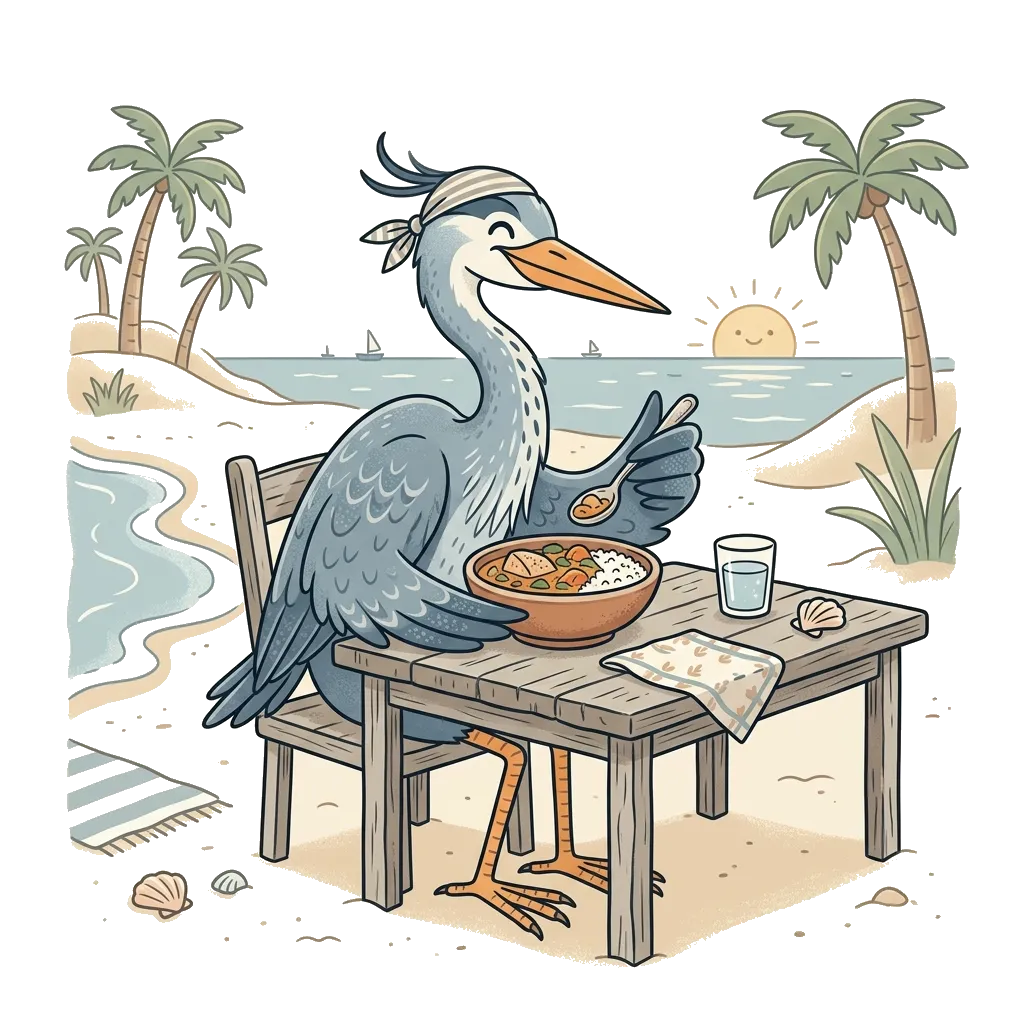
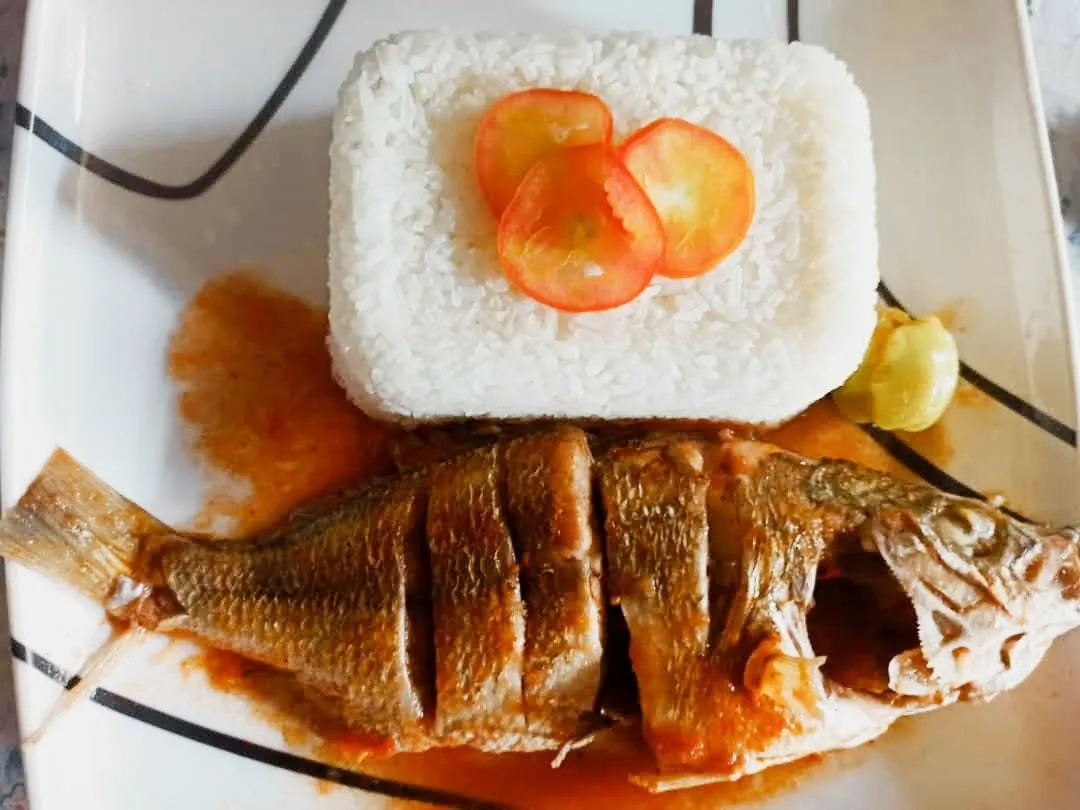
Grilled fish is without question the star dish of Grand-Popo. Fishermen bring in the day's catch that very morning: captainfish, sea bass, sole, grouper, wahoo or jack. The fish is marinated in a blend of garlic, ginger, chili and local spices, then grilled over wood fire until the skin is crispy and the flesh tender and fragrant. The smell of the grill carries across the beach from fifty meters away; by the time you sit down, the anticipation is already part of the meal.
It is served with attieke (fermented cassava semolina, similar to couscous), alloco (fried plantain) or sauteed vegetables. A squeeze of fresh lemon, a homemade hot sauce, and the feast is complete. Expect to pay 3,000 to 6,000 FCFA (5 to 9 EUR) for a generous grilled fish at a local restaurant.
For more on traditional dishes, our local cuisine guide details each specialty with its ingredients and history.
Seafood
Grand-Popo is a paradise for seafood lovers. The waters of the Atlantic and the Mono River offer an exceptional diversity of marine products, with a freshness that travelers from Europe rediscover with delight.
Local species worth knowing
Mono River crabs are famous throughout the region. Their flesh is particularly flavorful, especially those caught during the dry season (November to March). Prepared in sauce, grilled or in soup, they are a prized delicacy. In sauce, they turn the cooking liquid a deep brick red, the crab fat and chili melting together into something extraordinary.
Lagoon shrimp, smaller than their farmed cousins but infinitely more tasty, are sauteed with garlic and chili. You will find them at markets and in restaurants from the simplest to the most sophisticated. Their concentrated sweetness comes from feeding in the nutrient-rich lagoon water where the Mono meets the sea.
Lobsters and spiny lobsters are caught offshore by Xwla fishermen who brave the Atlantic waves in their pirogues. An accessible luxury: count 8,000 to 15,000 FCFA (12 to 23 EUR) for a grilled lobster at a beach restaurant.
From boat to plate
What makes the difference in Grand-Popo is the time between catch and plate. The fish you eat in the evening was caught that very morning, sometimes just hours earlier. This exceptional freshness transforms a simple grilled fish into a taste experience. You can feel it in the texture of the flesh — it holds together in flakes rather than falling apart, and the flavor is clean rather than heavy.
For the curious, it is possible to accompany fishermen on a sea outing with artisanal fishing — an adventure that begins before dawn and ends with tasting your catch.
Sodabi
No exploration of Grand-Popo's gastronomy would be complete without sodabi, the artisanal palm alcohol that is much more than a drink: it is a cornerstone of Beninese culture and social life.
Ancestral craft, living tradition
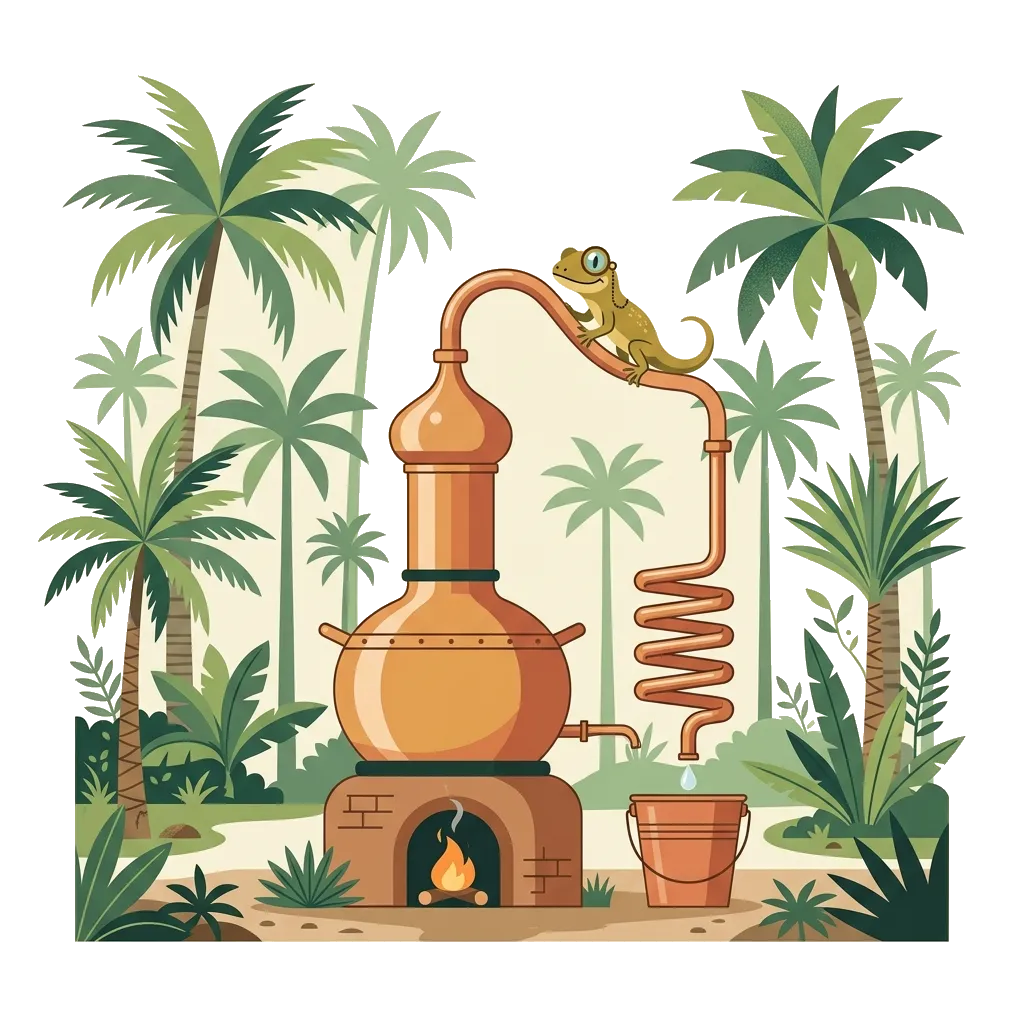
Sodabi is obtained by distilling palm wine, itself harvested by tapping the inflorescences of oil palm or borassus palms. The sap that flows out is collected in calabashes, then spontaneously fermented for a few days. Then comes the artisanal distillation, in rudimentary metal or clay stills heated over wood fire.
The result is a clear spirit, between 40 and 50 percent alcohol, with a frank and slightly smoky taste. Every distiller has his touch, his secret that makes the difference. Smell two different bottles and you will find two different personalities: one earthy and dry, the other floral and warm. A good sodabi finishes long and warm, without the harshness of industrial spirits.
The village of Heve
A few kilometers from Grand-Popo, the village of Heve is the beating heart of sodabi production in the region. Here you will find artisanal distilleries where visitors are welcomed with the legendary generosity of Beninese people. A visit to Heve allows you to understand the entire process, from palm wine harvesting to bottling, and to taste different varieties.
Sodabi is drunk neat, at room temperature, as an aperitif or digestif. It naturally accompanies fish and seafood dishes. Some versions are flavored with lemon, honey or spices — a gentler introduction for uninitiated palates.
Discover artisanal sodabi distillation and plan a visit to Heve for an immersion in this centuries-old tradition.
Best restaurants
Grand-Popo offers a range of restaurants that will satisfy all tastes and budgets. Here is a selection of the addresses that make the town's culinary reputation.
Fish and seafood restaurants
Chez Paterne is the reference institution. This beach restaurant serves the best grilled fish on the coast, prepared according to a closely guarded family recipe. The atmosphere is relaxed, feet in the sand, with the sound of waves as a backdrop. Count 5,000 to 10,000 FCFA (8 to 15 EUR) per person.
The beach restaurants lining the coast all offer a similar menu: grilled fish, sauteed shrimp, crab in sauce. Each has its specialty and atmosphere. Some offer an unbeatable view of the sunset — a spectacle worth the trip alone.
Lion Bar, better known for its cocktails and nightlife, also offers a menu of simple but quality dishes, perfect for a light lunch facing the ocean.
Local and family cuisine
For an authentic experience, guesthouses often offer dinner by reservation. This is the chance to taste family cooking prepared with love, far from tourist menus. These meals are generally served communally, in a warm atmosphere that encourages exchange. The cook usually comes to the table after the meal, and the conversation stretches long into the evening.
The restaurant guide gives you a complete selection with addresses, hours, specialties and price ranges for each establishment.
Markets and street food
The market experience
The Grand-Popo market is a sensory explosion. Stalls overflow with colorful produce: juicy tomatoes, green and red chilies, fresh okra, African eggplants, cassava, yams, plantains. The women vendors, seated behind their pyramids of fruit and vegetables, call out to you with a smile.
The fish market, located near the beach, is a spectacle in itself. From 7 am, pirogues return from the night's fishing. The catch is unloaded, sorted, negotiated in a friendly cacophony. The freshest fish go first — arrive early to see the bustle. The smell of iodine and salt is bracing, almost medicinal.
Street food
Street food in Grand-Popo is a chapter of its own. Doughnuts (ata, akara) are prepared in the morning and sold by the roadside, served with a chili sauce or bean porridge. Brochettes of beef or chicken, marinated in spices and grilled over coals, are the quintessential afternoon snack. The char on a good brochette is dry and fragrant, not bitter.
Tropical fruits deserve a special mention: dripping mangoes, sweet pineapples, juicy papayas, fresh coconuts. Sold individually at markets or along the beach, they are the perfect dessert after a fish meal.
For a complete overview of street food, our street food guide takes you to discover the best vendors.
Cooking classes
For travelers who want to take a piece of Grand-Popo home, cooking classes are the ideal activity. Several local cooks offer culinary workshops where you learn to prepare Beninese dishes, from market to plate.
The typical format starts with a market visit to choose the day's ingredients, accompanied by your chef. You learn to recognize the freshest fish, seasonal vegetables, essential spices. Then, head to the kitchen for a hands-on session of two to three hours, punctuated with tips and anecdotes about local food culture.
Classes are generally followed by a meal where you taste your own preparations. An immersive experience that delights food lovers and the curious alike.
Count 15,000 to 25,000 FCFA (23 to 38 EUR) per person for a complete class, market included. Book your Grand-Popo cooking class for this unique experience.
Local drinks: beyond sodabi
Beyond sodabi, Grand-Popo offers a range of local drinks to discover. Palm wine (atchohoun in the local language) is the non-distilled version, fresh and lightly fermented, with a sweet and tangy flavor. It is consumed within the day of harvest, before it ferments too much. Drink it in the morning and it is barely alcoholic. By evening, it bites.
Bissap, hibiscus flower infusion, is a refreshing drink served chilled, slightly sweetened. Tamarind juice, ginger juice and baobab juice are the other refreshing beverages found everywhere. The baobab version is thick and slightly sour, reminiscent of tamarind but earthier, and surprisingly filling.
Freshly pressed fruit juices are a safe bet: mango, pineapple, orange, papaya. Tropical fruits are pressed to order and served with ice. A glass of cold ginger juice after a long walk along the beach is one of the small pleasures that define a Grand-Popo afternoon.
Dining etiquette
A few simple rules will help you fully enjoy the culinary experience in Grand-Popo while respecting local customs.
Always wash your hands before eating — an important ritual, since many dishes are eaten with the fingers. Your host or the restaurant will offer a basin of water and soap.
It is polite to wait for the host to start the meal. If invited to a local home, do not arrive empty-handed: a fruit, a drink or a small gift is always appreciated.
Eat with the right hand only. The left hand is considered impure in traditional contexts. Serve yourself and eat with the right hand — it is a mark of respect.
Do not refuse a second serving. In Benin, insisting that the guest eats their fill is a sign of hospitality. Accept, even if you take a small portion. And compliment the cook: Beninese people are proud of their cuisine, and your praise will be met with a broad smile.
Tipping is not mandatory but appreciated. Leave about 10% of the bill in restaurants, or round up the amount.
Grand-Popo food is much more than simple nourishment: it is a gateway to the soul of this region. Every dish tells a story, every flavor carries the memory of the land and the people who shaped it. By exploring the markets, sitting at the tables of local restaurants, or learning to cook alongside village women, you will leave with much more than recipes — a true piece of Grand-Popo in your heart.
Plan Your Visit
Discover the magic of Grand-Popo with our curated local experiences.