







Sodabi is much more than an alcoholic drink in Benin. It is a central element of culture, spirituality and social life, especially in Grand-Popo and the lagoon villages that surround it. This artisanal palm spirit accompanies every major moment of Beninese life: births, weddings, funerals, Vodun rituals, reunions among friends. Going to meet sodabi means diving into the heart of Xwla identity and discovering an ancestral craft passed down through generations.
To understand the place of sodabi in local culture, start by exploring our Grand-Popo food and drink guide. And if distilling intrigues you, know that the village of Heve is the cradle of this tradition in the region.
Sodabi: palm wine's fiery transformation
Sodabi is an artisanal spirit obtained by distilling palm wine, the sweet, milky liquid that flows from cut palm inflorescences. The name comes from a deformation of the English word soda water, introduced by European sailors, but the tradition is purely African and dates back several centuries.
Palm wine, called atchohoun in the local language, is a lightly fermented drink (2 to 4 percent alcohol) consumed fresh within the day of harvest. Drink it cold in the morning and it is almost sweet, barely alcoholic. By evening, after eight more hours of fermentation, it has sharpened considerably. Sodabi, on the other hand, is the result of its distillation: a clear spirit between 40 and 50 percent alcohol, with a frank, slightly smoky taste and vegetal notes that recall the palm from which it comes.
Sodabi production is an essential artisanal activity in the villages of the region. Every distiller has his recipe, his touch, his manufacturing secrets passed down through the family. It is this diversity that makes the richness of sodabi: no two are alike, each bottle tells a story.
Distillation process: from tree to glass
Making sodabi begins at the foot of oil palms (Elaeis guineensis). The harvesters, called tappers, climb the trees with impressive agility. They incise the palm inflorescences with a special knife and attach a calabash or plastic container to collect the sweet sap that flows out.
This sap, fresh palm wine, is collected twice a day: morning and evening. It is then poured into plastic drums to ferment naturally for 24 to 48 hours. The liquid becomes slightly acidic and alcoholic, ready for distillation.
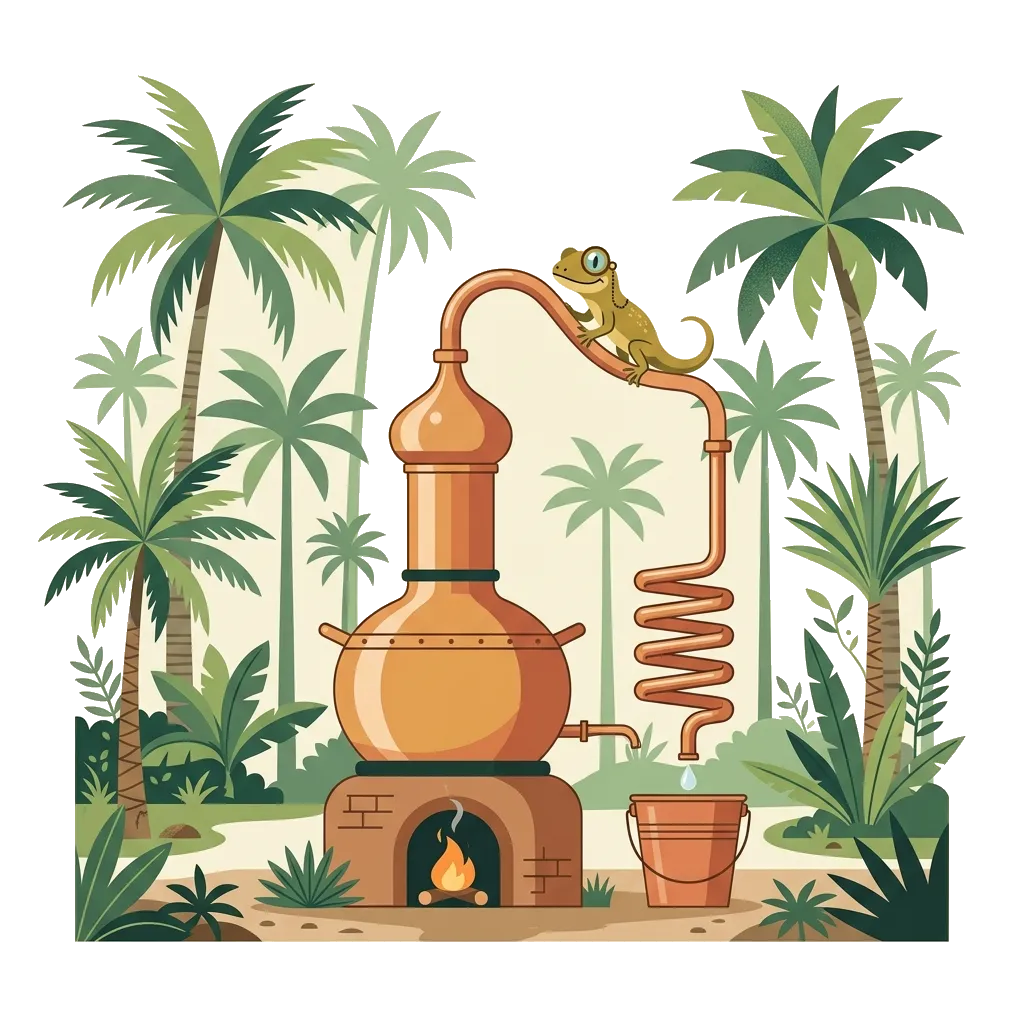
Artisanal distillation is a fascinating spectacle. The stills are made of recycled metal drums (often old oil barrels), topped with a copper or aluminum lid. A wood fire heats the fermented palm wine. The alcohol vapors rise, pass through a copper coil cooled by water drawn from a basin placed above. The coil condenses the vapor back to liquid and the sodabi drips out, clear and warm.
The distiller monitors the alcohol content with a jeweler's attention. The first run, called the head, is the strongest (50 percent and above). It is sometimes reserved for connoisseurs and rituals. The heart, around 40-45 percent, is the most balanced part, intended for sale and everyday consumption. The tail, weaker, is often redistilled or used for medicinal preparations. A drop of the heart on the fingertip burns cleanly, leaving behind a faint sweetness that tells the distiller the batch is right.
The village of Heve, where every courtyard holds a still
North of Grand-Popo, nestled between the calm arms of the lagoon, the village of Heve is the beating heart of artisanal sodabi production in the region. This is where the pulse of this centuries-old tradition truly beats. Heve is a village of distillers, where you meet entire families who dedicate their lives to transforming palm wine into this emblematic spirit.
The village is about 15 minutes from Grand-Popo by car or zemidjan. The road is an adventure in itself, lined with coconut trees and cassava plantations. Arriving in Heve, the first smells of smoke and alcohol greet you: the artisanal distilleries are everywhere, set up in house courtyards, under mango trees, along the lagoon.
The inhabitants of Heve are proud of their craft. They welcome visitors with the legendary generosity of Beninese people. They will show you the process, let you taste fresh palm wine and young sodabi, explain the secrets of each step. It is a total immersion in a living tradition, far from tourist circuits.
Access to Heve is made easier by the Fishing Route, the mythical coastal road that connects Grand-Popo to the fishing villages of the coastline. An excursion that wonderfully combines the discovery of landscapes and local culture.
Visiting an artisanal distillery
A distillery visit in Heve is one of the most authentic experiences Grand-Popo can offer. Here is what awaits you.
The welcome happens around a glass of fresh palm wine, served in a calabash. The liquid is cloudy and white, faintly tangy on the tongue, still fermenting slightly in the afternoon heat. The distiller explains the different stages of production. You will see the stills in action, smell the alcohol vapors rising from the drum, observe the expert hand of the master distiller adjusting the fire and checking the alcohol content by burning a sample on a fingertip.
Tasting is of course on the program. Young sodabi, freshly distilled, is powerful and frank. Some distillers offer older versions, aged in wooden barrels, with a rounder and more complex taste. Others still let you taste their medicinal infusions: sodabi macerated with roots, barks, rare herbs gathered from the sacred forest.
Each distillery has its specialty. Here, lemon is added to soften the taste. There, honey is macerated for a sweeter spirit. Further on, spiced sodabis are prepared: ginger, cinnamon, vanilla. An infinite variety that testifies to the creativity of Heve's distillers.
The visit generally lasts one to two hours. It is advisable to come in the morning, when distillation is in full swing. Transport is easy from Grand-Popo by zemidjan (1,000 to 2,000 FCFA, or 1.50 to 3 EUR). Most distilleries do not charge an entrance fee, but it is customary to buy a bottle as a thank you.
Tasting and flavors: what a good sodabi feels like
Sodabi is a spirit to be discovered with respect and without hurry. Its flavor is unique: vegetal, slightly smoky, with notes of nut and butter. The first sip surprises with its power and frankness. On the palate, quality sodabi is smooth despite its strength, with a long, warm finish that spreads from the throat to the chest. Cheap sodabi burns without warming; good sodabi warms without burning.
For a first approach, some prefer a flavored sodabi. Lemon versions are the most accessible, followed by honey sodabi, sweeter and softer. Enlightened amateurs seek aged sodabis, which develop aromas of wood, vanilla and candied fruit.
Sodabi is drunk neat, at room temperature, in a small glass. In local maquis and bars, it is often served as an aperitif, accompanied by brochettes or doughnuts. It is also excellent as a digestif, to close a meal of grilled fish.
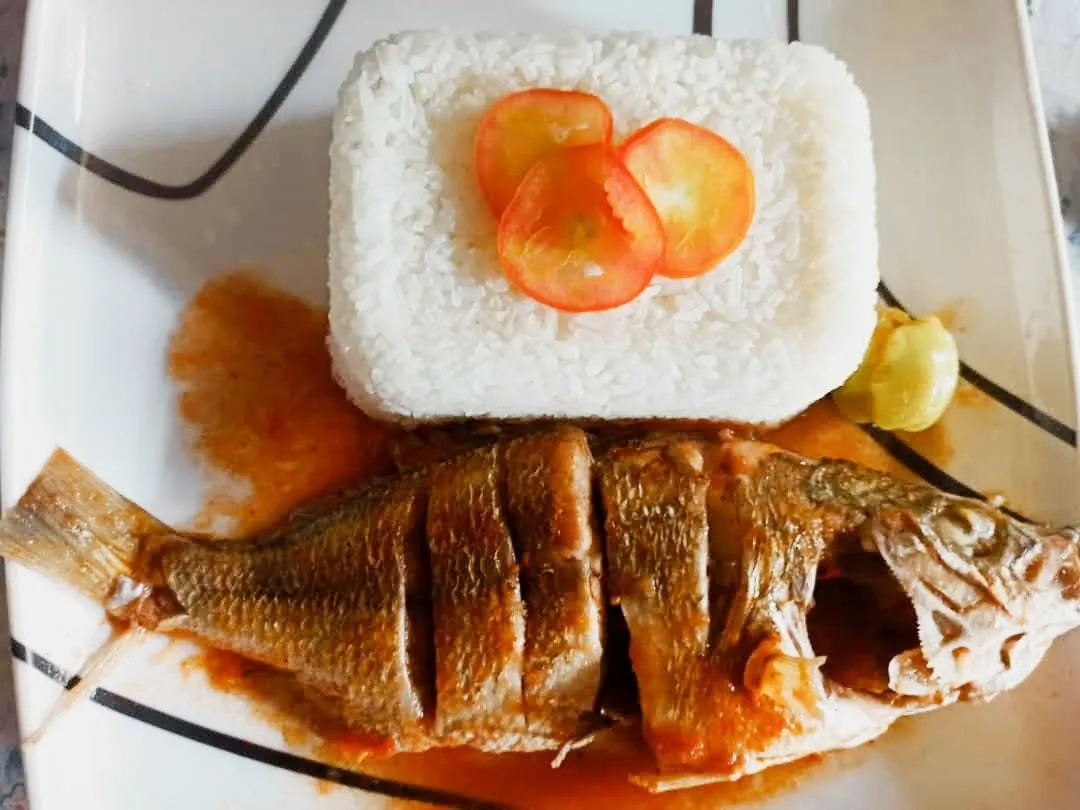
The perfect pairing: a fresh sodabi accompanies a grilled fish at Chez Paterne, the benchmark of Grand-Popo restaurants. The contrast between the smoky fish flesh and the vegetal power of sodabi is an experience not to be missed.
Sodabi in Vodun, weddings and fishing ceremonies
Beyond its gastronomic aspect, sodabi plays a fundamental role in Beninese culture and spirituality. In the Vodun tradition, it is used as a libation to honor deities and ancestors. Before any important ceremony, a few drops of sodabi are poured on the ground, accompanied by words of reverence. This simple gesture is charged with deep meaning: it is a call to the ancestors, a request for blessing. It is said to carry protective and purifying energy.
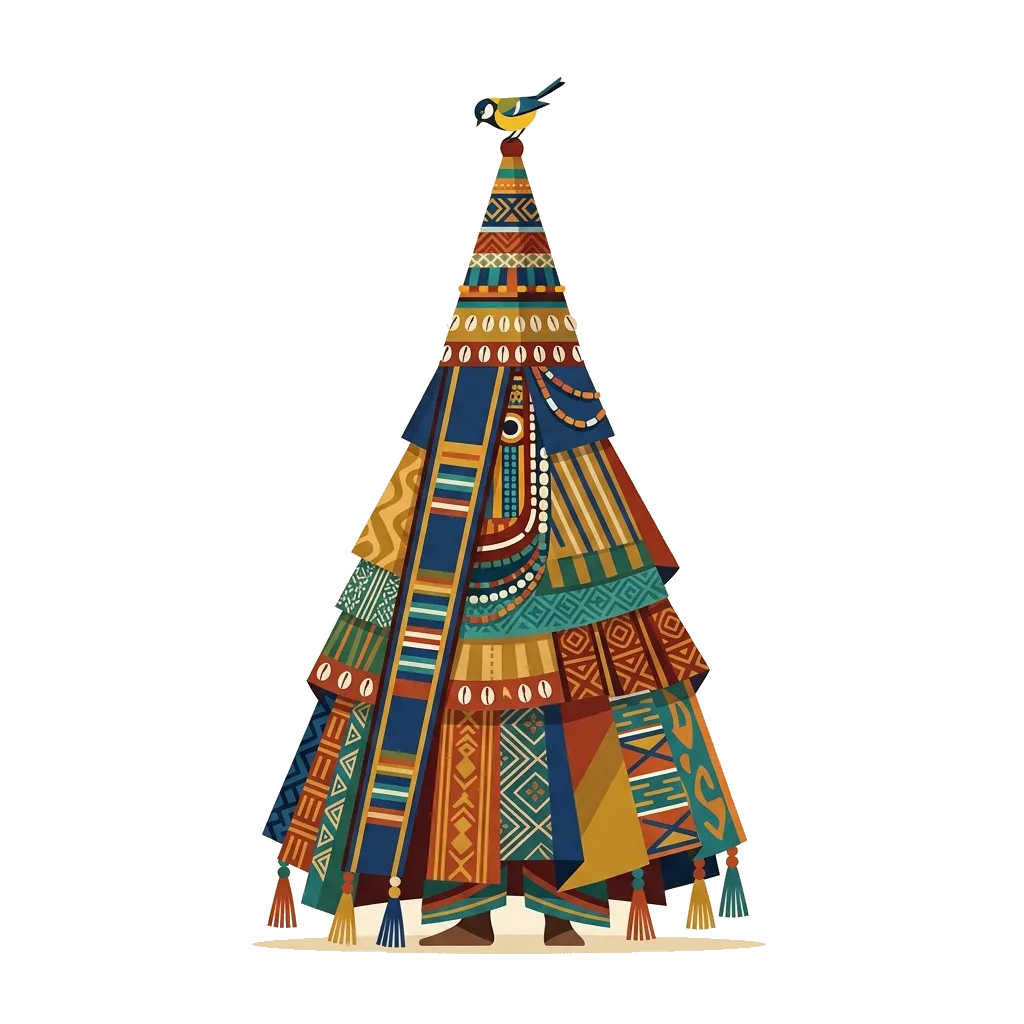
The Zangbeto, those mystical night watchers, use sodabi during their nightly outings. Our page dedicated to Grand-Popo Zangbeto explains the role of these traditional guardians in Xwla society.
Sodabi is also present at weddings (where it seals alliances), funerals (to honor the dead and support the living) and fishing ceremonies (to ask for the protection of the waters). It is a powerful social bond that brings communities together around life's important moments. A calabash passed from hand to hand is a gesture of trust and belonging. To refuse it would be to refuse the connection being offered.
Varieties and medicinal infusions: the pharmacopoeia in a bottle
One of the most fascinating facets of sodabi is its medicinal use. In Heve and the surrounding villages, distillers concoct plant-based preparations that heal, protect and strengthen.
The bottles lined up on shelves contain roots, barks and rare herbs whose recipes are secretly passed down from generation to generation. There are infusions for stomach aches, preparations to stimulate appetite or vitality, mixtures reputed to cure fatigue and aches. Each plant has been chosen for its known properties, each combination refined over decades.
The knowledge of local healers is inseparable from sodabi. Without it, the active principles of plants could not be extracted and preserved. An entire traditional pharmacopoeia relies on this artisanal spirit. Connoisseurs will tell you that the best medicinal sodabi is the one that has macerated for at least three months, away from light, in tinted glass bottles. The preparation turns dark amber as the roots release their color, and the flavor deepens from sharp to complex.
Where to buy sodabi in Grand-Popo
Sodabi can be bought directly from the distillers of Heve, but also in the maquis and bars of Grand-Popo. Prices vary according to quality and packaging:
- Young sodabi bottle (75 cl): 1,500 to 3,000 FCFA (2 to 5 EUR)
- Aged or infused sodabi (75 cl): 3,000 to 5,000 FCFA (5 to 8 EUR)
- Premium artisanal bottle: up to 8,000 FCFA (12 EUR)
The Grand-Popo markets also offer sodabi. The vendors' stalls offer a surprising choice of artisanal bottles, often without labels but with the guarantee of the local producer. Do not hesitate to taste before buying.
For travelers who want to bring a bottle back in their luggage, sodabi keeps well and withstands transport. Make sure the cork is tightly closed and pack the bottle in checked luggage. Sodabi is an authentic souvenir of Grand-Popo, far more meaningful than a tourist trinket. Each sip, once back home, will revive the memories of your journey on the Beninese coast.
Plan Your Visit
Discover the magic of Grand-Popo with our curated local experiences.