









The Gelede is one of Benin's richest and best-documented rituals, recognised by UNESCO as intangible cultural heritage of humanity since 2008. But it needs to be said clearly from the start: the Gelede is not celebrated in Grand-Popo. Its birthplace is Ketou, a historic Yoruba kingdom town in the Plateau department, several hours' drive from the coast.
This article is for travellers staying in Grand-Popo who are considering a multi-day cultural excursion inland, and want to know what to expect before committing to the trip.
The Gelede, a UNESCO heritage
The word Gelede breaks down into "Ge" (mystery) and "Lede" (woman who has given birth). The ritual was born in the 18th century in Ketou and honours female ancestors and Iya Nla, the primordial spirit of all creation in Yoruba cosmology. It celebrates the spiritual power of women, particularly older women, seen as holders of a force capable of protecting or threatening the community depending on whether it is honoured or neglected.
UNESCO inscribed the Gelede on its Representative List of the Intangible Cultural Heritage of Humanity in 2008, recognising both the aesthetic value of the masks and the depth of the thought system they embody.
An excursion, not a Grand-Popo event
It bears repeating: the Gelede belongs to the Yoruba-Nago cultural area, centred on Ketou, Save and Pobe, in south-eastern Benin. Grand-Popo, on the Atlantic coast in the far south-west of the country, is culturally distinct — it is Xwla, Xwéda and Popo territory, with its own traditions (Vodun, Egungun, Zangbeto, Nonvitcha).
If you're looking for a mask ritual directly accessible from Grand-Popo, the article on Egungun masks is a closer match to a local experience. The Gelede, on the other hand, is a genuine journey to another region of Benin — best treated as a trip extension rather than a day trip.
What the mask actually means
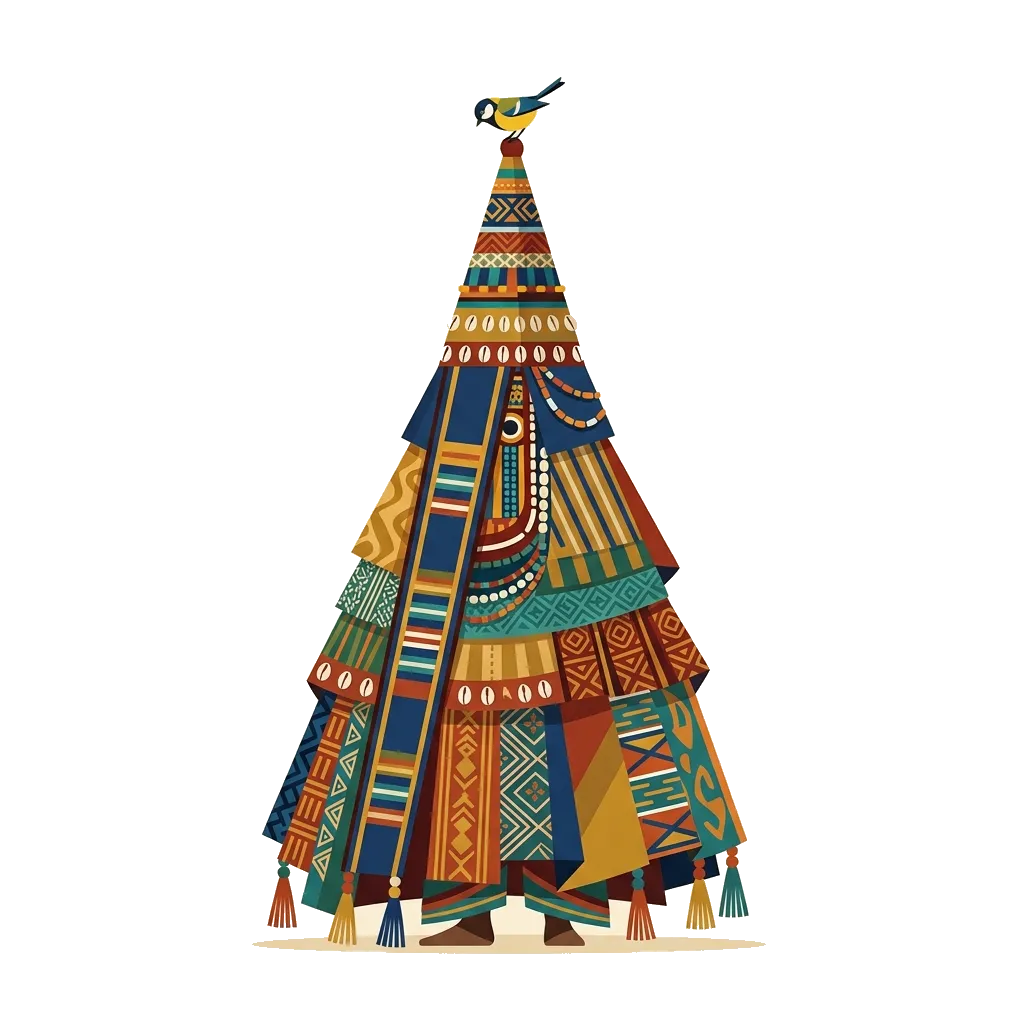
Men initiated into the Gelede society wear masks representing female figures, in colourful costumes adorned with shells and beads. The apparent paradox — men embodying female power — sits at the heart of the symbolic system: it is about channelling and honouring a force considered too powerful to be left without ritual mediation.
The masquerades blend theatre, social satire, dance and music. Some characters caricature community failings (greed, vanity, misconduct), in a spirit close to moral comedy. Others embody animal figures or ancestors. The whole makes for genuine popular theatre, as entertaining as it is spiritually charged.
When and how to witness it
The main ritual outings of the Gelede take place every year from March to May, in the Yoruba-Nago towns and villages of southern and central Benin: Ketou, Save, Pobe and their surroundings. Ketou remains the historical reference and the best-documented destination for witnessing the ritual in good conditions.
Exact dates vary by community and are not centralised in a single national calendar — it's advisable to check locally or with a specialised guide before fixing travel dates specifically around the Gelede.
Planning the trip from Grand-Popo
Distance and duration. Ketou is 138-163 km from Cotonou depending on the route, roughly 2 to 3 hours' drive from the capital. From Grand-Popo, factor in the trip to Cotonou (1.5-2 hours) plus the road to Ketou: half a day of travel each way is realistic overall.
Transport. Several public transport companies serve Ketou from the Étoile Rouge district in Cotonou, for a fare of 3,000 to 6,000 FCFA (4.50 to 9 EUR). Locally, zemidjans (motorbike taxis) and shared taxis get you around town.
Accommodation. Hotel options in Ketou remain modest — the town isn't equipped as a major tourist hub. A few simple guesthouses welcome travellers, but it's best to plan for a single night there and head back to Cotonou or Porto-Novo for the rest of your trip.
Recommended organisation. Given the distance and limited local tourist infrastructure, this excursion suits a local guide or driver better than solo improvisation, especially if you want to witness a ritual outing rather than simply visit the town.
FAQ
Does the Gelede take place in Grand-Popo? No. The Gelede is a south-eastern Benin ritual, centred on Ketou, Save and Pobe — not on the Atlantic coast.
What is the best time to see the Gelede? March to May, the period of the main annual ritual outings.
How much time should I plan for this excursion from Grand-Popo? At least two days, factoring in the round trip and one night in Ketou or nearby.
Is the Gelede accessible to outside visitors? Yes, but with respect: these are living rituals, not tourist shows. A local guide helps you understand the context and behave appropriately.
Is there a closer equivalent to Grand-Popo? The Egungun masks, present in the Grand-Popo region itself, offer a comparable cultural experience without the long trip.
Plan Your Visit
Discover the magic of Grand-Popo with our curated local experiences.