









Grand-Popo is not just a holiday destination. It is a place that holds onto those who come to discover it. Between the Atlantic Ocean and the Mono River, this strip of Beninese land attracts new residents each year: remote workers seeking meaning, entrepreneurs tempted by West Africa, sun-seeking retirees, or young families in transition. Living in Grand-Popo means choosing a different rhythm, where the cost of living allows a quality of life that few places in the world still offer.
Discover the complete Grand-Popo guide for an introduction to the region.
Why Grand-Popo holds onto the people who come to discover it
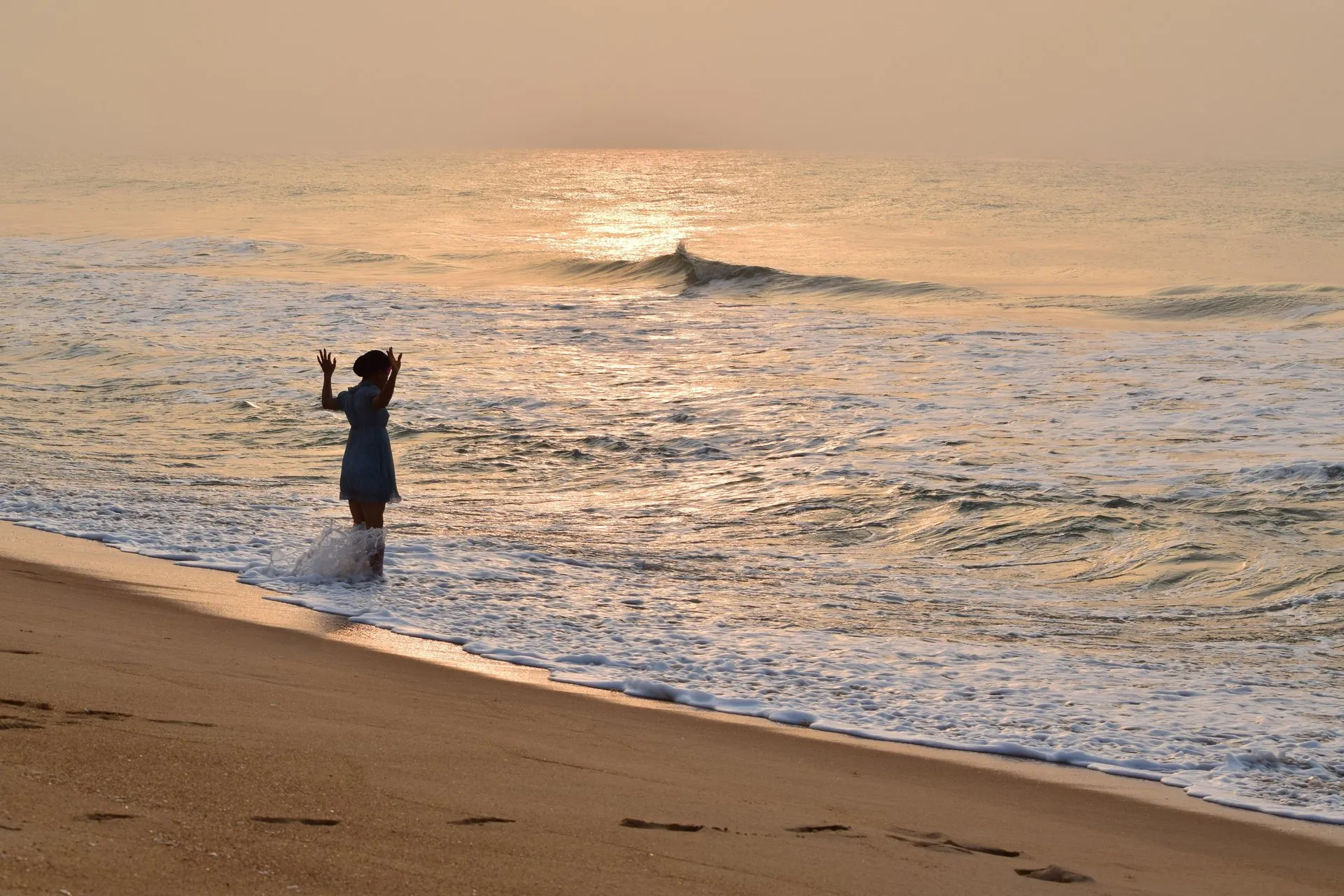
Choosing Grand-Popo as a place to live is first about responding to a desire for space and simplicity. The town has about eight thousand inhabitants and stretches along a coast of ochre sand beaches lined with coconut palms. The atmosphere is peaceful, far from the bustle of Cotonou, two and a half hours away by road. The calm is palpable from the first evening, when the sound of the waves replaces that of horns and engines.
The tropical climate offers two dry seasons (December-March and July-August), ideal for enjoying the beach and outdoor activities. The expat community, though modest in size, is welcoming and supportive. You will meet French, Belgian, German and a few North Americans, all drawn by the same desire for simplicity and authenticity. WhatsApp groups and weekly meetups help newcomers build connections quickly.
The cost of living is one of the major assets: with a monthly budget of 600,000 to 1,200,000 FCFA (about 915 to 1,830 EUR), you live very comfortably including housing, food, leisure and regular outings. Nature is omnipresent: beach, river, mangroves, flora and fauna create an exceptional living environment for nature lovers and outdoor enthusiasts.
Another aspect draws new arrivals each year: the feeling of safety. Grand-Popo's residents look out for each other and petty crime is rare. People leave their doors open, children play outside without worry, and evening walks on the beach are common. This sense of peace, so rare in the modern world, is perhaps the deepest reason to settle here.
What the blogs about Grand-Popo rarely say: the town changes people more than they expect. Long-term residents consistently report that their priorities shifted within the first year. Not because of any particular event, but because of the accumulation of mornings with the Atlantic, evenings at the Lion Bar, meals eaten with neighbours, conversations at the market that take forty minutes because neither party is in a hurry. The pace is not a feature you get used to. It becomes part of how you think.
Daily life that reveals itself slowly
A typical day in Grand-Popo starts early, with the sunrise over the ocean. The first fishermen return from the sea while women set up their market stalls. Breakfast is taken on a terrace facing the coconut palms: coffee, beignets, fresh tropical fruit. The morning is good for work, reading or a walk on the beach before the heat intensifies. In the afternoon, one rests in the shade of a kapok tree or takes a nap lulled by the sea breeze. In the evening, social life resumes: a drink at Lion Bar, grilled fish at Chez Paterne, a walk on the sand. This slow but never boring rhythm is one reason so many visitors end up staying.
The practical aspects matter too. Grand-Popo has a weekly market, a handful of small grocery stores, a pharmacy and a health centre. For anything more complex — a hospital visit, a hardware store, a large supermarket — Cotonou is two hours by road or taxi-brousse. Most residents make the trip once or twice a month and plan it in advance. The distance is a filter, not an obstacle.
Administrative procedures: what settling actually involves
Settling in Grand-Popo involves a few formalities: residence permit for stays exceeding three months, embassy registration, obtaining a tax number to work. Procedures are simplified through the one-stop shop of the Investment Promotion Agency. It is advisable to be accompanied by a lawyer or local consultant for initial steps, especially for rental or property purchase. The expat community is a valuable resource for navigating these steps — ask at Lion Bar, where institutional memory about administrative hurdles has been accumulated over many years.
Real estate and housing options from beach villas to river-view bungalows
Grand-Popo's property market offers varied options, from furnished beachfront villas to traditional houses in inner neighbourhoods. Renting is the most common entry point for newcomers.
Furnished rental across different budgets and distances from the beach
Rental prices vary by proximity to the beach and standard:
- Small two-room villa near the beach: 150,000 to 250,000 FCFA per month (229 to 381 EUR)
- Three-room villa with garden: 250,000 to 400,000 FCFA per month (381 to 610 EUR)
- High-end house with pool: 400,000 to 700,000 FCFA per month (610 to 1,067 EUR)
Leases are generally signed for one year, renewable. It is advisable to visit several properties before committing and check the quality of electricity and water supply. Power cuts are occasional — a backup generator or solar panel setup is worth the investment. Water pressure drops in the dry season in some neighbourhoods. Ask current tenants, not the landlord.
Buying land: accessible but requiring vigilance at every step
The land market is accessible but requires particular vigilance. A building plot near the beach sells for 10,000 to 25,000 FCFA per square metre (15 to 38 EUR). Buying land involves going through a notary and verifying the land title with the land registry. Property disputes exist, so professional local guidance is prudent.
See our real estate page for a detailed guide to buying and renting procedures.
Cost of living: what a comfortable life actually costs month by month
Living in Grand-Popo costs considerably less than in Europe while offering a high quality of life. Here is an estimate of monthly expenses for one person:
| Item | Modest budget | Comfortable budget |
|---|---|---|
| Housing | 150,000 FCFA (229 EUR) | 350,000 FCFA (534 EUR) |
| Food | 80,000 FCFA (122 EUR) | 150,000 FCFA (229 EUR) |
| Transport | 30,000 FCFA (46 EUR) | 80,000 FCFA (122 EUR) |
| Electricity and water | 25,000 FCFA (38 EUR) | 50,000 FCFA (76 EUR) |
| Internet | 20,000 FCFA (30 EUR) | 35,000 FCFA (53 EUR) |
| Leisure and outings | 40,000 FCFA (61 EUR) | 100,000 FCFA (152 EUR) |
| Health | 15,000 FCFA (23 EUR) | 40,000 FCFA (61 EUR) |
| Total | 360,000 FCFA (549 EUR) | 805,000 FCFA (1,227 EUR) |
Fresh fruit and vegetables are abundant and cheap at local markets. Fish, caught each morning, is exceptionally fresh. Imported products (cheese, wine, electronics) are more expensive than in Europe.
Retirees on European pensions live extremely well here. Digital nomads earning in euros or dollars find their purchasing power stretches far. Entrepreneurs investing locally face a different calculation — the cost of living is low, but business setup costs, legal fees and the slow season can strain cash flow if not planned carefully.
See the detailed cost of living analysis.
Expat community: around a hundred people, diverse and genuinely welcoming
Grand-Popo's expat community numbers about a hundred people, a figure that grows steadily. It stands out for its conviviality and mutual support. New arrivals are quickly integrated through WhatsApp groups, informal meetups at Lion Bar and events organised by residents.
Typical profiles and what draws each of them
Several profiles are found among expatriates:
- Remote workers and entrepreneurs: people in their 30s and 40s active in digital, consulting or business creation, drawn by the cost of living and quality of life
- Retirees: wanting to enjoy the climate and comfortable purchasing power
- Families: often settled for humanitarian, diplomatic or entrepreneurial missions
- Artists and creators: attracted by the calm and inspiration of this exceptional natural setting
One of the community's assets is its diversity: French, Belgian, Swiss, Canadian, German, Dutch and Beninese from the diaspora who have returned home coexist harmoniously.
The community's informal rule is simple: help the newcomer, because you were the newcomer once. This translates into practical things — rides to Cotonou, introductions to reliable contractors, honest warnings about which administrative office takes four months to respond. The WhatsApp group is more useful than any official information channel.
Meet the expat community and its members.
Digital nomads: Grand-Popo as an alternative to Bali or Lisbon, with lower costs
Grand-Popo is becoming a sought-after destination for digital nomads, an interesting alternative to Bali or Lisbon. The cost of living is lower, authenticity is more present and the natural environment is preserved.
Internet connection: the honest picture
The main challenge for digital nomads remains the internet connection. 4G is available with MTN and Moov Africa operators, offering sufficient speed for standard remote work. Data plans are affordable:
- 10 GB plan: 5,000 FCFA (8 EUR)
- 30 GB plan: 10,000 FCFA (15 EUR)
- 100 GB plan: 25,000 FCFA (38 EUR)
WiFi at accommodations is sometimes unstable. The most reliable solution is to use a 4G hotspot with a local SIM card. Several ecolodges and villas now offer dedicated workspaces with reinforced connection. Video calls work well in the village centre during off-peak hours. Heavy uploads or real-time collaboration tools require patience, especially during afternoon hours when the network is busiest.
Workspaces that actually work
Lion Bar serves as an informal coworking space, with its shaded terrace and outdoor library. Some ecolodges offer quiet spaces with sea views, perfect for working in the early morning before the heat. The most productive window is 7am to noon — before the heat slows thinking and before the network congestion picks up. Afternoons work better for asynchronous tasks.
Discover the complete guide for digital nomads.
Nightlife at Lion Bar and the rhythm of evenings on the Beninese coast
Social life in Grand-Popo revolves mainly around Lion Bar, a true local institution. This hybrid venue, half-bar, half-outdoor library, is the meeting point for the expat community and passing travellers.
Relaxed atmosphere, affordable cocktails (2,500 to 4,500 FCFA, 4 to 7 EUR), live concerts some evenings and sunset over the beach as a backdrop: Lion Bar embodies the art of living in Grand-Popo. You will meet artists in residence at Villa Karo alongside Xwla fishermen sharing a glass of sodabi.
Evenings remain calm: no noisy nightclubs here. Nightlife consists of a good meal at Chez Paterne or one of the beach restaurants, followed by a drink at Lion Bar under the stars. This is not a limitation — it is, according to almost every long-term resident, one of the reasons they stayed.
Dive into the Lion Bar atmosphere.
Investment opportunities: tourism, real estate and services where demand leads supply
Investment potential in Grand-Popo is real, driven by tourism development and the growing arrival of new residents. The most promising sectors are:
- Hotels and tourist accommodation: demand exceeds supply, especially for ecolodges and high-end furnished rentals
- Restaurants: few international cuisine options exist beyond local restaurants and Chez Paterne
- Services for expats: concierge, property management, language courses, administrative support
- Organic farming and processing: the region produces quality fruit, vegetables and seafood
The Beninese business environment has improved considerably in recent years, with simplified procedures via the Investment Promotion Agency's one-stop shop. Set-up costs are moderate compared to other African destinations.
Explore investment opportunities for more details.
Testimonials from those who came for a visit and never got back on the plane
"I came to Grand-Popo for a month's holiday three years ago. I never got back on the plane. The light here, the pace of life, the kindness of the people... I opened a small art gallery and I regret nothing." -- Sophie, 42, gallery owner
"I work in digital from my villa with a sea view. With a good 4G plan and some organisation, I can work as well as from Paris. Except here, my lunch break is grilled fish with my feet in the sand." -- Thomas, 34, developer
"We came as a family two years ago. Our children go to the French school in Cotonou in the morning and spend their afternoons at the beach. Life here gives them a freedom they would never have had in Europe." -- Marie and Jean, 38 and 40, parents
"I came for a research project on mangroves and I stayed for the light. Each morning I walk twenty minutes to Bouche du Roy and I have never seen two identical sunrises. This place changes how you see the world." -- David, 45, environmental researcher
These stories illustrate what makes Grand-Popo a place where life is good. Not just for a weekend, but for life. What they share — and what the numbers in the cost tables above cannot convey — is a quality of presence. Being here, people say, is different from being elsewhere. Not easier, not simpler, but more full.
Thinking of settling in Grand-Popo? Contact us for personalised advice on housing, administrative procedures and daily life.
Plan Your Visit
Discover the magic of Grand-Popo with our curated local experiences.