


Stretching 467 kilometres, the Mono River is the lifeline of southwestern Benin. At Grand-Popo, it is more than just a waterway: it is a transport route, a food source, a living space and a natural border. Its banks shelter fishing villages, lush mangroves and exceptional aquatic wildlife. Exploring the Mono River Grand-Popo means discovering the region's green lung and the daily life of communities that live to its rhythm. For the broader natural context, see our nature and ecotourism guide.
The Mono: geography and seasonal character
The Mono River rises in the Atakora massif, northwestern Benin, near the Togolese border. It crosses Togo for most of its course before returning to Benin to form a vast coastal delta. At Grand-Popo, it empties into the Atlantic Ocean through Bouche du Roy, an estuary classified as a UNESCO Biosphere Reserve.
The Mono is a tropical regime river, characterised by floods in the rainy season (June to October) and low water in the dry season (December to March). Its average flow is 280 m³/s, but it can reach 1,500 m³/s during floods. These seasonal variations shape the landscapes and the lives of riverside communities in ways that no infrastructure has managed to fully tame. The river decides the calendar, not the other way around. A flood year means some villages are briefly cut off, some rice fields lost, some nets carried away — and the communities adapt as they have always done.
At Grand-Popo, the river widens considerably to form a coastal lagoon dotted with islands and sandbanks. This area is navigable for several kilometres upstream, to the village of Adjaha and beyond. The brown silt-heavy water slows as it spreads, and in the early morning light the surface is the colour of old copper. By mid-morning, the first wind arrives and the colour changes — ruffled copper becoming pewter, then silver.
The river's role in daily life
For Grand-Popo's residents, the Mono is a daily companion. It provides water for domestic and agricultural use, even if drinking water comes from boreholes. Women wash clothes and do dishes on the banks in a warm, communal atmosphere — the rhythmic slapping of wet cloth on stone is one of the characteristic sounds of a Mono morning. The rhythm of the river organises the day: high tide brings the canoes to the landing, low tide exposes the mudbanks where children dig for crabs and small shrimp.
The river is also a transport route. Pirogues connect riverside villages and provide access to fields and fishing areas. For the people of Adjaha and Gbakpodji, the pirogue is as natural as a bicycle — the first one pulled out of the water in the morning before breakfast, the last one hauled ashore in the dusk.
The Mono's banks support market gardens: tomatoes, chillies, okra and sweet potatoes grow on the fertile alluvial soils after the floods recede. Farmers work by hand, in the Xwla agricultural tradition, tending rows that extend right to the waterline. The soil here is almost black, extraordinarily rich, and the vegetables it produces are noticeably larger and more flavourful than those grown further inland on sandier ground.
Pirogue excursions on the Mono
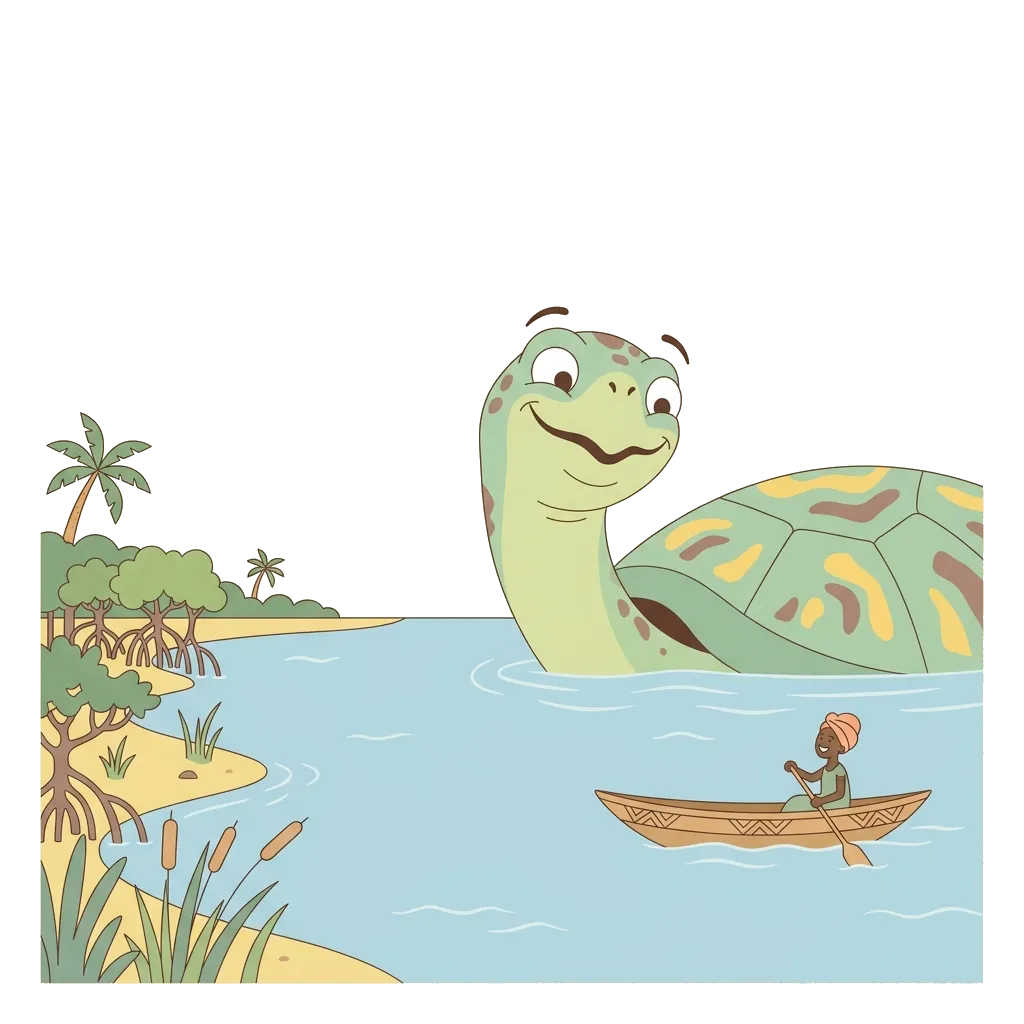
A pirogue excursion on the Mono River Grand-Popo is the region's flagship activity. Local fishermen become guides, taking visitors through mangrove channels, between palms and sand islets, at a pace determined by the current.
Two main routes are available. The downstream route, lasting one to two hours, descends toward Bouche du Roy: you cross the mangrove, observe birds and finish at the estuary where the river meets the ocean. The sight of Atlantic waves crashing against the fresh waters of the Mono is striking — a collision of two entirely different bodies of water that produces a permanent churning line of foam. The colour boundary between brown river water and green ocean is visible from twenty metres away.
The upstream route, longer (3 to 4 hours), goes up the river toward Adjaha and beyond. You discover fishing villages, rice paddies and oil palm plantations that crowd to the water's edge. Guides show you traditional fishing techniques and stop at a village for fresh coconut water. Along the way, watch for the olive-green flash of a malachite kingfisher (Corythornis cristatus) hunting from a low branch, or the long neck of a purple heron (Ardea purpurea) lifting above the papyrus on the far bank in slow, deliberate wingbeats. At the wider sections, groups of African darters (Anhinga rufa) perch on dead branches with wings spread to dry, their S-curved necks giving them an ancient, heraldic look.
Departures are early morning (6-7 am) to avoid the heat and enjoy the golden light. Prices range from 5,000 to 10,000 FCFA (8 to 15 EUR) per person for a 2 to 4 hour outing.
Fishing: techniques and species
Fishing is the dominant economic activity on the Mono. Xwla fishermen use various techniques passed down through generations. Drift nets are stretched between two pirogues, angled across the current and hauled in slowly. Rattan traps are placed on the bottom overnight and checked at dawn — a quiet, almost meditative process as the fisherman lifts each trap and sorts its contents by hand in the first light. Handlines are used for individual catches, particularly for captain fish (Lates niloticus) in the deeper pools.
The species caught are numerous: captain fish, catfish, Nile carp and mullet. Freshwater shrimp, highly prized, are caught with shrimp nets when the waters recede and the shrimp concentrate in the remaining pools. Women wade into the shallows with conical wicker baskets, dipping them into the silt in a motion repeated thousands of times through the dry season.
Fish is eaten fresh in beachfront restaurants or smoked for preservation. Women smoke fish on wooden racks over smouldering coconut husks, an occupation that takes hours and fills the town with a characteristic smell that mingles with the river air. A tray of smoked fish costs 2,000 to 5,000 FCFA (3 to 7.60 EUR) at Avlo market.
Riverside villages: life at the water's edge
The villages along the Mono are easily accessible by pirogue and offer an authentic glimpse of Xwla life. Adjaha, the best known, is near Bouche du Roy. Its stilt houses built directly over the water and sandy lanes make it a photogenic spot. The residents are welcoming and used to visitors, neither indifferent nor performative. A pirogue arriving generates genuine curiosity — children run to the bank first, then the adults follow with less hurry.
Gbakpodji is wilder, surrounded by palm groves and fields that stretch away from the bank. Less touristy, it allows more authentic exchanges. Children wave from the bank, women look up from their work with a calm gaze that holds no demand. The village rooster always seems to be the first sound you hear when the motor cuts.
Hève, to the east, is accessible by road or river. Its banks are lined with oil palm and cocoa plantations. The visit takes its full meaning in late afternoon, when the pirogues return from fishing and the golden light sets the landscape ablaze. The sound of paddles on water, the smell of smoked fish from the bank, the low talk of men pulling nets — it is a scene that has played out here for centuries, and will continue long after you have left.
The hour the Mono turns to copper
Sunsets on the Mono River are legendary. Around 5:30-6 pm, depending on the season, the sky turns orange, pink and purple, reflected in the calm river waters. The pirogues of the last fishermen cut black silhouettes against this blazing backdrop.
The best spots to watch this spectacle are the banks near Bouche du Roy, the Lion Bar pier (facing the sunset), or simply your pirogue, stopped mid-river with paddles lifted. The beachfront lodges all have terraces facing the sunset. The moment when the sun drops below the tree line on the Togolese side and the entire river surface turns to hammered copper is worth every minute of the wait.
Stay fifteen minutes after the sun disappears: the colours continue to evolve long after the disc is gone. The sky moves through orange to rose to a deep violet before darkness arrives. At this stage the first fruit bats emerge from the palm groves, crossing the pale sky in erratic arcs, and the river takes on a completely different character — cooler, quieter, a darker shade of everything.
The border with Togo: two countries, one river
The Mono River serves as a natural border between Benin and Togo for about fifty kilometres. Several unofficial crossing points exist between riverside villages, but the official border post is near Adjaha.
A pirogue trip can follow the border, and you can see Togolese villages on the opposite bank — the same houses, the same pirogues, the same nets drying on bamboo poles. The river that separates them joins them as much as it divides. Families on both banks share dialects, seasonal festivals and fish species. The border was drawn by colonial administration; the communities it bisected paid it little attention then and pay it little more now. Do not cross without proper documentation. Checks are rare but fines can be steep.
For travellers who want to visit both countries, Grand-Popo is a practical entry point: the coastal road connects directly to Lomé (45 minutes). Check our access guide for formalities.
Practical tips for your excursion
To make the most of your Mono River Grand-Popo excursion: set off early (6-7 am) or late afternoon (3-4 pm) to avoid the heat. Wear a hat, sunglasses and sunscreen. Bring enough water (at least 1.5 litres per person) and a snack if you are taking the longer upstream route.
Wear light, comfortable clothing that can get splashed. Water shoes or closed sandals are recommended for getting in and out of the pirogue at landings where the bank is muddy. Do not forget your binoculars for birdwatching on the river.
The excursion price generally includes the guide-paddler but not any stops (fresh coconut, beer, etc.). Allow 2,000 to 3,000 FCFA (3 to 4.60 EUR) extra for these items. A tip of 1,000 to 2,000 FCFA (1.50 to 3 EUR) for your guide is appreciated if you enjoyed the outing.
Plan Your Visit
Discover the magic of Grand-Popo with our curated local experiences.