







The Grand-Popo market is an explosion of colors, scents and life. It is the beating heart of the town, where fishermen sell the day's catch, where Xwla women offer their artisanal salt, where spices color the stalls with their warm hues. More than a simple place of commerce, it is a permanent spectacle and a dive into the daily life of the inhabitants.
Discovering the Grand-Popo markets means immersing yourself in local culture, tasting the freshest produce, chatting with smiling vendors and taking home authentic souvenirs. Every visit to the market is a unique sensory experience.
To understand how market produce feeds the local table, read our food and drink guide.
Grand-Popo market, where town life really happens
The Grand-Popo market is located in the town center, a few hundred meters from the beach and the main landing stage. It spreads around a central square and into the adjacent alleys, under metal sheet and canvas awnings that rattle in the sea breeze. Step in and you feel the temperature drop a few degrees under the shade, the noise rising to meet you.
The market is organized by sections. On one side, the fruit and vegetable stalls with vibrant colors: scarlet tomatoes, green okra, shiny African eggplants, red and green chilies, plantains, juicy mangoes, sweet pineapples, papayas and coconuts. The women vendors, seated behind their pyramids of produce, call out to you with a smile that expects nothing and offers everything.
On the other side, the fish market, near the beach. This is the busiest section, especially in the morning from dawn. The fish are laid out on wooden tables, sorted by species and size. The smell of iodine and salt is powerful, almost briny. Flies buzz, negotiations are lively, and the women who run these stalls have been here every morning for decades. They know which pirogue captain brings the best captainfish, and they will tell you when not to buy.
In the center, the spice and condiment stalls. Large sacks of dried chili, ginger, garlic, stock cubes, artisanal salt. Small portions of dried shrimp, smoked fish, baobab powder. The colors are bright: yellow turmeric, red chili, brown nutmeg, the pale gold of crushed ginger.
Around the square, a few shops sell local crafts, printed fabrics, bead jewelry and carved wooden objects. The selection is more modest than in Ouidah or Cotonou, but the authenticity is undeniable.
The market takes place every day, with peak attendance on Saturday morning, the day of the big weekly market when villagers from the surrounding area come to sell their produce.
Fresh produce, the morning's honest harvest
The Grand-Popo market is the best place to discover the generosity of the Beninese land. The fruits and vegetables are exceptionally fresh, often picked the day before or that very morning, and it shows in the color and texture of everything on display.
Tropical fruits vary by season. December to March is mango season, from the smallest and most fibrous varieties to the large and juicy Kent and Tommy Atkins mangoes. Victoria pineapples from the Grand-Popo region are famous for their sweetness and lack of acidity. Papayas, bananas, coconuts, oranges and grapefruits are available all year round.
Vegetables include tomatoes, okra, African eggplants, chilies (sweet and hot), onions, shallots, carrots, cabbage, green beans and cassava leaves. More European vegetables (salads, zucchini, cucumbers) are available at specialist stalls but are rarer and more expensive.
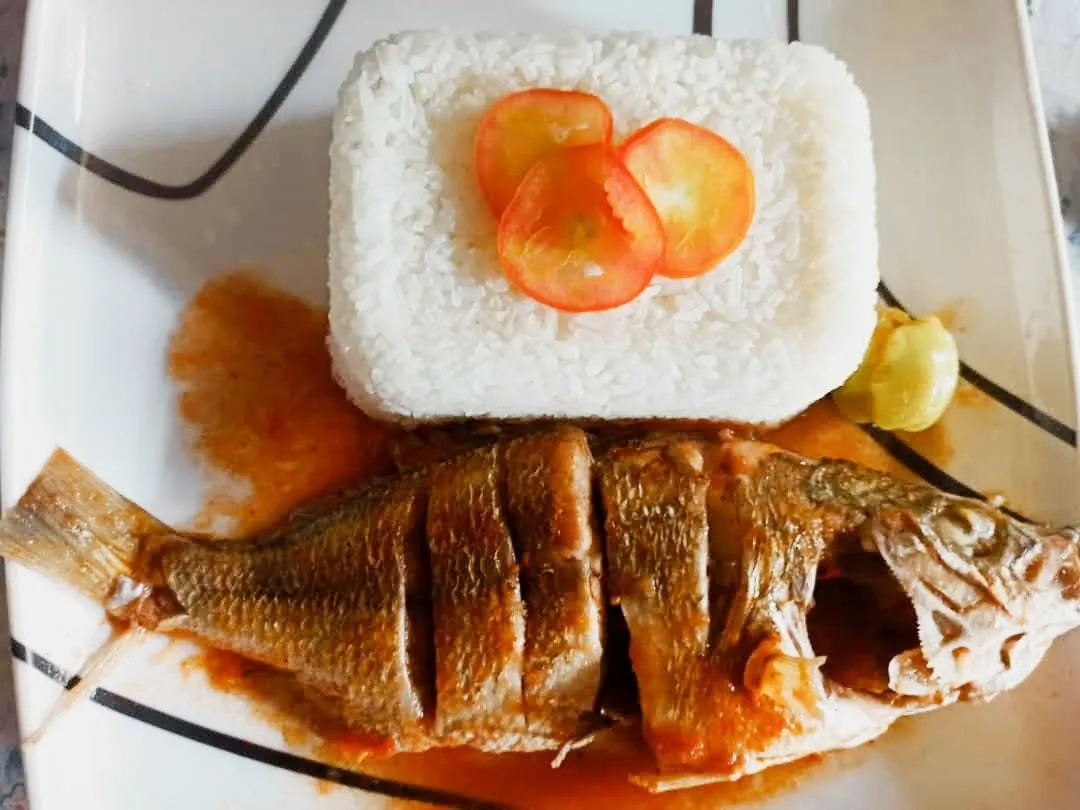
Fresh fish is the star product of the market. Captainfish, sea bass, sole, wahoo, jack, sea bream, grouper: the choice depends on the day's catch and sea conditions. Fish are sold whole, sometimes gutted on request. Fishermen arrive around 6 am and the best pieces go quickly to the market women who have been coming every day for years.
Crustaceans: lagoon shrimp, Mono crabs, lobsters and spiny lobsters on order. Shrimp are sold in heaps, crabs are sometimes tied by the pincers with palm fibers to keep them alive and fresh.
Processed products: artisanal red palm oil, shea butter, peanut paste, tropical fruit jams and local honey from the palm groves.
Spices and condiments, the soul of a Beninese kitchen
The Grand-Popo market is a paradise for spice lovers. The stalls overflow with condiments that are the soul of Beninese cuisine, and many of them are not easily found elsewhere.
Chili is king. Several varieties are available: bird's eye chili (the hottest, used sparingly), sweet chili (used for color and flavor without excessive heat), dried chili (preserved for the rainy season) and chili powder prepared artisanally by the vendor. Every household has its preference, and every vendor will give you a strong opinion on which to choose.
Artisanal salt from Grand-Popo is an exceptional product harvested by Xwla women from the coastal lagoons. It is sold in bags of 250 grams to 2 kilograms, at prices ranging from 500 to 1,000 FCFA per kilo (0.76 to 1.50 EUR). Some vendors offer it flavored with chili or ginger. The gray color is not an impurity: it is the mineral trace of the lagoon that gives this salt its depth.
Dried shrimp are an essential condiment. Pounded, they go into the making of gba na and many sauces. Their concentrated umami flavor is irreproducible with industrial products.
Smoked fish is another basic condiment. The fish are slowly smoked over a wood fire, giving them an intense, almost jammy flavor and a long shelf life. They are crumbled into sauces and rice dishes.
Ground spices: turmeric, ginger, nutmeg, clove, black pepper, cinnamon. Some vendors offer "house" blends for fish or chicken, whose exact recipe is kept secret and passed down through generations.
Stock cubes, ubiquitous throughout West Africa, have their dedicated stall. Although purists prefer natural spices, their use is so widespread that they are part of the culinary landscape.
Local crafts, genuine rather than manufactured
The Grand-Popo market offers a selection of crafts more modest than the big markets of Ouidah or Cotonou, but with an authenticity that the bigger markets have largely lost.
The following items are worth looking for:
- Printed fabrics: Dutch wax, rich Bazin, locally indigo-dyed fabrics. Count 3,000 to 10,000 FCFA (5 to 15 EUR) for a six-yard piece, depending on quality and pattern
- Glass bead jewelry: necklaces, bracelets, earrings with geometric patterns made by local artisans. Prices start at 1,000 FCFA (1.5 EUR) for simple pieces
- Carved wooden objects: masks, statuettes, animals, spoons and mortars. Wood carving is a tradition in the region and prices are negotiable
- Basketry: wicker baskets, straw mats, raffia fans, traditional hats. These utilitarian objects are woven by women and make beautiful souvenirs that are light to carry
- Pottery: terracotta pots, water-cooling jars (canaris), bowls and decorative plates. Traditional pottery is a disappearing craft that the market helps to maintain
Best time to visit: why morning changes everything
To make the most of the Grand-Popo market, timing matters more than anything else.
Early morning from dawn (6 am to 8 am) is the ideal time for the fish market. The pirogues return from the night's fishing, the catch is unloaded and negotiated in an electric atmosphere. Photographers will appreciate the soft morning light and the raw energy of the unloading.
Morning (8 am to 11 am) is the best time for the general market. The stalls are fully stocked, the fruits and vegetables are at their freshest, and the vendors are in good spirits. The heat is not yet oppressive enough to wilt the produce or the customer.
Saturday morning is the big market day. Villagers from surrounding communities (Agoue, Heve, Avlo) come to sell their produce. Attendance is at its peak, the atmosphere is festive and somewhat chaotic. This is the best day for an immersive experience if you can handle the crowd.
Afternoon (2 pm to 5 pm) is quieter. The stalls gradually empty, prices sometimes drop on remaining produce. This is a good time to browse crafts without the morning pressure.
Avoid Sunday: the market is very reduced and most vendors do not come.
Bargaining with a smile, a social game with rules
Bargaining is an integral part of the market experience in Grand-Popo. It is not a conflict but a social game, an exchange where the smile and respect count as much as the final price.
Start by greeting. A hello with a smile opens all doors. Vendors will appreciate you taking the time to exchange a few words before talking about money.
Ask the price. The vendor announces a first price, which generally includes a bargaining margin. Do not pull a face. Smile and offer a lower price (about half the announced price for craft items, 70 to 80 percent for fresh produce).
Keep smiling. Bargaining is a convivial moment. If the vendor refuses your offer, increase slightly. If she accepts too quickly, it means you could have offered less.
Do not bargain on essential items. Fruits and vegetables at 50 or 100 FCFA are not negotiable. Only craft items, fabrics and decorative objects merit bargaining.
Buy several items from the same stall. The vendor will be more inclined to give a discount if you take several things. It is a common and appreciated practice.
Discovering treasures, what only regulars know
Beyond the obvious products, the Grand-Popo market holds a few treasures that only regulars know about.
Flavored salt. Some women offer artisanal salt mixed with chili, ginger or aromatic herbs. Ask specifically: they prepare it on demand, and it makes a delicious and original souvenir that will perfume everything you cook with it at home.
Pure shea butter. Benin's shea butter is recognized for its quality. At the market, you will find it in the form of yellow or white blocks, wrapped in leaves. Used for skin and hair care, it is an ancestral cosmetic product that travels well.
Local honey. Produced in the palm groves of Grand-Popo, honey is less known than other products but of remarkable quality. Its flavor is floral and woody, with notes of mangrove and palm blossom that you will not find in any supermarket jar.
Medicinal teas. Baobab leaves, moringa, lemongrass, ginger: the spice vendors know the medicinal properties of each plant and will advise you with kindness and a certain quiet pride in their knowledge. Some of these preparations have been passed down through families for generations without ever being written down.
Photographic souvenirs. The portraits of vendors, the pyramids of colorful fruits, the fish laid out on tables, the play of light and shadow under the awnings: every corner of the market is an image to capture. Always ask permission before photographing people.
Photo tips, respectful and effective
The Grand-Popo market is a wonderful playground for photographers, but a few rules of etiquette are essential.
Always ask permission. Before photographing a person, smile, show your camera and ask. Most vendors will agree with a smile. Some will refuse: respect their choice without discussion.
Do not photograph people preparing food without consent. It is a matter of respect and hygiene. If you want to photograph a stall, frame wide and avoid close-ups of faces without authorization.
Compensate the model. Buy a small product from the person you photograph: a fruit, a sachet of spices. It is a form of recognition for their time and trust.
Use natural light. Morning light (6 am to 9 am) is the most beautiful for market photos. It is soft, golden, and highlights the colors of the products and the texture of the skin.
Be discreet. A light camera, a zoom for spontaneous portraits, no flash: discretion is the key to natural and respectful photos.
FAQ
When does the Grand-Popo market take place? Every day from about 6 am to 6 pm. The big market is Saturday morning. Sunday is very reduced.
Where is the Grand-Popo market located? In the town center, a few hundred meters from the beach and the main landing stage.
What can I buy at the Grand-Popo market? Fresh fruits and vegetables, fish and shellfish, spices, artisanal salt, crafts, fabrics, jewelry and pottery.
Do I need to bargain on prices? Yes, for crafts and fabrics. Fresh produce has very low fixed prices.
What is the best day to visit the market? Saturday morning for the big market, or weekday at dawn for the fish market.
Can I take photos at the market? Yes, with the consent of the people being photographed. Buy a small product as a thank you.
Plan Your Visit
Discover the magic of Grand-Popo with our curated local experiences.