




The crafts of Grand-Popo are a tangible reflection of Xwla culture: every object tells a story of know-how transmitted across generations, of natural materials and precise gestures. From palm-fiber baskets to wood-fired pottery to ritual sculptures, Grand-Popo crafts offer visitors far more than souvenirs: pieces of cultural identity. This guide takes you through the region's craft traditions and tells you where to buy authentic pieces. For the general cultural context, see our culture and heritage guide.
Local materials, ancient gestures: craft traditions of Grand-Popo
The Xwla developed crafts adapted to their lagoon environment. Raw materials come from the surrounding nature: palm fibers, mangrove wood, clay from the Mono riverbanks, cotton grown in nearby fields. Each craft technique is linked to a practical or ritual need, yet all share a remarkable aesthetic sensibility.
Knowledge transmission happens within families, from mothers to daughters for pottery and basketry, from fathers to sons for carving and joinery. Patterns and techniques vary by clan, each family keeping its own manufacturing secrets. These secrets are not mysterious: they are the identity of a lineage translated into gesture.
What you rarely read in guides: some artisans refuse to sell their work through tourist shops. They prefer a direct encounter, a conversation, an act of recognition. The object and the maker need to meet the buyer. Buy directly when you can.
Indigo threads and wooden shuttles: traditional weaving
Weaving is one of the most emblematic crafts of Grand-Popo. Xwla women weave on traditional looms, producing strips of cotton that are then assembled into loincloths. The rhythmic clacking of the shuttle crossing the warp threads is a familiar music in the courtyards of Avlo quarter.
The geometric patterns, often symbolic, represent elements of nature: Mono River waves, palm leaves, fish scales. Some patterns are reserved for ceremonies, others for daily life. An experienced weaver can read a loincloth the way others read a sentence. The pattern announces the clan, the occasion, even the spiritual affiliation of the wearer.
Colors come from natural dyes. Indigo, extracted from the leaves of the plant of the same name, produces the deep blue characteristic of Beninese fabrics. Red ochre comes from laterite clay, yellow from silk-cotton tree bark. These natural tones have a staying power that synthetic dyes will never match.
A handwoven loincloth costs between 5,000 and 15,000 FCFA (EUR 8 to 23) depending on the complexity of the patterns and the quality of the weave. Each piece is unique: buying them directly supports the local weavers.
From raw wood to sacred form: wood carving
Wood carvers in Grand-Popo perpetuate an artistic tradition linked to Vodun and ritual masks. Statuettes, Egungun masks and totems are carved from local species: iroko, silk-cotton, mahogany.
In the workshops of the Gbakpodji quarter, artisans work without preparatory drawings, letting the form emerge from the wood. This is not improvisation. It is listening. The carver first roughs out the piece with an axe, then shapes it with knives and gouges, before sanding with pumice stone and coating with palm oil to protect against insects. The whole process can take days for a single mask. Masks, charged with spiritual meaning, are reserved for initiates, but artisans also produce decorative pieces accessible to visitors.
A carved statuette measuring between 30 and 80 cm costs 10,000 to 30,000 FCFA (EUR 15 to 46). Small wall masks start at 3,000 FCFA (EUR 4.60). Always verify the wood comes from sustainable sources: environmentally conscious artisans use offcuts or trees felled for construction.
Clay from the Mono, fire of straw: Xwla pottery
Xwla pottery is an exclusively female craft. Potters shape jars, cooking pots and pitchers from clay collected on the Mono riverbanks. The potter's wheel is unknown: everything is made by hand, using the coiling technique, which gives the pieces a charming irregularity.
Firing is done outdoors, in a wood-and-straw fire. Seated on the ground in the courtyard, the potters work at the rhythm of the sun. Wet clay between their hands, the slowness of the gestures, the silent concentration: a scene unchanged for centuries. The pottery takes on the characteristic terracotta shade, sometimes blackened by deliberate smoking to strengthen impermeability. Utilitarian pieces (cooking pots, water jars) sell for 1,000 to 5,000 FCFA (EUR 1.50 to 7.60). More elaborate decorative pieces can reach 10,000 FCFA (EUR 15).
Where and how to buy: practical guide
Avlo market is the main place to buy Grand-Popo crafts. Saturday is the ideal day: artisans from surrounding villages come to display their creations. The market runs all day, from 7 am to 6 pm. Prices are negotiable, but do so respectfully: haggling is normal, aggressive haggling is not.
Artisan workshops are a better option for authentic pieces. Buying directly eliminates intermediaries and lets you discuss the artisan's work, technique, and the story behind the piece. Workshops in Gbakpodji and Adjaha welcome visitors by appointment.
Tourist lodges and hotels often sell craft pieces, with a 20 to 30 per cent markup over direct prices. Handy for a last-minute purchase, but not the best way to support the local economy.
Try it yourself: workshops and demonstrations
Several Grand-Popo artisans open their workshops to travelers who want to understand their work. These visits are privileged moments of exchange. Avlo weavers welcome visitors in the morning (8 am to 11 am), when they work in the cool of the day before the sun rises too high. Gbakpodji potters prefer the afternoon, after preparing the clay.
A workshop visit lasts 1 to 2 hours and costs 5,000 to 10,000 FCFA (EUR 8 to 15). Some artisans offer introductory sessions: try your hand at weaving or clay modeling for an afternoon. You will not produce anything useful. But you will understand, in your hands, what these gestures represent.
Recognizing the authentic: souvenirs worth bringing home
To bring back an authentic souvenir from Grand-Popo, choose objects used in everyday Xwla life. A handwoven loincloth, a palm-fiber basket, a small decorative mask or a utilitarian pot are choices that support the local economy and carry a story.
Avoid imitations imported from Ghana or Nigeria, sometimes sold as local crafts. Genuine Xwla objects bear the marks of the hand: irregularities, imperfections, the feel of real material. An artisan who takes the time to explain their work is the best guarantee of authenticity.
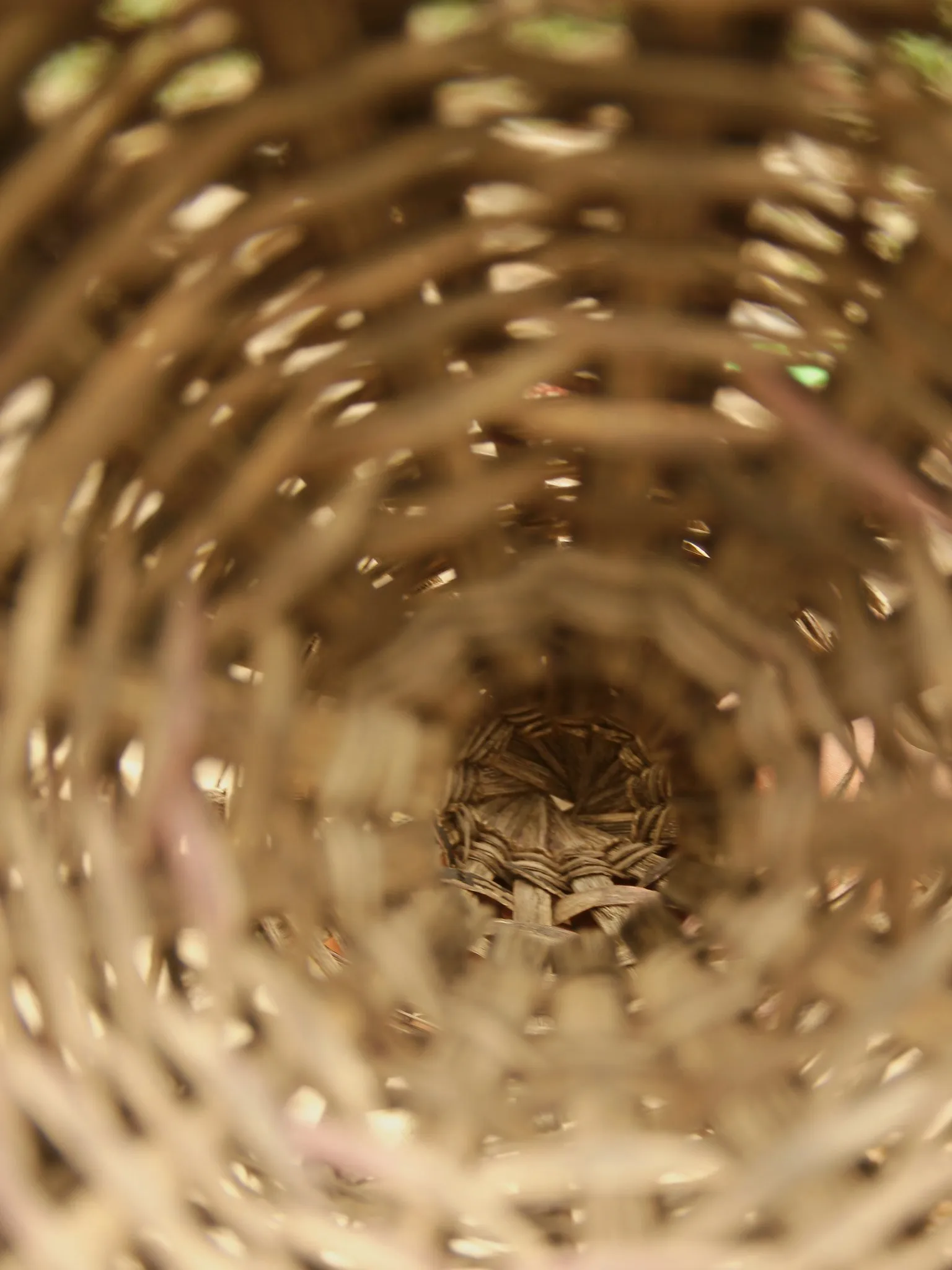
Basketry is also a Grand-Popo specialty. Xwla women weave baskets, mats and fans from raffia palm fiber and rattan. Each piece takes several days of work, from harvesting the fibers to natural dyeing to the final braiding. Patterns vary by use: bread baskets, shopping baskets, placemats. Prices range from 1,000 to 8,000 FCFA (EUR 1.50 to 12) depending on size and complexity. These lightweight, sturdy objects make excellent souvenirs easy to transport in luggage.
One last advice: take the time to ask the story behind what you buy. Not just how it is made, but why that pattern, why that material, why that color. The artisan who answers those questions gives you something the object alone cannot carry.
Plan Your Visit
Discover the magic of Grand-Popo with our curated local experiences.